

 Global| Mar 18 2026
Featured Data Additions, March 18, 2026
EMERGECW→ Romania → Prices → BNR Inflation Target and Forecast → Financial Market Projections
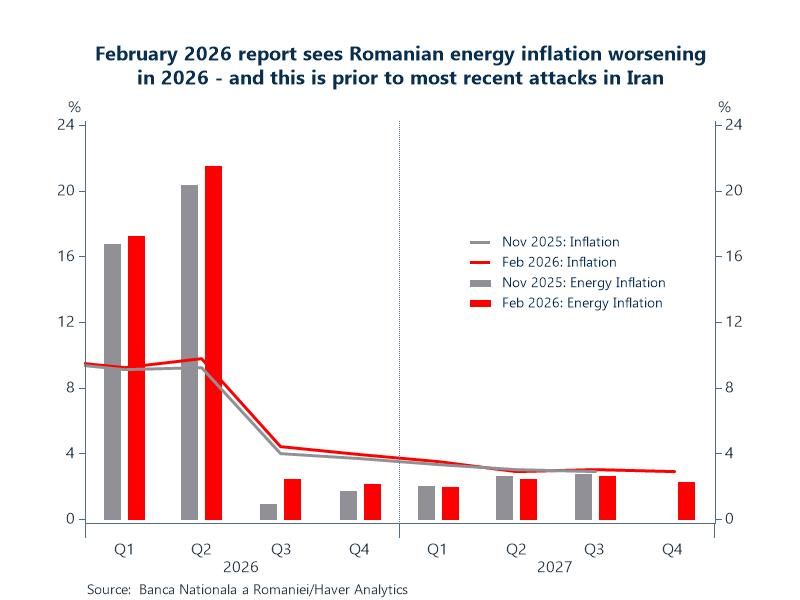
Quarterly forecasts for Romania were added to the EMERGECW database. These series have a forecast horizon of 2 years and include series for overall inflation, core inflation, fuel, energy, food and administered prices. Also included are inflation target forecasts and forecast uncertainty for CPI, both with upper and lower bounds. These data are sourced from the National Bank of Romania and start in Q4 2023.
Chart: Since the November 2025 report, overall inflation forecasts for 2026 in Romania worsened from a quarterly average of 6.5% to 6.8% in the February 2026 report. Energy inflation increased almost a full percentage point for 2026 from a quarterly average of 9.9% to 10.8%. Note that the February report was released a full 10 days prior to the February 28 attacks on Iran, so it will be interesting to see how these forecasts change when the National Bank of Romania updates them in May.
SURVEYS → Consumer Indicators → Survey of Consumer Pay Choice
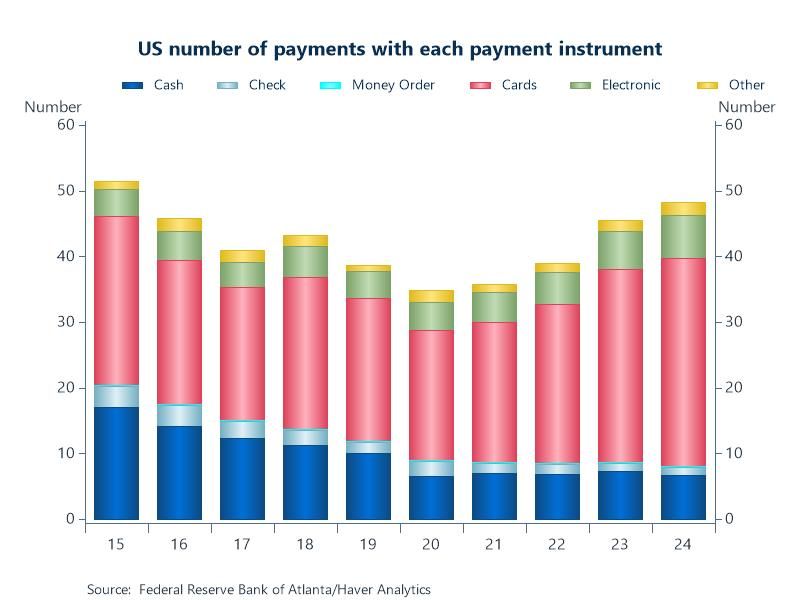
The Survey and Diary of Consumer Payment Choice for the US was added to SURVEYS. This survey reports the number, $ value, and shares of payments by transaction type and by payment instrument. It also reports consumers’ adoption of bank and nonbank payment accounts, use of payment instruments, rankings of instruments for security and other characteristics, and preference for using payment instruments for specific types of transactions. Annual data are sourced from FRB Atlanta and start in 2015.
Chart: In 2024, there were statistically significant increases in the number of all payments compared to 2023 – they increased by almost three payments, or 5.4%, to 48 on average per consumer per month. Consumers continued their move away from paper payment methods as lower shares were reported using cash and checks. The number of cash payments decreased by 8.2% YoY. Payment cards retained their dominance in the consumer sphere, representing 2/3 of payments by number.
EMERGEMA → Saudi Arabia → Business Cycle Indicators and Surveys → Business Confidence Index
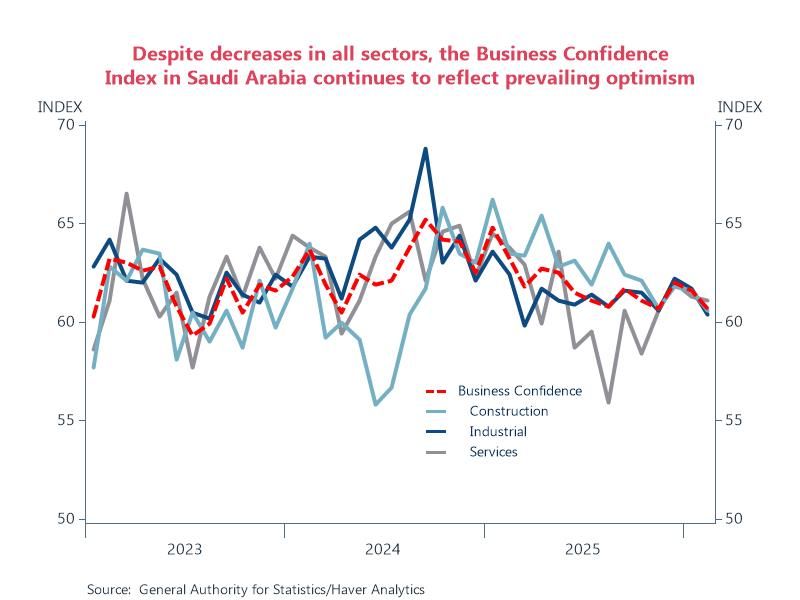
Saudi Arabia's Business Confidence Index was added to EMERGEMA. An overall index plus detail for the construction, industrial and services sectors are available. Data are reported on a scale from 0-100, with 50 representing the neutral level. Values above 50 indicate optimism, while values below 50 reflect pessimism. Monthly data are sourced from the General Authority for Statistics and start in January 2023.
Chart: In February 2026, the BCI for the construction sector recorded a MoM decline of 1.6 points. The industrial sector recorded a slightly larger decline of 2.2 and the services sector declined by 0.5 compared to January. All sectors attributed these declines in confidence levels to input cost concerns. The overall index declined by 1.5 points, but continues to reflect prevailing optimism despite the gradual downward trend since early 2025.
BENELUX → Netherlands → Financial → Money, Banking and Credit → Pension Assets by Currency
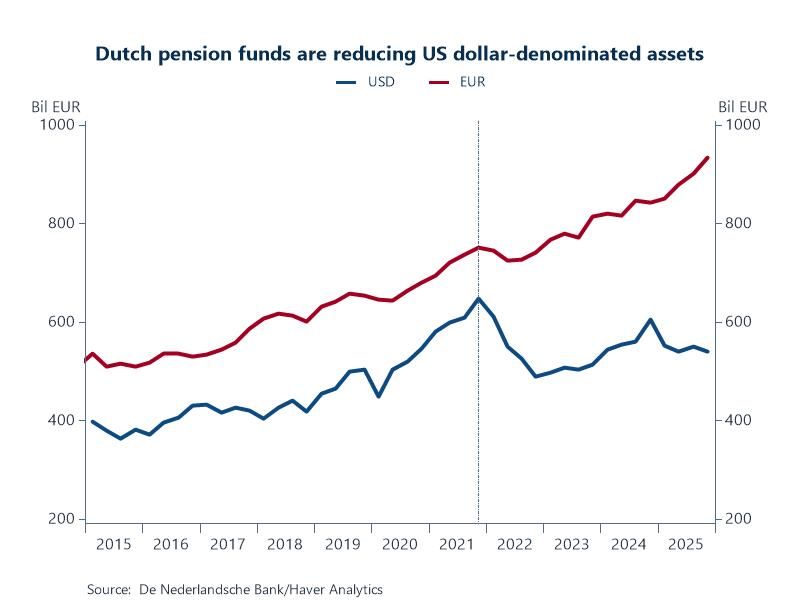
Pension fund asset statistics by currency of investment for the Netherlands were added to BENELUX. Series are available for all pensions funds, company, industry-wide and other pension funds. Euro and non-euro denominated assets including in British pounds, Japanese yen, US dollars and other currencies are also available. Quarterly data are sourced from De Nederlandsche Bank and start in Q1-2015.
Chart: Dutch pension funds have been reducing their overall exposure to dollar assets. At the end of 2025, they held €541bn in dollar-denominated investments, down from €648bn at the end of 2021. Over the same period, euro-denominated investments increased from €752bn to €935bn. Drivers for this include heightened USD volatility, growing concerns over the US debt load, as well as policy and tariff uncertainty under the Trump Administration.
More Featured Data Additions
 Global| Sep 23 2026
Featured Data Additions, September 23, 2026
 Global| Sep 18 2026
Featured Data Additions, September 18, 2026
 Global| Sep 02 2026
Featured Data Additions, September 2, 2026
 Global| Aug 27 2026