

 Global| Mar 04 2026
Featured Data Additions, March 4, 2026
EMERGEPR → Philippines → Public Finance and Debt → Holders of Onshore Government Securities
Ownership of onshore government securities statistics for the Philippines were added to EMERGEPR. Onshore securities are issued within the Philippines in Pesos targeting the domestic investor base. These series are reported as percentage shares of the total and cover the major holders. Quarterly data are sourced from the Central Bank of the Philippines and start in Q2 2022.
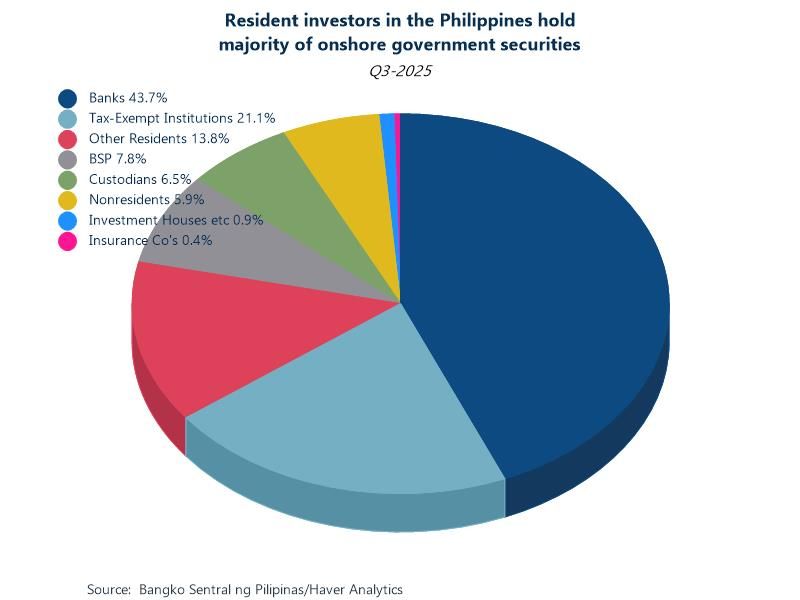
Chart: As of the end of September 2025, foreign holdings of onshore peso government securities rose to 5.9% from 5.1% at the end of Q2 2025. These percentages are significantly higher than only two years ago when the share was 1.7%. Meanwhile, resident investors held the remaining 94.1% of onshore government securities, with banks holding the largest share at 43.7%, followed by tax-exempt institutions (21.1%), other residents (13.8%), and the Central Bank of the Philippines (7.8%).
EMERGEMA → South Africa → Financial → Debt → Infrastructure and Development Finance Bond
Infrastructure and development finance bond statistics for South Africa were added to EMERGEMA. Total issuance plus detail by the two maturities issued are available by type of bond holder which includes the foreign sector, monetary institutions, insurance companies and pension funds. Monthly data are sourced from the National Treasury and start in December 2025.
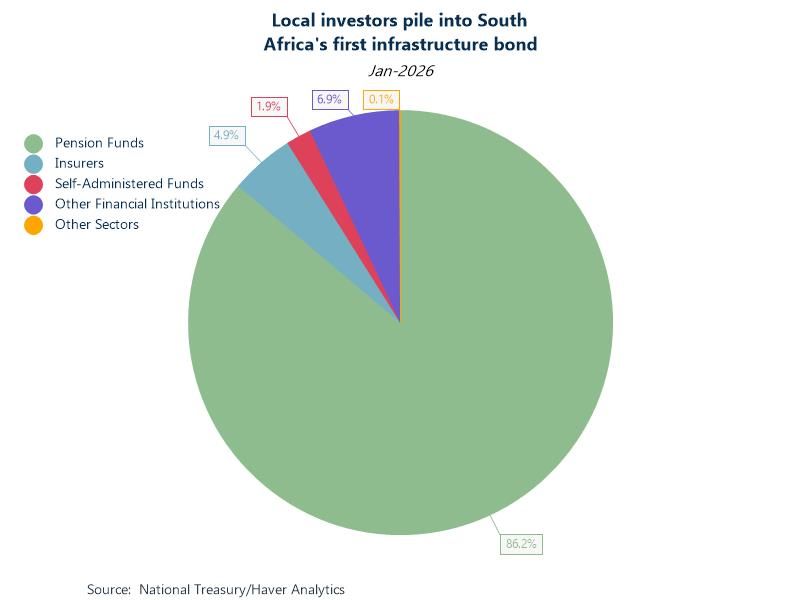
Chart: South Africa raised 11.8 billion rand in its first infrastructure-bond sale, drawing bids for more than twice the amount sought and boosting its construction-led growth plans. The main participants were local investors, particularly the pension funds which hold 86.2% of the debt. There was very limited direct interest from offshore accounts (<0.1%). Africa’s largest economy sold 7 billion rand of 10-yr debt and 4.8 billion rand of 15-yr notes. Bids for the securities exceeded 26 billion rand, reflecting strong market confidence.
EMERGELA → Guatemala → International Trade and Balance of Payments → Exports and Imports by Country
Foreign trade statistics by country for Guatemala were added to EMERGELA. Import and export totals reported in thousands of US$ are available for over 170 countries that trade with Guatemala. These monthly statistics are sourced from Banco de Guatemala and start in January 2016.
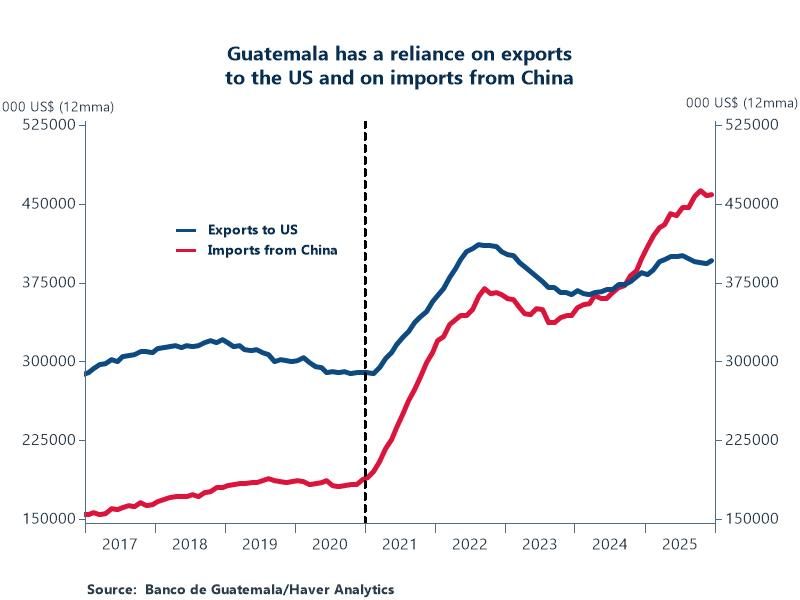
Chart: The US remains Guatemala's top trading partner - receiving over 30% of its exports and driving its textile & apparel industry via CAFTA-DR. Since 2021, exports to the US have increased by 36.6% further cementing the deep economic partnership between the nations. China has emerged as its second-largest trading partner, driven almost entirely by imports, which have increased by 144.6% since 2021. However, exports to China are negligible, thus creating a lopsided, import-dependent relationship.
EMERGECW → by Country → Armenia → Financial → Money and Banking → Level of Dollarization
Various measures of the level of dollarization for Armenia were added to the EMERGECW database. Dollarization refers to the extent to which a foreign currency (commonly the USD) replaces a country's domestic currency as the primary medium of exchange, store of value, and unit of account. High levels often indicate past economic instability, high inflation, or low trust in national monetary policy. Monthly data are sourced from the Central Bank of Armenia and start in January 2006.
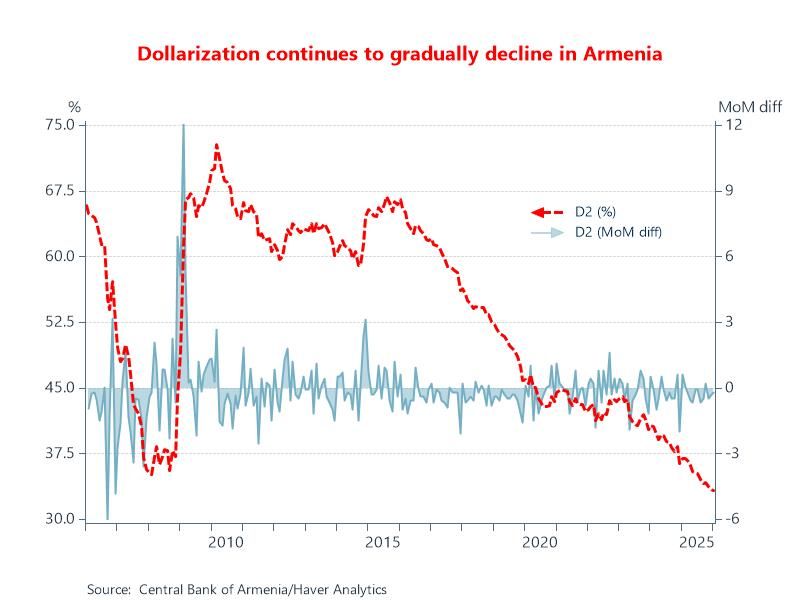
Chart: In January 2026, the dollarization rate in Armenia, in this case measured as the ratio of resident dollar deposits to total resident deposits, dropped to 33.2% - its lowest level since the beginning of the time series. It has been demonstrating a steady downward trend since January 2016, when it stood at 66.5%. An appreciating Armenian dram against the USD, proactive de-dollarization policies by the central bank, and significant Russian capital inflows have been the drivers of this trend.
More Featured Data Additions
 Global| Sep 18 2026
Featured Data Additions, September 18, 2026
 Global| Sep 02 2026
Featured Data Additions, September 2, 2026
 Global| Aug 27 2026
Featured Data Additions, August 27, 2026
 Global| Aug 19 2026