

 Global| May 06 2026
Featured Data Additions, May 6, 2026
EMERGEMA → Ghana → National Accounts → Monthly Indicator of Economic Growth (MIEG)
The Monthly Indicator of Economic Growth (MIEG) for Ghana was added to EMERGEMA. The MIEG is an economic statistic designed to provide early monthly signals on the direction of the economy ahead of the full quarterly GDP release. Indexes and YoY growth rates are available for the total economy and its three major sectors – agriculture, industry and services. Monthly data are sourced from the Ghana Statistical Service and start in January 2023.
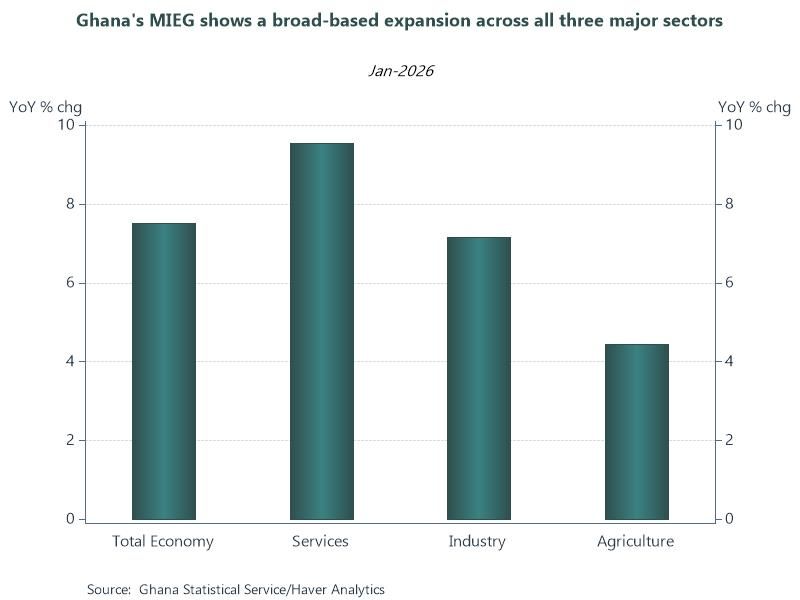
Chart: The economy expanded by 7.5% in January 2026 compared to the 8.2% recorded in January 2025. The data also show that all three major sectors of the economy recorded positive growth, pointing to continued broad-based economic momentum. The services sector was the standout performer recording growth of 9.6%, followed by industry at 7.2% and agriculture at 4.5%. These results suggest that Q1 GDP is likely to record moderate but steady growth, supported mainly by the services sector.
EMERGEPR → Singapore → Employment and Earnings → Hiring, Wages and Retrenchment Expectations
Additional labor market indicators for Singapore were added to the EMERGEPR database. Expectations of firms to raise wages and to hire new employees in the next three months expressed in % of firms are now available. These monthly series are sourced from the Ministry of Manpower and start in June 2020.
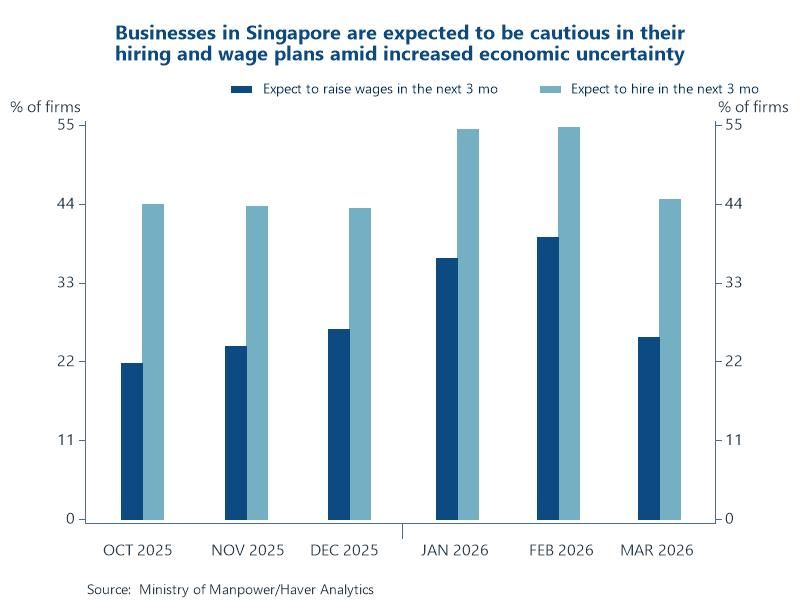
Chart: Looking ahead to Q2 2026, expectations are for the labor market to remain tight in Singapore and continue to expand. However, businesses are expected to be cautious in their hiring and wage plans amid increased economic uncertainty due to geopolitical tensions. The share of firms expecting to hire in the next three months declined from 54.6% in February to 44.6% in March, while expectations to raise wages declined from 39.3% to 25.4% over the same period. These are significant 1-month declines in expectations after multiple months of positive readings.
EMERGECW → Kosovo → Employment and Earnings → Youth Not in Education, Employment or Training (NEET)
Labor force participation rates and youth not in employment, education or training (NEET) rates for Kosovo were added to EMERGECW. Both concepts are available as levels or rates by sex. The participation rate table also features detail by age group. Quarterly data are sourced from the Kosovo Agency of Statistics and start in Q1 2016.
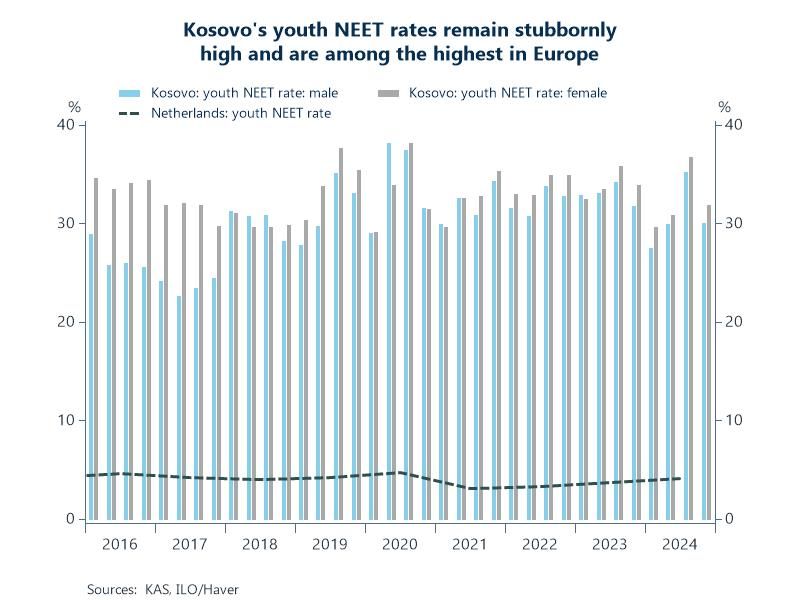
Chart: Kosovo currently faces one of the highest NEET rates in Europe, with approximately 30% of males and 32% of females aged 15–24 falling into this category as of Q4 2024. While overall unemployment is at record lows (10.8% in 2024), the NEET rate has remained relatively stagnant, reflecting deep structural issues in the transition from school to work. In contrast, the Netherlands frequently maintains a NEET rate below 5% for young people reflecting effective employment support and vocational training to ensure young people remain in education or enter the workforce.
ENERGY → Country-Sourced Statistics → Brazil → Production, Sales, Import and Export of Oil & Natural Gas
A new, more detailed table for oil and natural gas statistics for Brazil was added to ENERGY. Concepts include production of oil, NGL and natural gas, sales of petroleum products and exports/imports of crude oil and oil products. Quarterly data are sourced from Petrobras and start in Q1 2019.
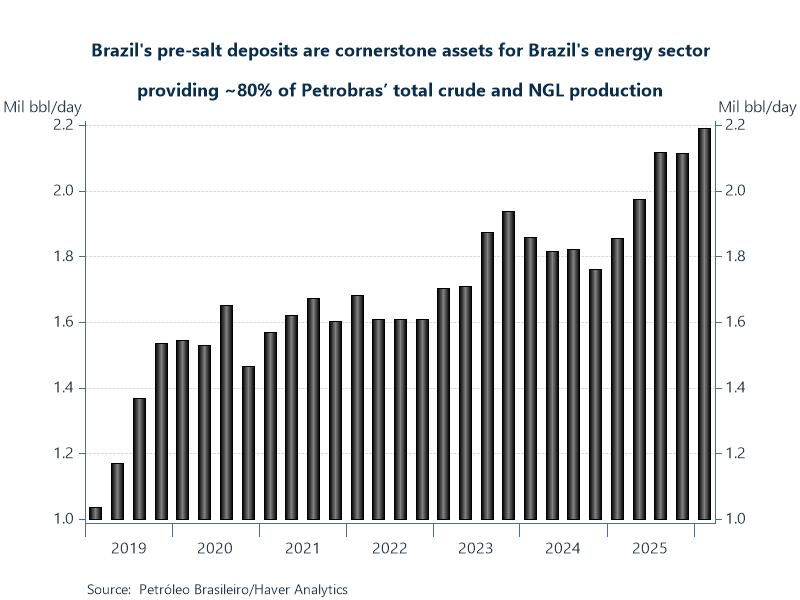
Chart: Brazil’s energy sector is experiencing a boom in oil production, reaching record highs driven by pre-salt field development. These ultra-deepwater fields deliver high-quality, low-sulfur light crude at competitive breakeven costs, driving energy sovereignty and substantial economic revenue. Since Q1 2019, pre-salt production has increased by 111%, currently produces 2.2 mboe per day, has proven reserves of 30-40 billion barrels, and is expected to bolster Brazil's energy future for decades.
More Featured Data Additions
 Global| Sep 23 2026
Featured Data Additions, September 23, 2026
 Global| Sep 18 2026
Featured Data Additions, September 18, 2026
 Global| Sep 02 2026
Featured Data Additions, September 2, 2026
 Global| Aug 27 2026