

The July 2026 Employment Situation – One of These Things Is Not Like the Other
|in:Viewpoints
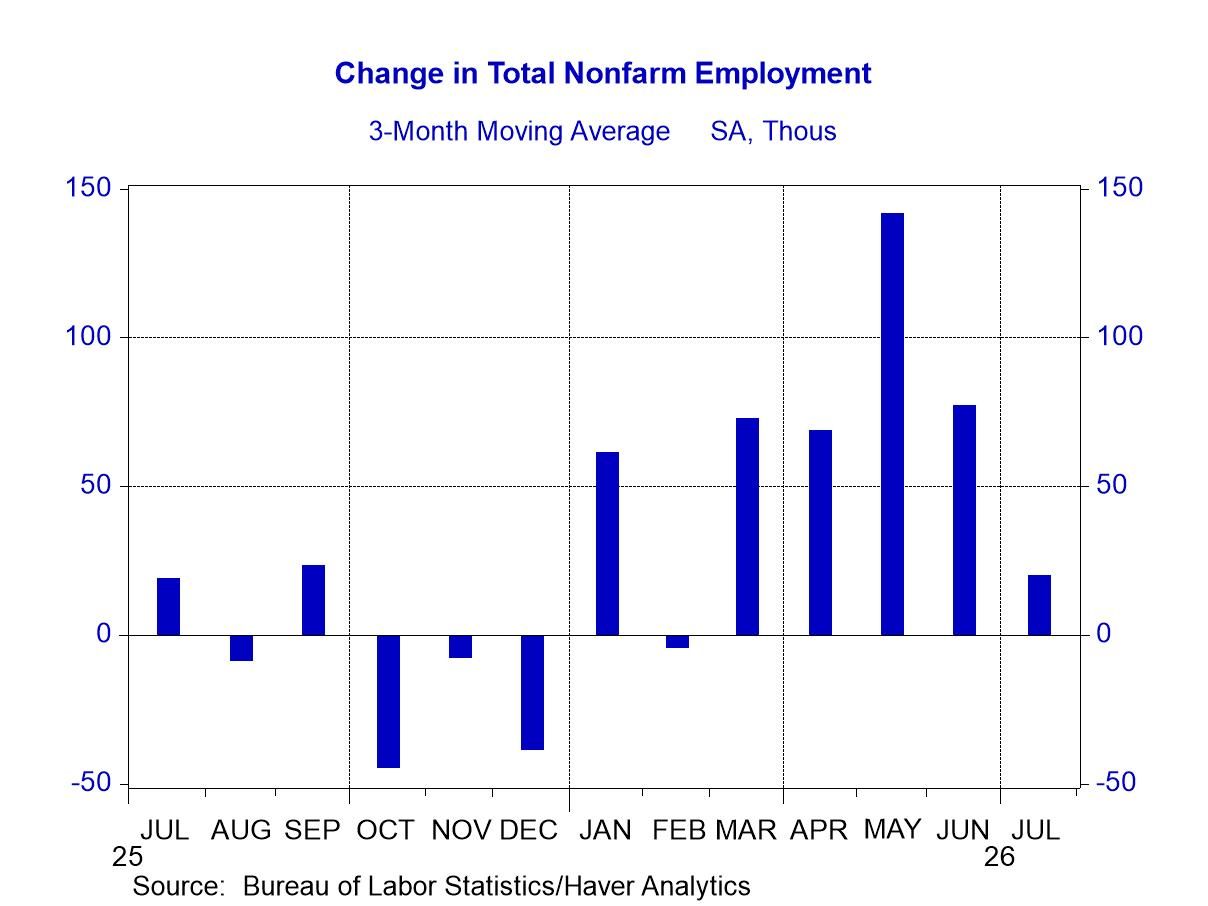
The Bureau of Labor Statistics (BLS) reported on August 7, 2026 that the three-month moving average of the change in total nonfarm payrolls was only 20,000 in the three months ended July 2026. This compares unfavorably with the 142,000 average change in the three months ended May 2026. (See Chart 1). If we can believe the BLS data released on August 7, three months of which were revised, the US labor market has weakened significantly in the past three months.
Chart 1
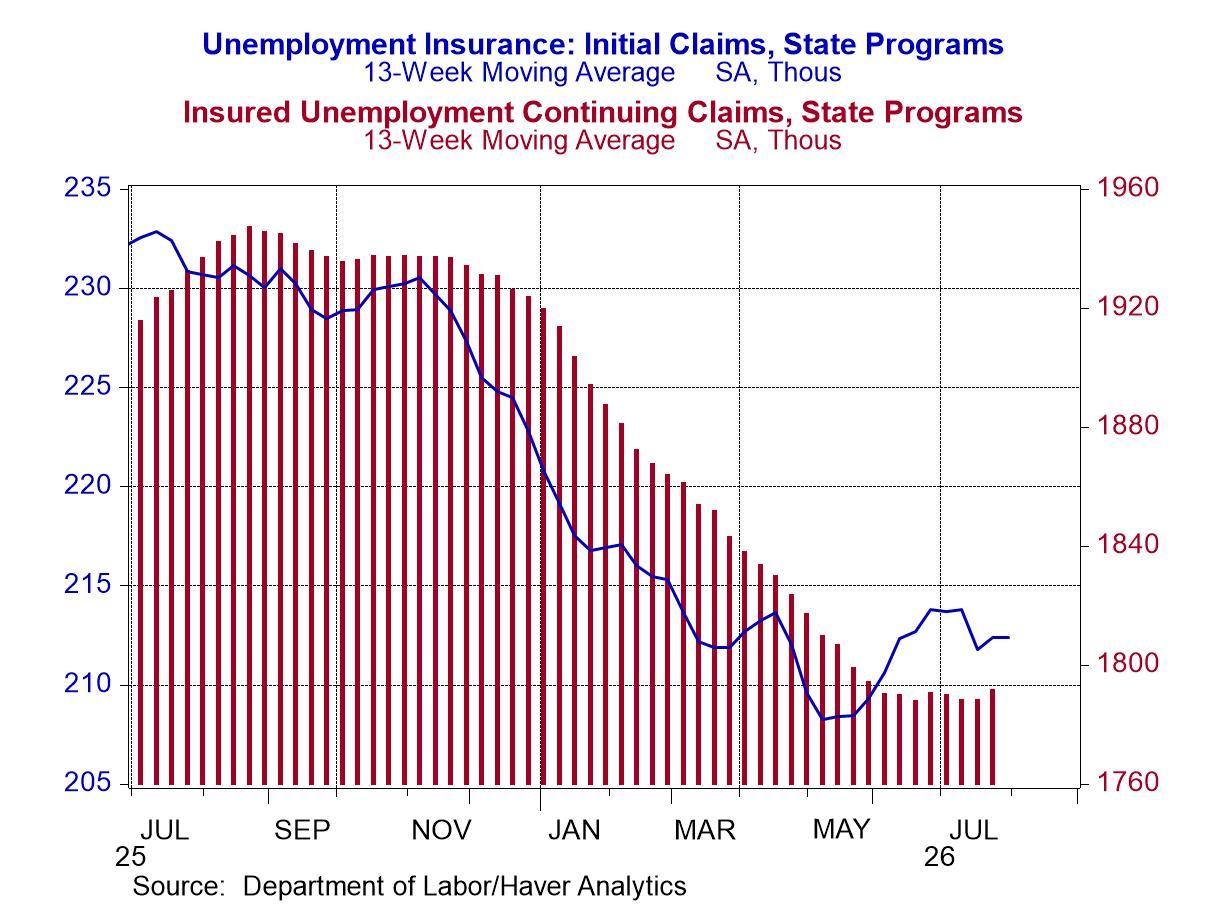
But is there reason to doubt the veracity of the latest BLS nonfarm payroll data? The 13-week moving average of state unemployment data, both initial filing claims as well as continuing claims, do not indicate any fundamental weakening in labor market conditions in the three months ended July 2026 (See Chart 2). Although these data do get revised, not nearly to the extent that the monthly BLS nonfarm employment data do. Moreover, the weekly state unemployment data measure the universe of filers, not a sample, which is the monthly BLS report of nonfarm payrolls. The people filing unemployment claims have an incentive to file. If they do not file, they are penalized by delayed unemployment payments. The firms that report nonfarm payroll employment payrolls to the BLS do not get penalized for late or inaccurate reports.
Chart 2
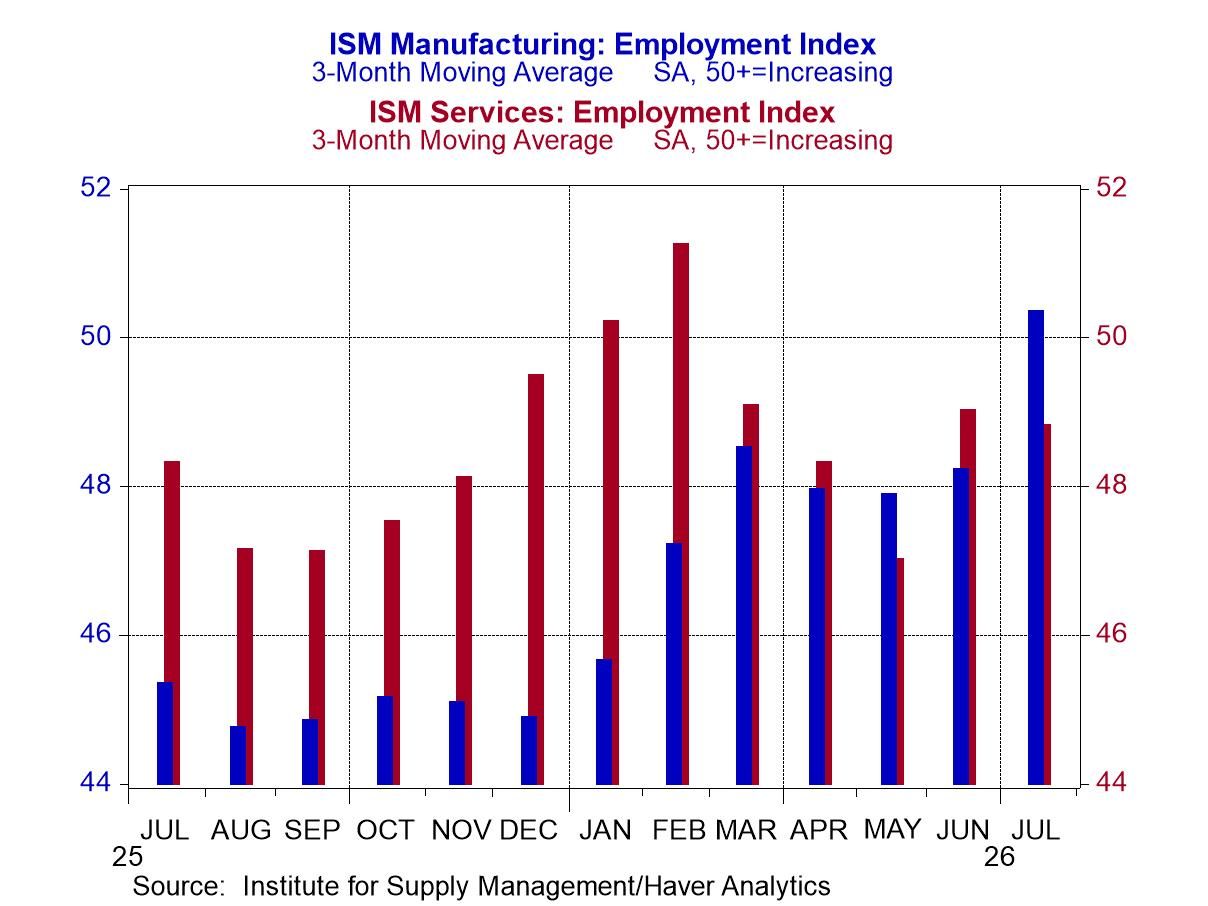
The three-month moving average of the Employment Indices of the ISM Manufacturing and Service Industries do not signal any fundamental weakening in the labor market in the three months ended July 2026. (See Chart 3). These data do not get revised save for seasonal adjustments annually.
Chart 3
Every month the Challenger, Gray and Christmas consulting firm surveys businesses and government entities as to their announced hiring and layoff plans. This does not necessarily mean that the plans are implemented in a particular survey month. Plotted in Chart 4 are the three-month averages of seasonally-adjusted announced hiring plans minus announced layoff plans. These data do not suggest that there was any significant weakening in the US labor market in the three months ended July 2026. To the contrary, these data suggest there was a strengthening the labor market.
Chart 4
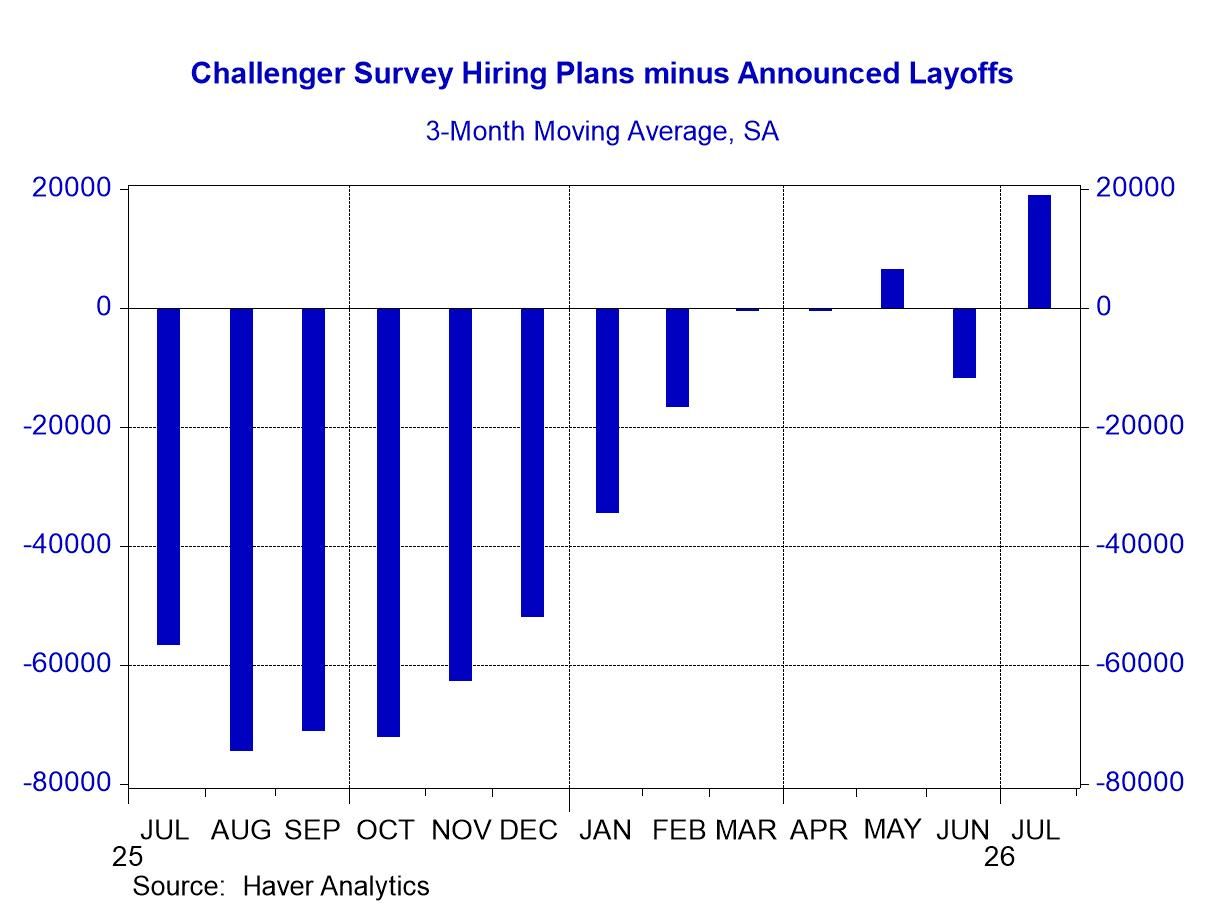
In sum, one of the charts above is not like the other three. Will the true state of the US labor market of the past three months please stand up?

Paul L. Kasriel
AuthorMore in Author Profile »Mr. Kasriel is founder of Econtrarian, LLC, an economic-analysis consulting firm. Paul’s economic commentaries can be read on his blog, The Econtrarian. After 25 years of employment at The Northern Trust Company of Chicago, Paul retired from the chief economist position at the end of April 2012. Prior to joining The Northern Trust Company in August 1986, Paul was on the official staff of the Federal Reserve Bank of Chicago in the economic research department. Paul is a recipient of the annual Lawrence R. Klein award for the most accurate economic forecast over a four-year period among the approximately 50 participants in the Blue Chip Economic Indicators forecast survey. In January 2009, both The Wall Street Journal and Forbes cited Paul as one of the few economists who identified early on the formation of the housing bubble and the economic and financial market havoc that would ensue after the bubble inevitably burst. Under Paul’s leadership, The Northern Trust’s economic website was ranked in the top ten “most interesting” by The Wall Street Journal. Paul is the co-author of a book entitled Seven Indicators That Move Markets (McGraw-Hill, 2002). Paul resides on the beautiful peninsula of Door County, Wisconsin where he sails his salty 1967 Pearson Commander 26, sings in a community choir and struggles to learn how to play the bass guitar (actually the bass ukulele). Paul can be contacted by email at econtrarian@gmail.com or by telephone at 1-920-559-0375.
 Global