Surging Energy Prices Push Up PCE Prices and Consumption in March
by:Sandy Batten
|in:Economy in Brief
Summary
- The PCE price index jumped 0.7%, reflecting an 11.6% m/m surge in energy prices.
- The core index was up 0.3%, in line with expectations but still well above the Fed’s target.
- Personal income increased 0.6% m/m, led by a 0.4% m/m rise in compensation.
- Personal consumption jumped 0.9% m/m with a slight upward revision to February.
- However, much of the March gain in nominal consumption also reflected the jump in energy prices.
- Real consumption rose by a more modest 0.2% m/m.
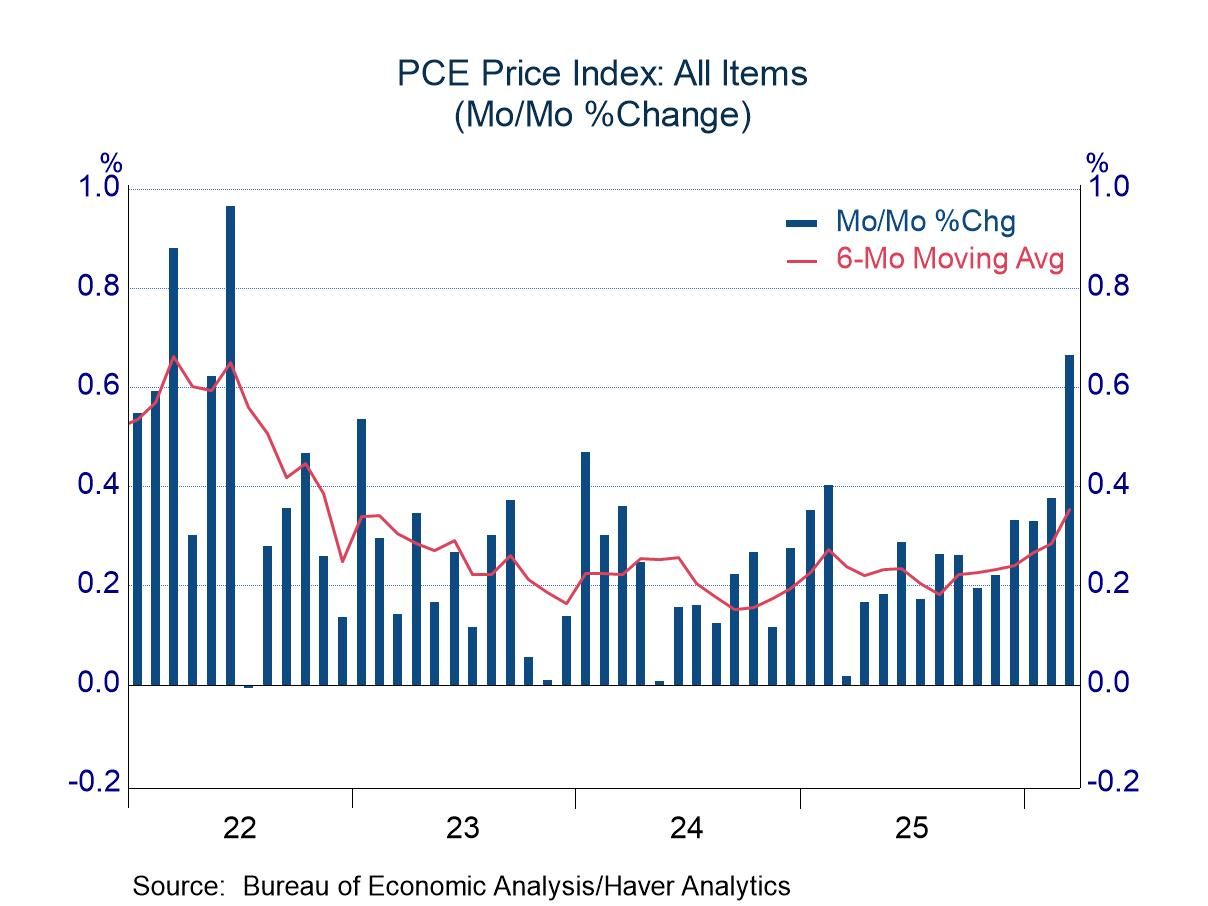
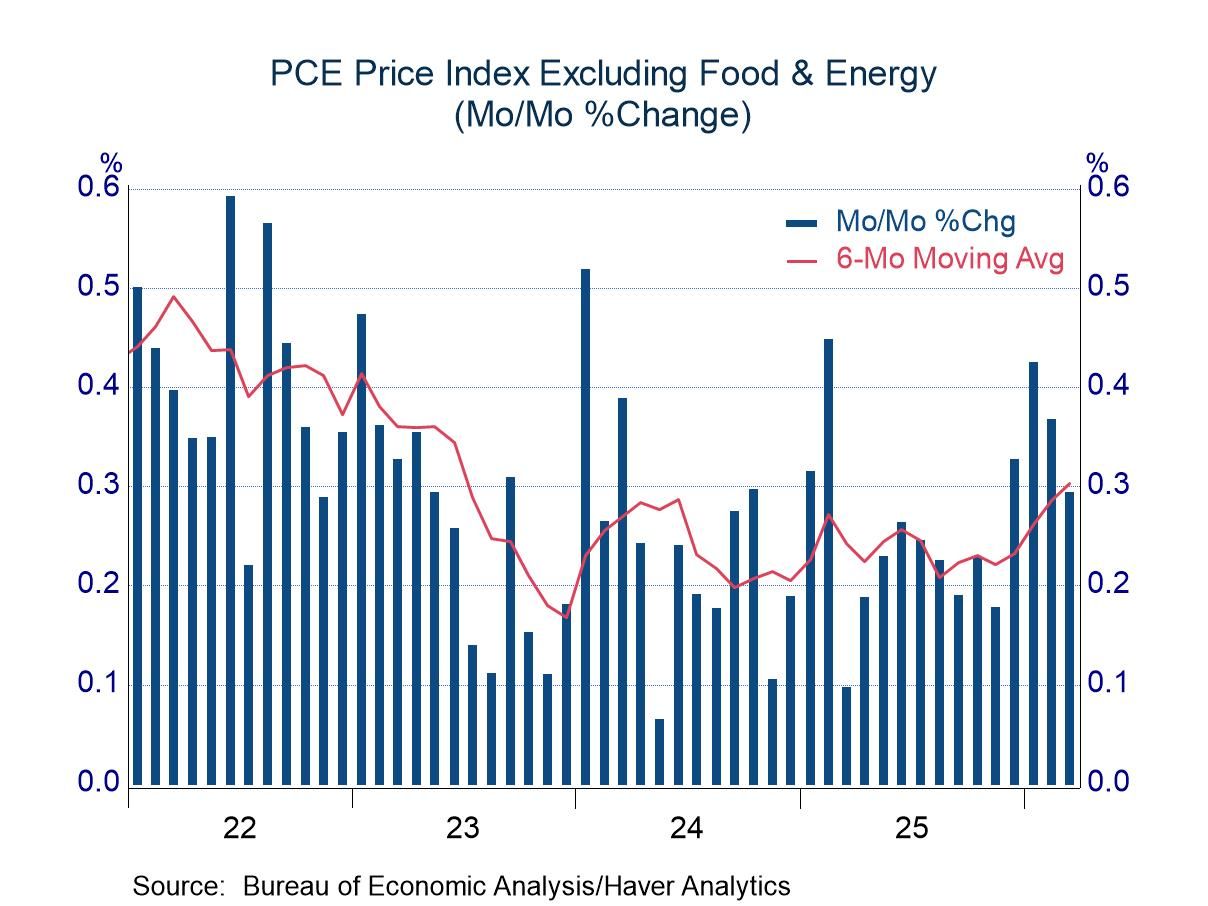
This monthly report contains a wealth of information concerning the state of the consumer. The anticipation ahead of today’s report centered on how much the surge in energy prices since the escalation of the US-Iran conflict in early March would push up overall PCE inflation. Prices of energy goods and services jumped 11.6% m/m not annualized in March. This was the largest monthly increase since September 2005. As a result, the headline PCE price index increased 0.7% m/m (3.5% y/y versus 2.8% y/y in February), the largest monthly gain since July 2022 but in line with expectations of the Action Economics Forecast Survey.
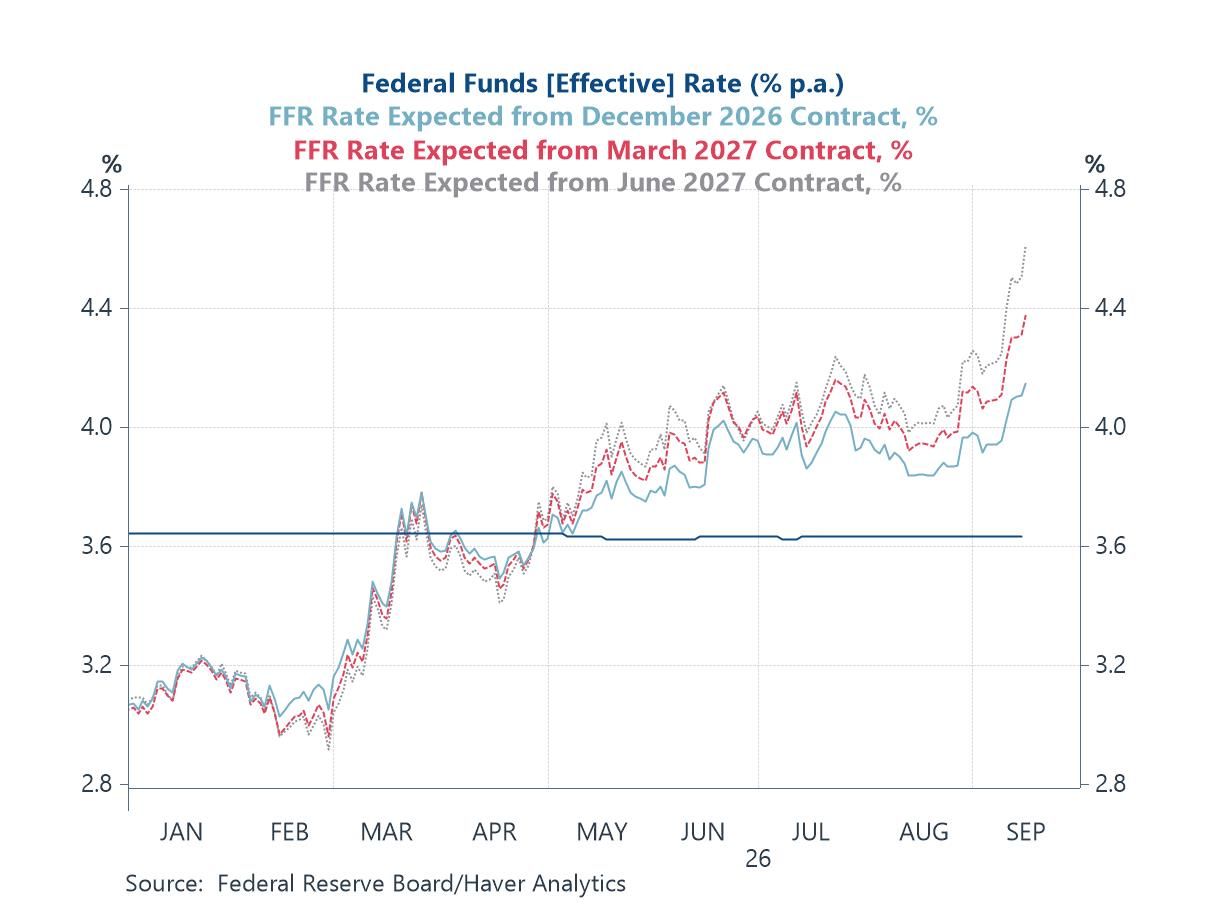
The core index (that is, excluding food and energy prices) rose by a more modest 0.3% m/m in March, down from a 0.4% monthly increase in February and in line with expectations. However, the yearly rate rose further to 3.2% y/y in March from 3.0% in February, well above and moving away from the Fed’s 2% target. The FOMC left its fed funds rate target unchanged at yesterday’s meeting, but some committee members dissented, opposing the implied easing bias contained in the statement. Chair Powell, in his press conference, noted that a number of members have become more concerned over the inflation outlook and the possible need for a Fed response.
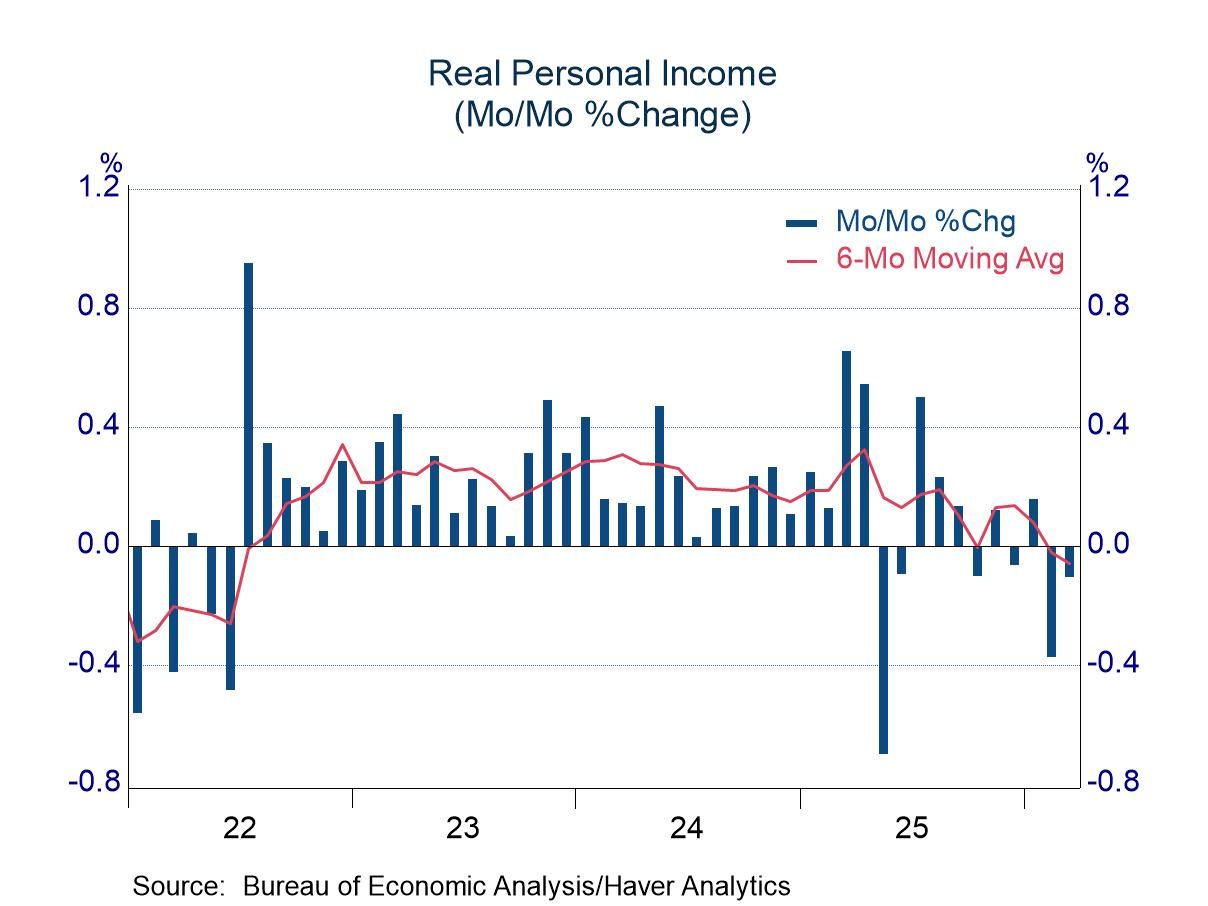
Nominal personal income posted a solid 0.6% m/m (3.7% y/y) increase in March following an upwardly revised unchanged reading in February (previously -0.1% m/m). The March increase was twice the 0.3% monthly gain expected by the Action Economics Forecast Survey. However, after adjusting for inflation, real personal income slipped 0.1% m/m in March on top of a 0.4% m/m decline in February.
Employee compensation continued to be a major driver of personal income in March. It rose 0.4% m/m (4.1% y/y) in March after a 0.2% monthly increase in February. In March, proprietors’ income jumped 2.8%. This outsized increase reflected payments to farmers from the federal government’s Farmer Bridge Assistance Program. Rental income rose a solid 0.7% m/m, the same gain as in February. Income from financial assets increased 0.4% m/m following a 0.9% m/m decline in February. Personal current transfer payments edged up 0.1% m/m versus a 0.3% m/m decline in February.
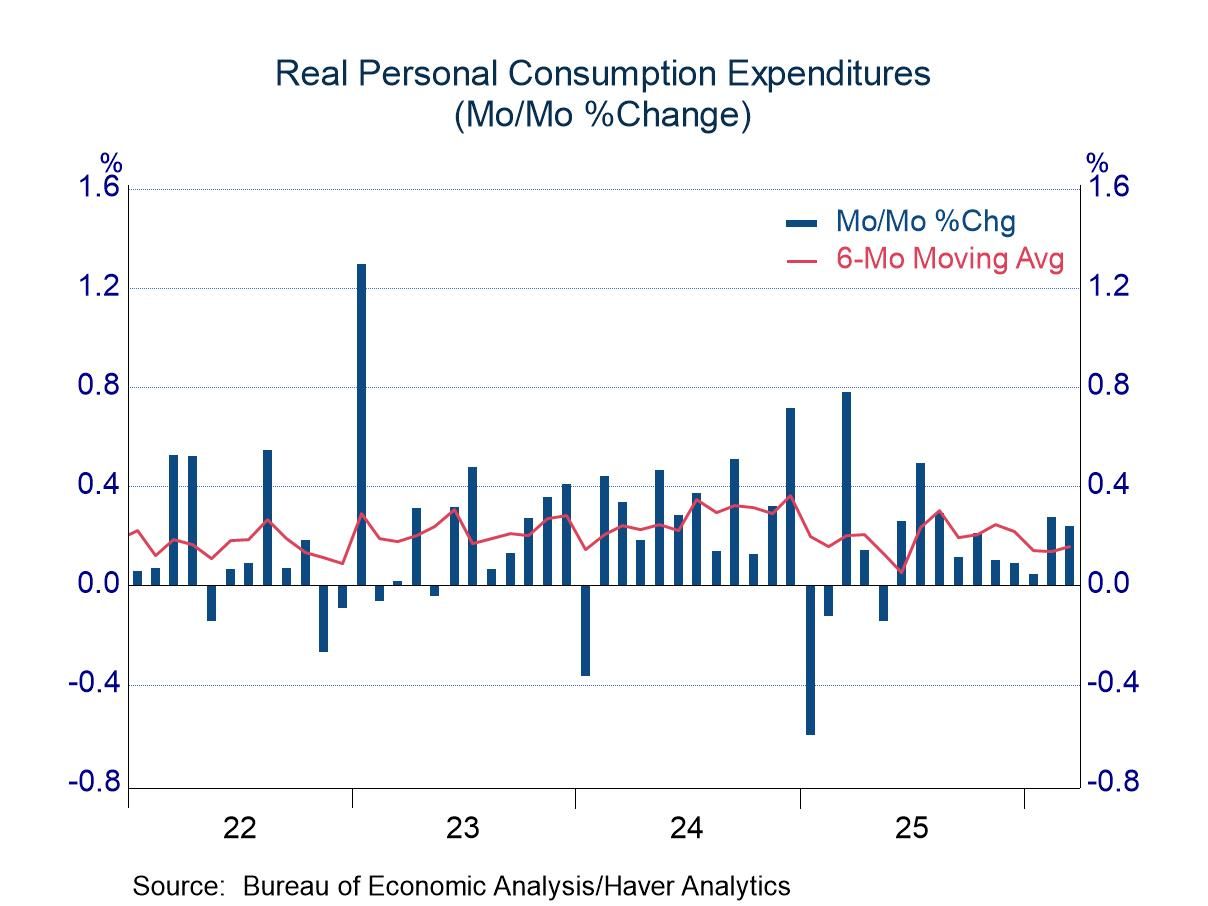
Nominal consumption expenditures jumped 0.9% m/m (5.7% y/y) in March following an upwardly revised 0.6% monthly gain in February (previously +0.5% m/m). Spending on goods rose 2.0% m/m (4.5% y/y) while spending on services increased 0.4% m/m (6.3% y/y). As for overall inflation, the surge in energy prices also accounted for a large portion of the March gain in nominal spending. After adjusting for overall inflation, real PCE rose a more modest 0.2% m/m following an upwardly revised 0.3% m/m increase in February (previously +0.1% m/m). Still, the solid gains in February and March provide a strong starting point for Q2. The March level is 1.5% at an annual rate above the Q1 average. For all of Q1, real PCE rose 1.6% q/q saar.
The personal income and consumption figures are available in Haver’s USECON database with detail in the USNA database. The Action Economics forecasts are in AS1REPNA.

Sandy Batten
AuthorMore in Author Profile »Sandy Batten has more than 30 years of experience analyzing industrial economies and financial markets and a wide range of experience across the financial services sector, government, and academia. Before joining Haver Analytics, Sandy was a Vice President and Senior Economist at Citibank; Senior Credit Market Analyst at CDC Investment Management, Managing Director at Bear Stearns, and Executive Director at JPMorgan. In 2008, Sandy was named the most accurate US forecaster by the National Association for Business Economics. He is a member of the New York Forecasters Club, NABE, and the American Economic Association. Prior to his time in the financial services sector, Sandy was a Research Officer at the Federal Reserve Bank of St. Louis, Senior Staff Economist on the President’s Council of Economic Advisors, Deputy Assistant Secretary for Economic Policy at the US Treasury, and Economist at the International Monetary Fund. Sandy has taught economics at St. Louis University, Denison University, and Muskingun College. He has published numerous peer-reviewed articles in a wide range of academic publications. He has a B.A. in economics from the University of Richmond and a M.A. and Ph.D. in economics from The Ohio State University.
More Economy in Brief
 Global