October Housing Starts: A Surprising Gain, but a Still-Soft Trend
Summary
- Multi-family starts surge and single-family starts improve…
- …but underlying averages are tilting downward
- Building permits soften
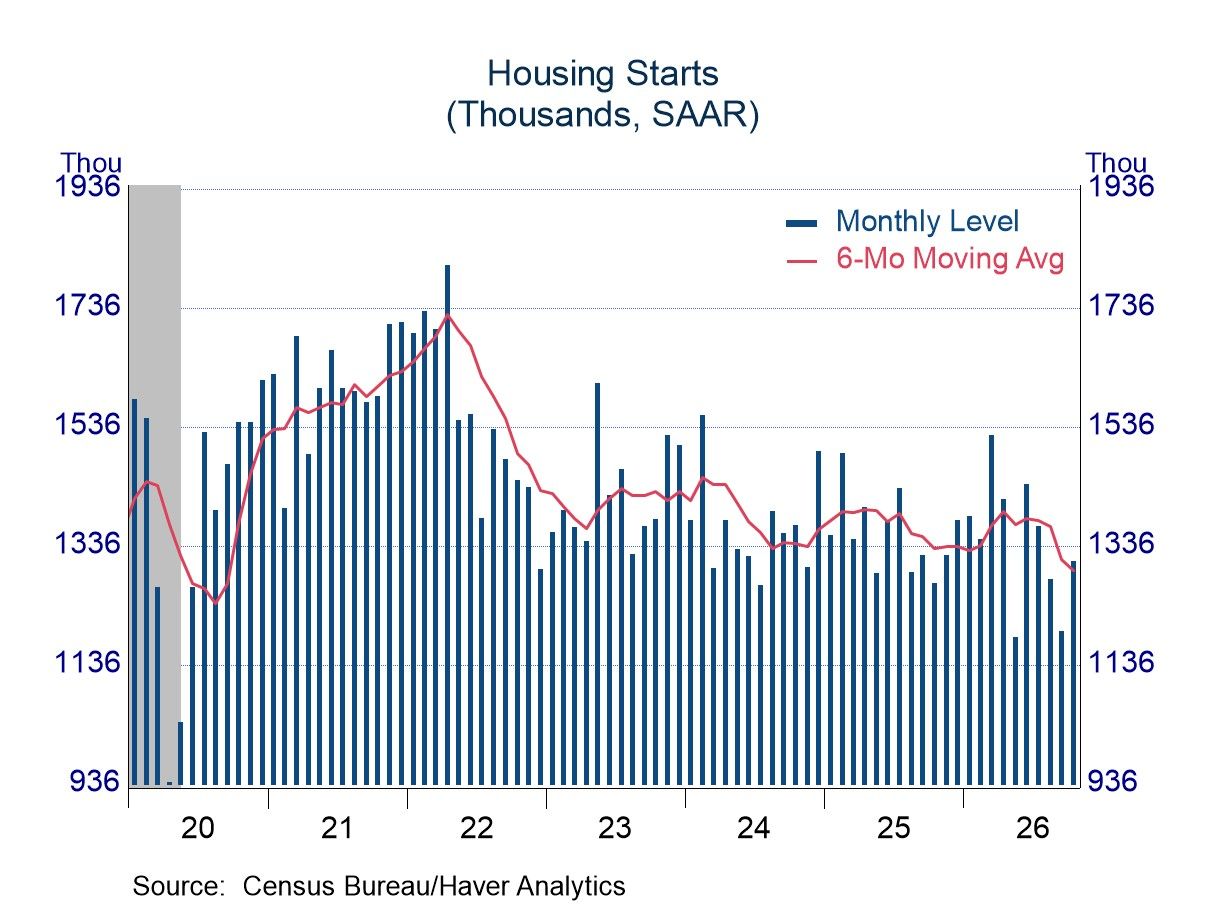
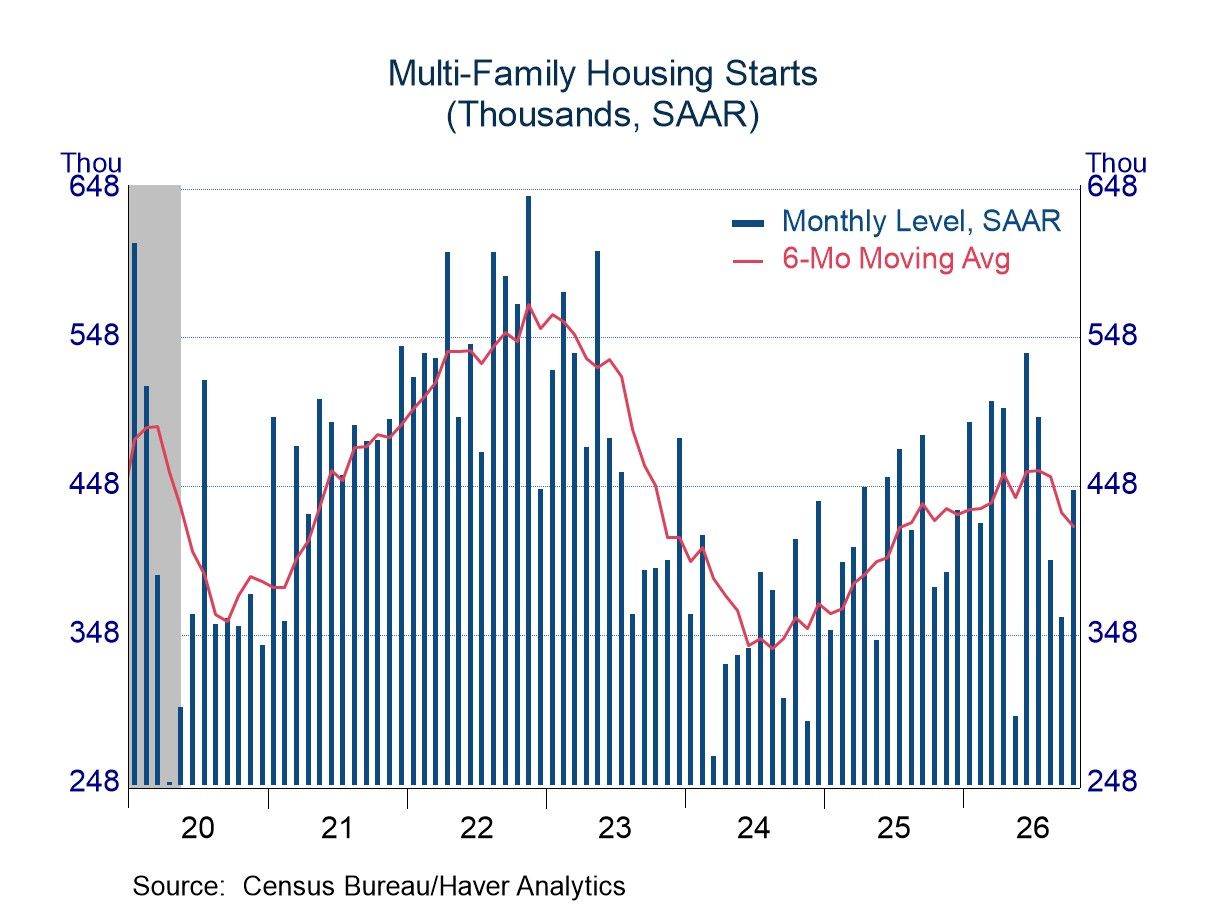
Housing starts jumped 9.9% in October, far exceeding the expected increase of 1.6%. The jump occurred from a downward-revised level in the prior month (2.5% lower than previously believed), but the new level of 1.309 million units still easily exceeded the consensus estimate of 1.24 million units from Action Economics. Most of the increase in total starts occurred in the multi-family sector, which surged 23.6%. This component sometimes shows marked swings, and the change occurred from a soft reading in September. Thus, the increase could be viewed as a case of random volatility. A downward tilt in the six-month moving average of multi-family starts reinforces the view that the October jump primarily reflected statistical noise (chart, upper right).
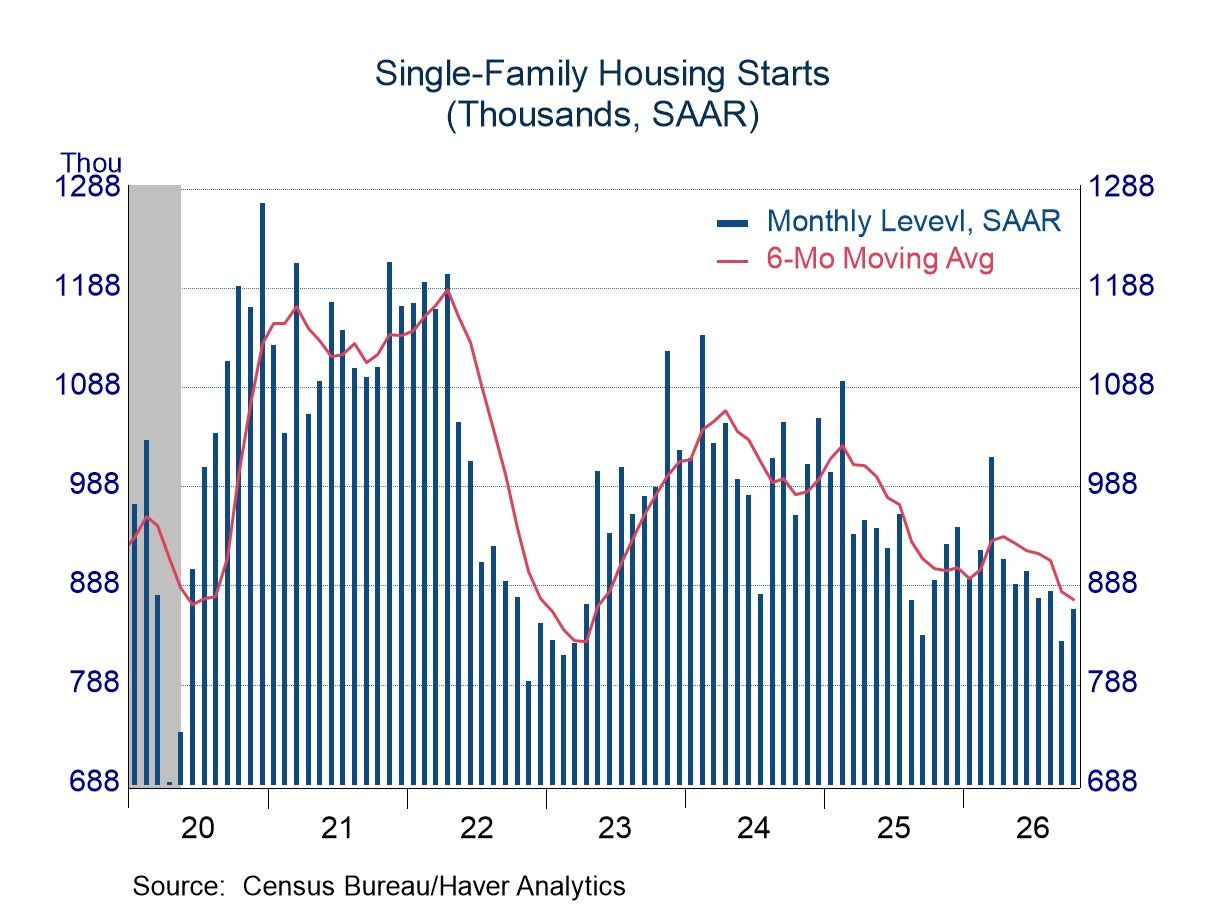
Single-family starts rose 4.0% in October, an apparently solid gain. However, nearly all of the downward revision to previous results occurred in the single-family area, which makes the latest increase less impressive. Indeed, the level of single-family starts in October was the second-lowest of the year, better than only the September observation. The downward trend in single-family activity also signals softness (chart, lower left).
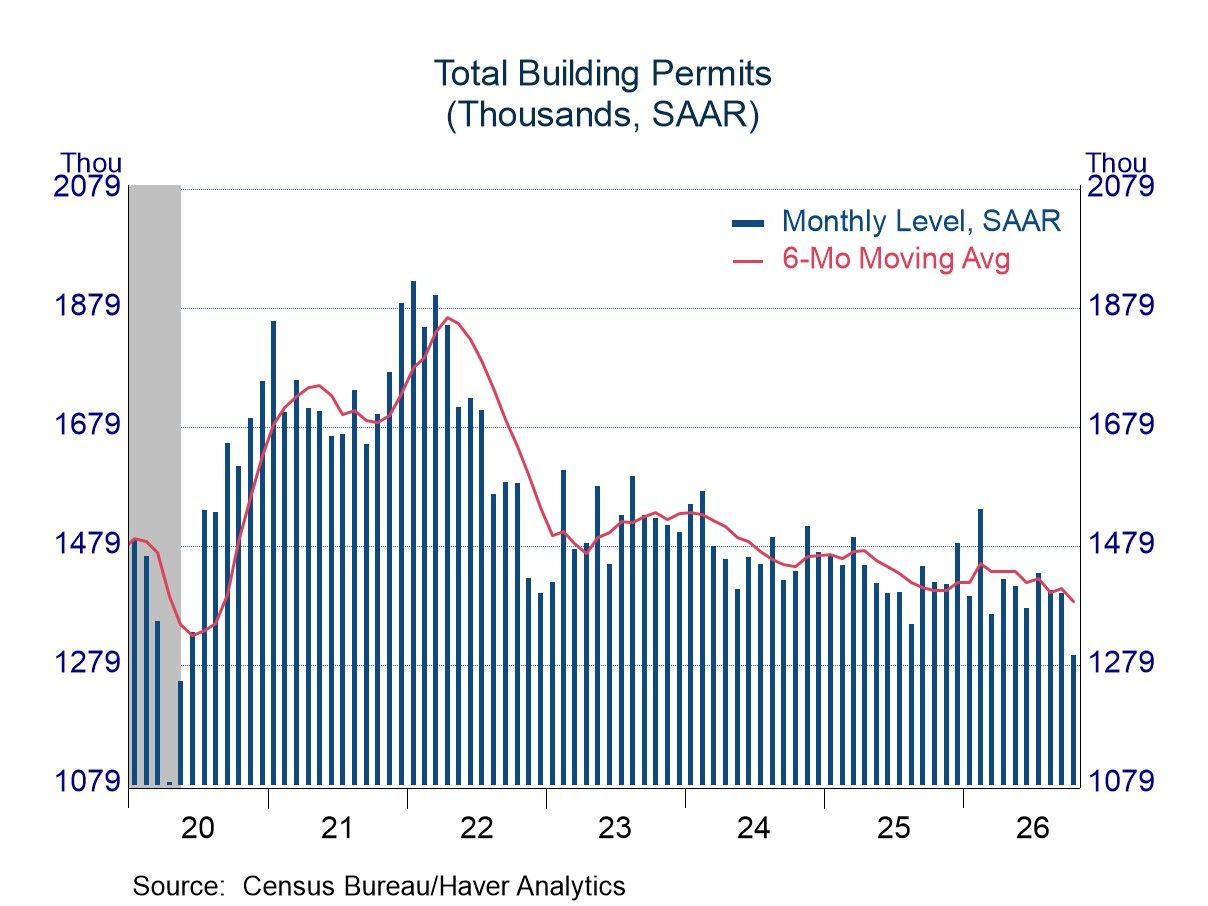
Many analysts focus on building permits because they are less volatile than starts and therefore provide a clearer view of underlying trends. Permits posted a sharp decline (-7.4%), with both single-family and multi-family components contributing. Single-family permits showed the sharper change: off 8.7% versus a decline of 5.3% for multi-family permits.
Housing has been a soft area for the economy in the past few years, with private residential construction making negative contributions to GDP growth in eight of the past 10 quarters (and minuscule positive contributions in the other two quarters). The latest results on housing starts suggest that the soft performance will continue.

Michael J. Moran
AuthorMore in Author Profile »Before joining Haver Analytics in 2025, Michael J. Moran was the chief economist of Daiwa Capital Markets America Inc. He was responsible for preparing the firm’s economic forecast and interest rate outlook. He traveled frequently to visit the clients of Daiwa Capital Markets and wrote weekly economic commentary. Mr. Moran also was involved in the flux of financial markets, as he spent a portion of each day on Daiwa’s trading floor interpreting economic statistics and Federal Reserve activity for traders and salespeople. Mr. Moran is quoted frequently in the financial press, and he appears regularly on cable news shows. He also has published articles in several journals and periodicals. Before joining Daiwa Capital Markets America, Mr. Moran worked as an economist at the Federal Reserve Board in Washington, D.C. where he analyzed a broad range of issues dealing with the financial sector of the economy and regularly briefed the Board of Governors. He was on the faculty of Pennsylvania State University from 1979 to 1980 and taught on a part-time basis at George Washington University from 1980 to 1987.
Mr. Moran received his Ph.D. in economics from Pennsylvania State University in 1980 and a B.S. in business administration from the University of Bridgeport in 1975. He was a CFA charter holder from 2002 until 2016.
More Economy in Brief