Asia| Jul 20 2026
Economic Letter from Asia: Two Speed Ahead
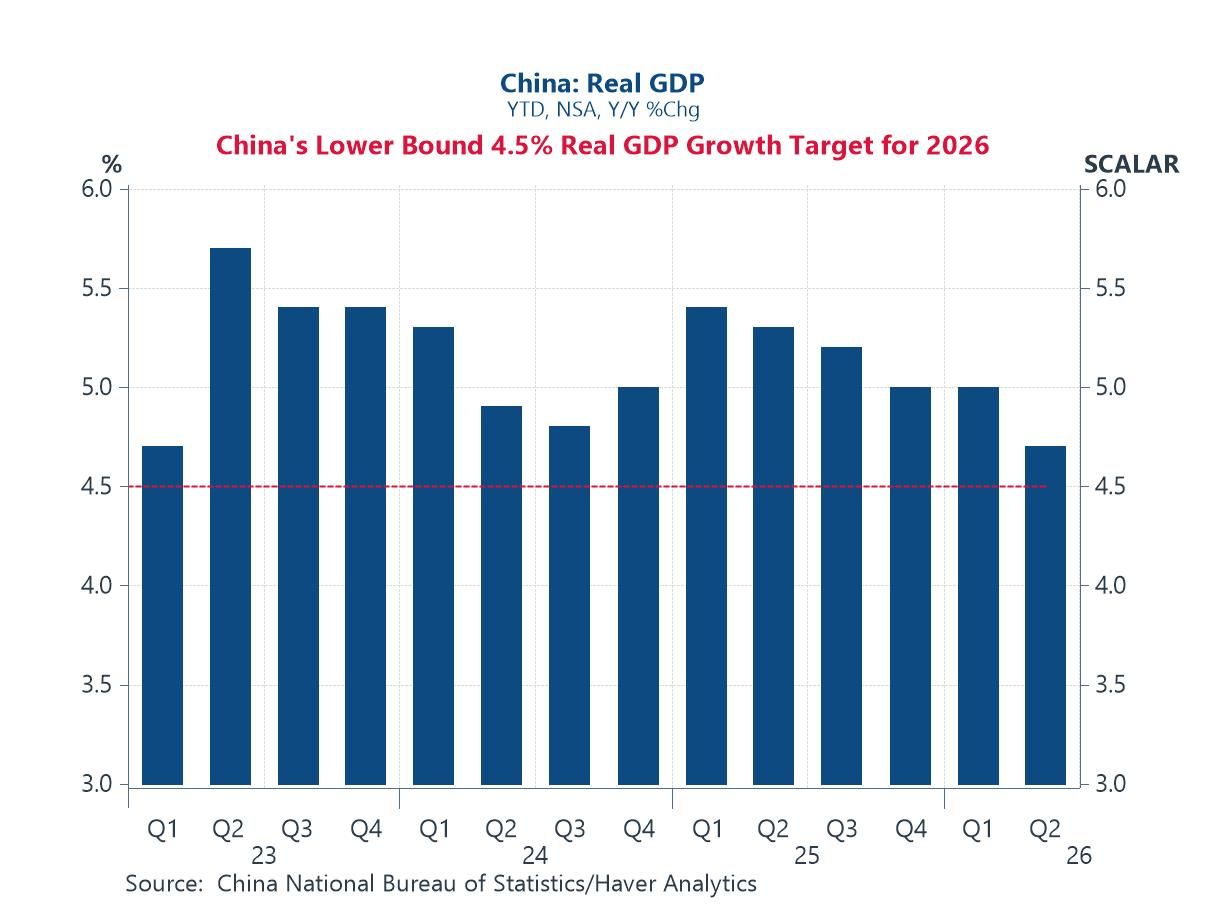
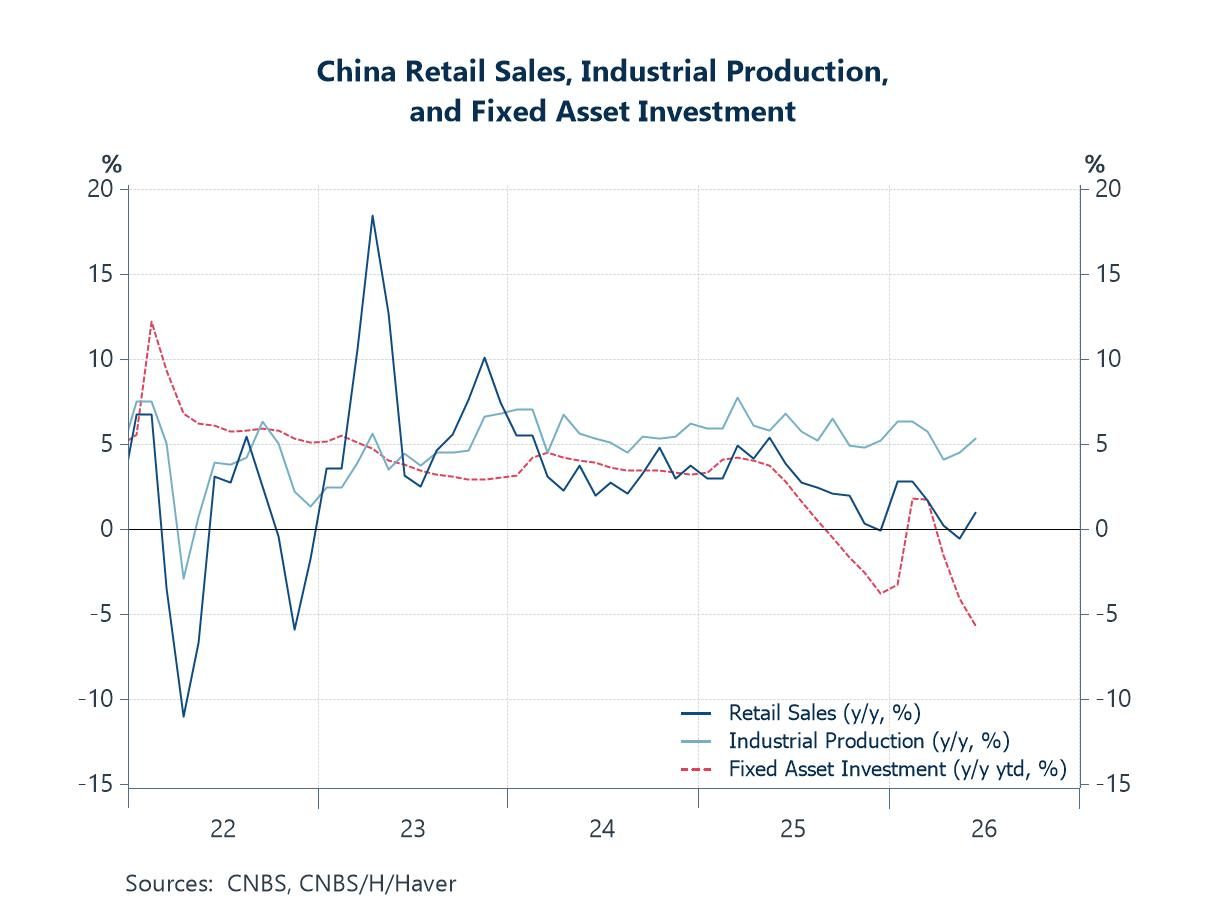
In this week's Letter, we examine China's increasingly two-speed economy, where robust AI-driven exports mask faltering domestic demand and a stalled rebalancing. Q2 GDP growth slowed to 4.3% y/y from 4.8%, dragging the year-to-date (ytd) rate towards the lower bound of its 4.5% to 5% target (chart 1). Beneath the headline, a two-speed split has widened, with external-oriented sectors holding up while more inward-focused prints such as retail sales and fixed asset investment weaken (chart 2).
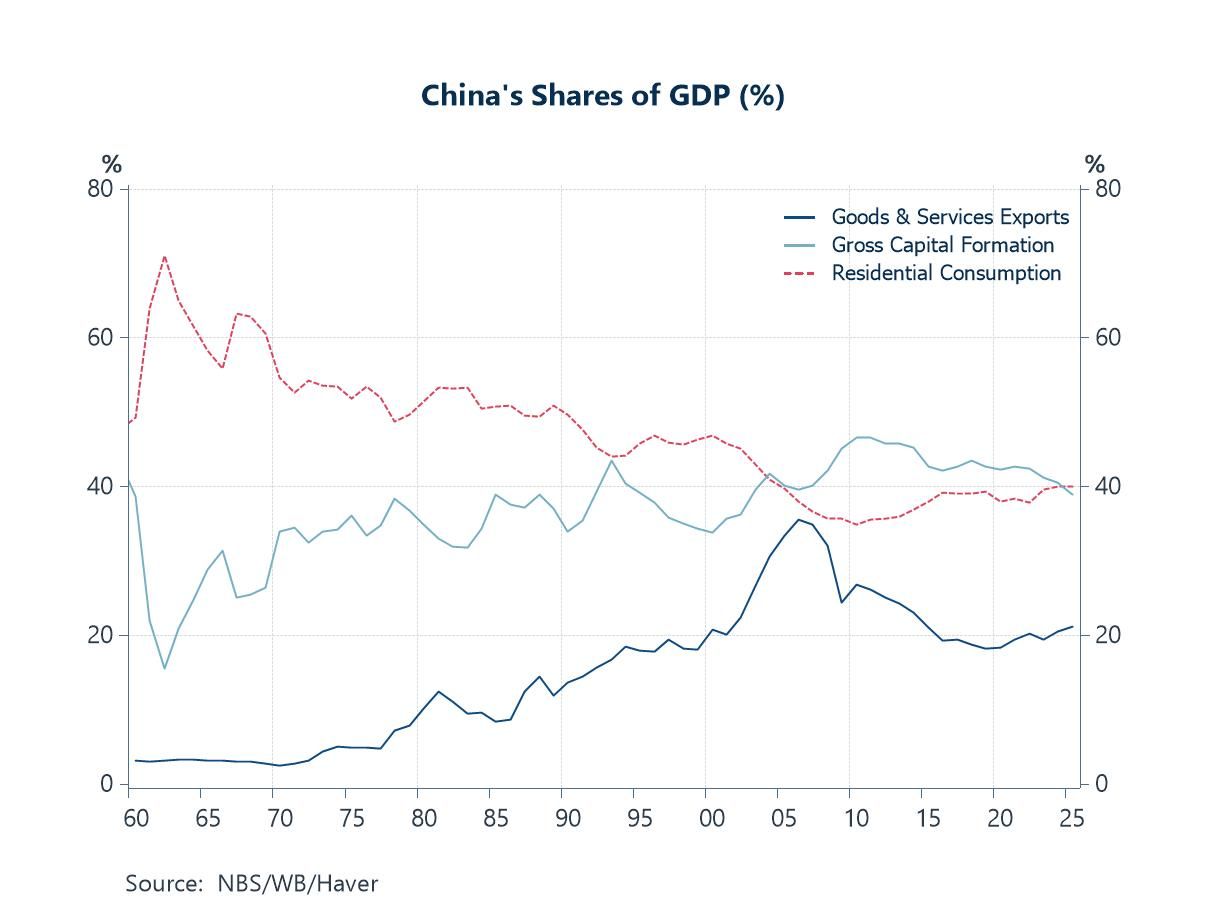
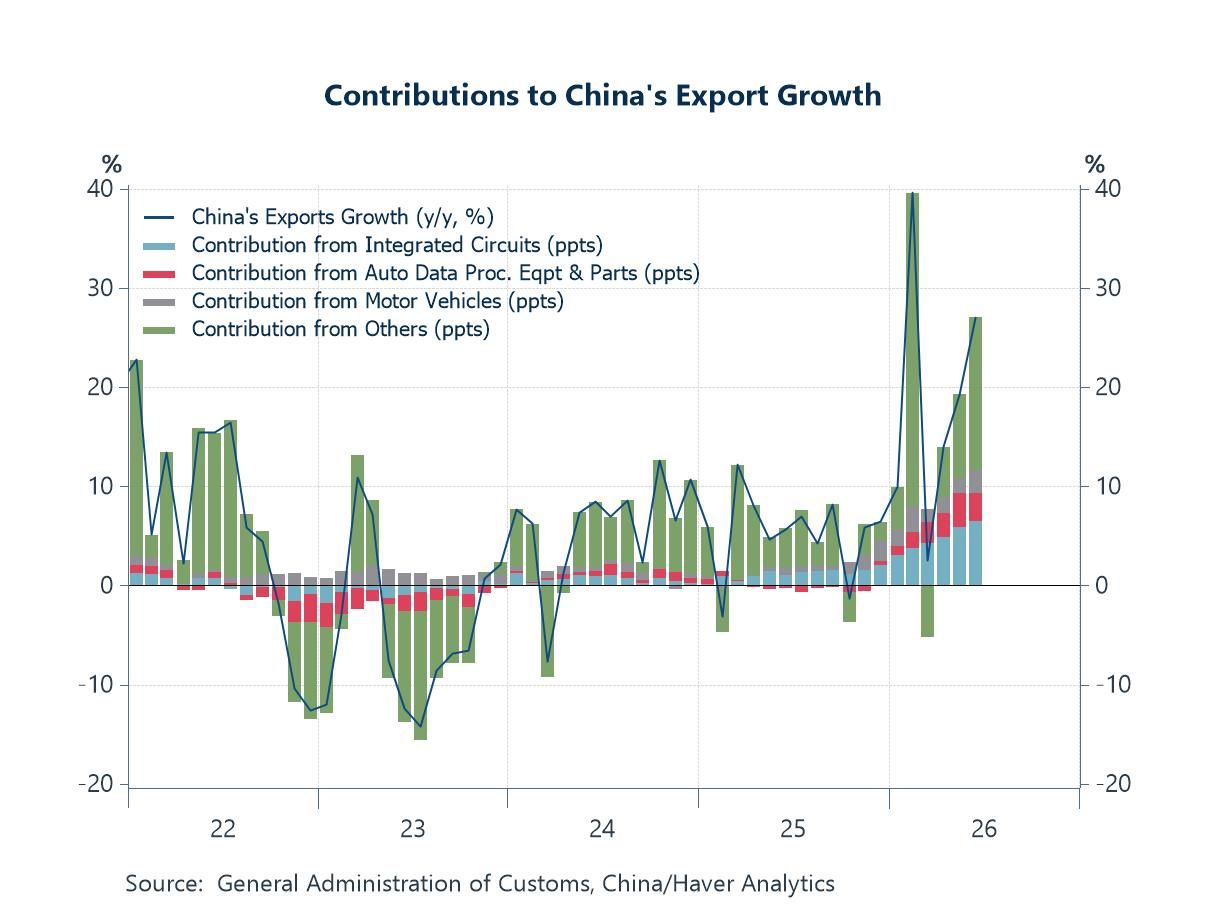
Exports have kept climbing even as rebalancing stalls, with the export share of GDP rising to about 21% and consumption stuck near 40% (chart 3). With consumption hard to lift, tilting away from exports would sacrifice China's main growth driver, making rebalancing a difficult path. That export strength owes much to the AI boom, as integrated circuits added nearly 6.5 ppts to June's 27% y/y growth (chart 4). Part of the surge, though, likely reflects importer front-loading ahead of expected tariff hikes and the coming holiday seasons. Domestically, however, growth in retail sales had floundered, dragged down by autos, furniture and appliances, while trade-in subsidies likely delivered only one-off, front-loaded gains (chart 5). All while a fragile consumer climate, unsettled by the ongoing property crisis, continues to hold spending back. That crisis runs deep, with property price declines now into a fifth year and no clear bottom in sight (chart 6).
China’s Q2 GDP China's Q2 GDP results disappointed when posted last week, with growth slowing to 4.3% y/y from Q1's 4.8%. That drop dragged the y/y ytd growth rate towards the lower bound of the 4.5% to 5% target for the year (chart 1). The reading followed a run of soft monthly data, leaving investors increasingly concerned about domestic growth. Even so, China continues to benefit from more robust growth in its externally oriented sectors. This increasingly two-speed dynamic, alongside a persistent lack of economic rebalancing, remains a concern for investors. It has left them looking to Chinese authorities for signs of fresh stimulus to keep the economy on track for its full-year target. We return to these themes in later sections.
Chart 1: China’s year-to-date GDP growth and 2026 growth target lower bound
China’s two-speed economy China's two-speed economy is captured in chart 2, where externally oriented sectors have held up comparatively well. They are proxied here by data for export-heavy industrial production growth. The inward, domestically oriented readings of retail sales and fixed asset investment have fared markedly worse. Retail sales growth deteriorated to the point of posting declines in May this year, despite multiple rounds of government-led incentives to spur consumption. On fixed asset investment, y/y ytd figures have sat in negative territory for months. That followed only a brief period of growth earlier this year. It underscores how weak investment flows have become, largely hit by China's protracted property slump.
Chart 2: China growth in retail sales, industrial production, and fixed asset investment
Exports and related sectors have continued to enjoy robust growth, helped in part by strong demand for AI-related goods, even as domestically oriented sectors falter. Rebalancing towards consumption was a resurgent initiative touted by authorities last year. Instead, China's export share of nominal GDP rose again in 2025, to about 21% (chart 3). The share of residential consumption, meanwhile, has been broadly unchanged at 40%. However, China's gross capital formation share of GDP has continued its downward trend, to about 39%. Against that backdrop, rebalancing looks hard to pursue now, especially if consumption growth cannot be reliably and sustainably boosted. Without that support, the burden of adjustment falls on exports. Paring them back would sacrifice the main growth driver, with little ready to replace it.
Chart 3: China’s shares of GDP
China’s exports Delving deeper into exports, chart 4 shows how far the current AI boom has driven China's recent export growth. Integrated circuits accounted for only about 7% of China's goods exports over the past 12 months. Yet these goods, central to the global AI buildout, have contributed in outsized fashion to export growth in recent months. In June, they added nearly 6.5 percentage points to China's 27% y/y export growth. Other notable contributors include automatic data processing machines and parts, and motor vehicles. Part of the recent surge, however, also likely reflects importer front-loading, ahead of expected tariff hikes on China and the approaching holiday seasons. Even so, with this boom in place, exports have become just about the only significant growth driver China can lean on, amid a faltering domestic economy.
Chart 4: Contribution to China export growth
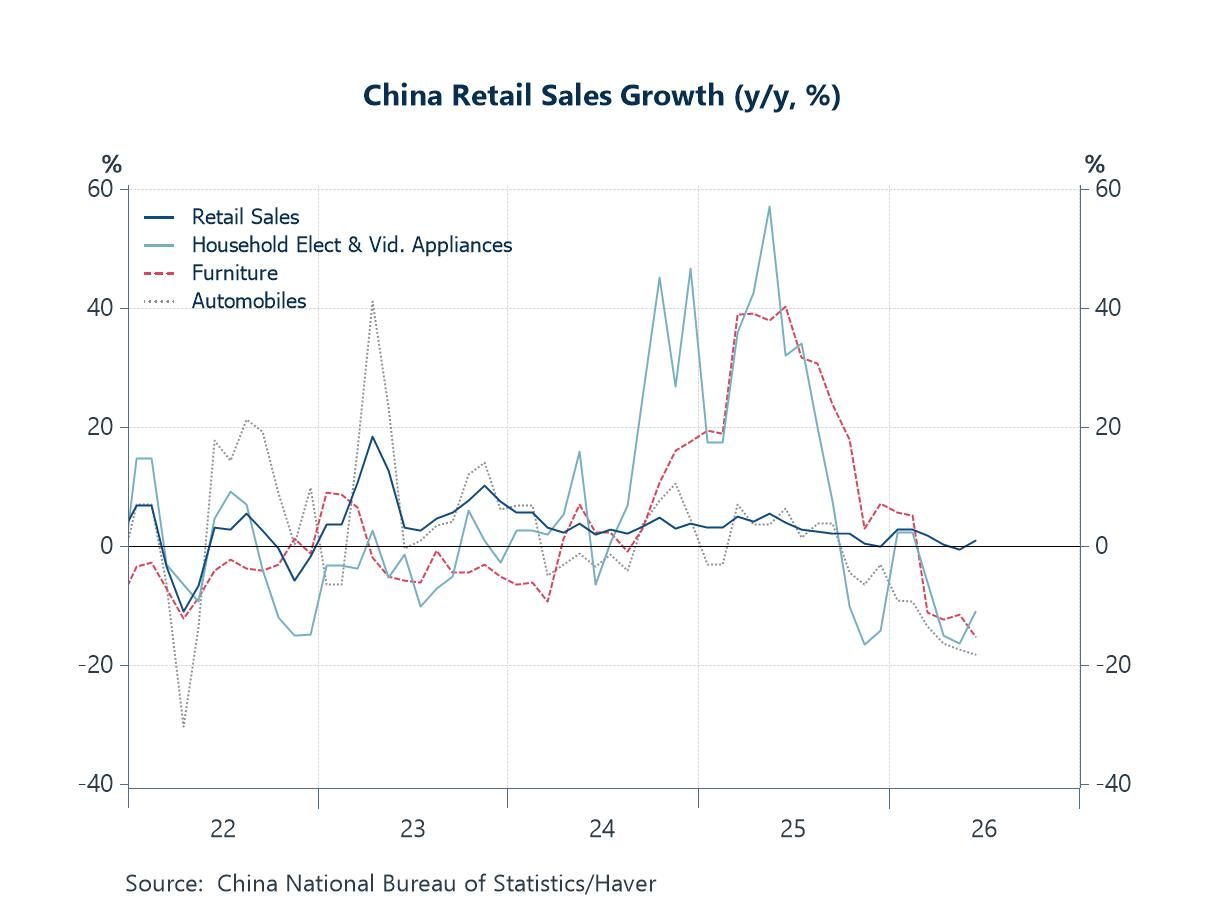
China’s domestic sector On the flip side, more domestically oriented sectors, captured by prints such as retail sales, have been floundering. Digging beneath the headline, chart 5 shows that the recent lacklustre performance has been dragged down by a few select sectors. Chief among them are automobiles, furniture and household appliances. These slumps have come in spite of recent government measures to spur consumption, such as trade-in subsidies. Admittedly, measures like these likely delivered only one-off effects, front-loading demand from the outset. That payback can be seen in this year's numbers. Also weighing on retail sales is a fragile consumer climate, unsettled in part by China's ongoing property crisis. That crisis, among other factors, continues to hold consumers back from spending more freely.
Chart 5: China retail sales growth
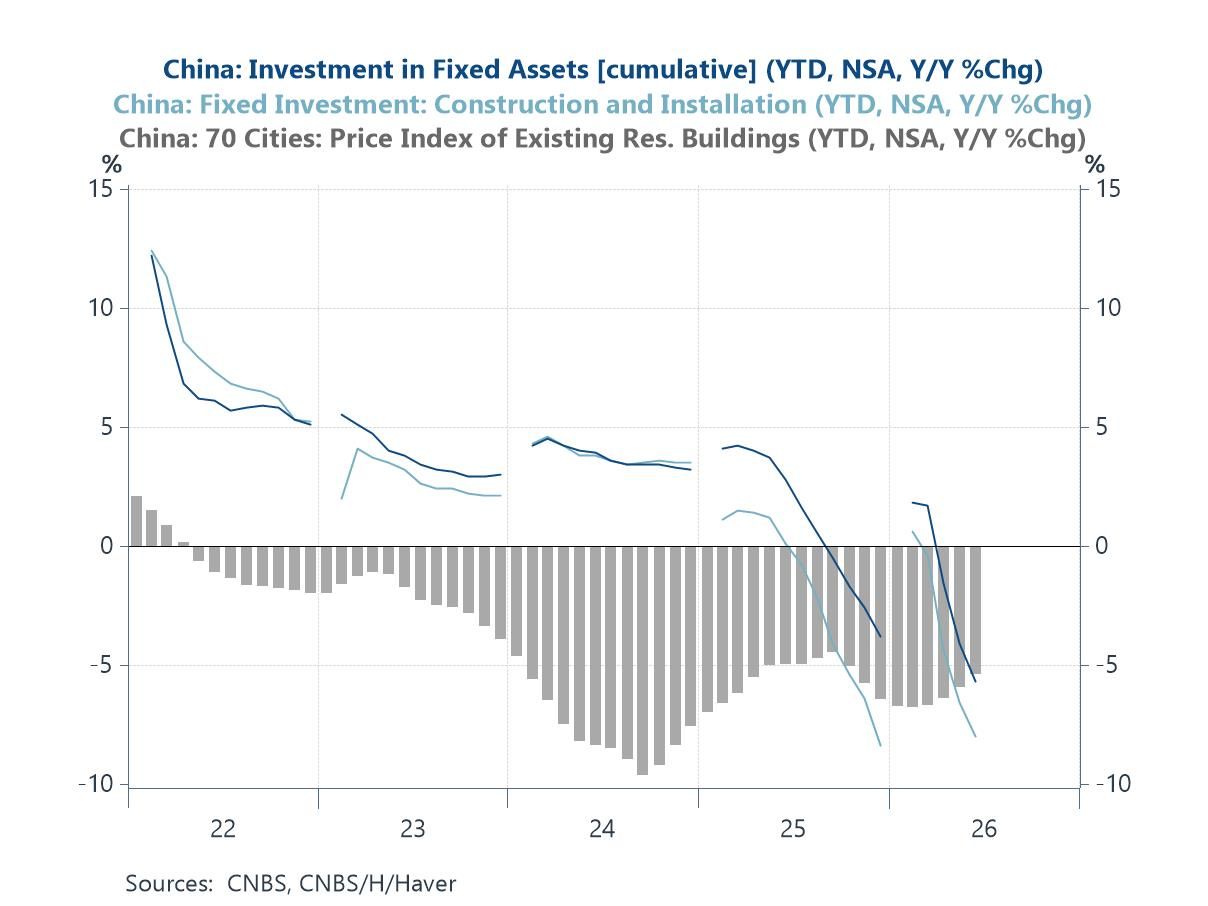
Turning to the property market, chart 6 shows that China's price declines have now stretched into a fifth year, with a bottom still too unclear to call. The dampening effects have fed through to other figures, running from wealth effects on consumer sentiment and spending to weaker demand for new residential building, which in turn drags on construction-related investment and employment. In a way, though, this painful and gradual unravelling is arguably what the market needs, shifting the sector away from its speculative past. There have been some signs that the bulk of the pain may have passed, such as smaller price declines, though these remain disparate across cities and unevenly spread. So while there have been city-specific measures to stem further fallout, nationwide stimulus to revive the sector looks unlikely for now.
Chart 6: China fixed-asset investment and property prices

Tian Yong Woon
AuthorMore in Author Profile »Tian Yong joined Haver Analytics as an Economist in 2023. Previously, Tian Yong worked as an Economist with Deutsche Bank, covering Emerging Asian economies while also writing on thematic issues within the broader Asia region. Prior to his work with Deutsche Bank, he worked as an Economic Analyst with the International Monetary Fund, where he contributed to Article IV consultations with Singapore and Malaysia, and to the regular surveillance of financial stability issues in the Asia Pacific region.
Tian Yong holds a Master of Science in Quantitative Finance from the Singapore Management University, a Master of Science in Analytics from the Georgia Institute of Technology, a Bachelor of Science in Mathematics from the Singapore University of Social Sciences, and a Bachelor of Science in Banking and Finance from the University of London.
More Economy in Brief