Asia| Oct 26 2026
Economic Letter from Asia: Decisions, Decisions
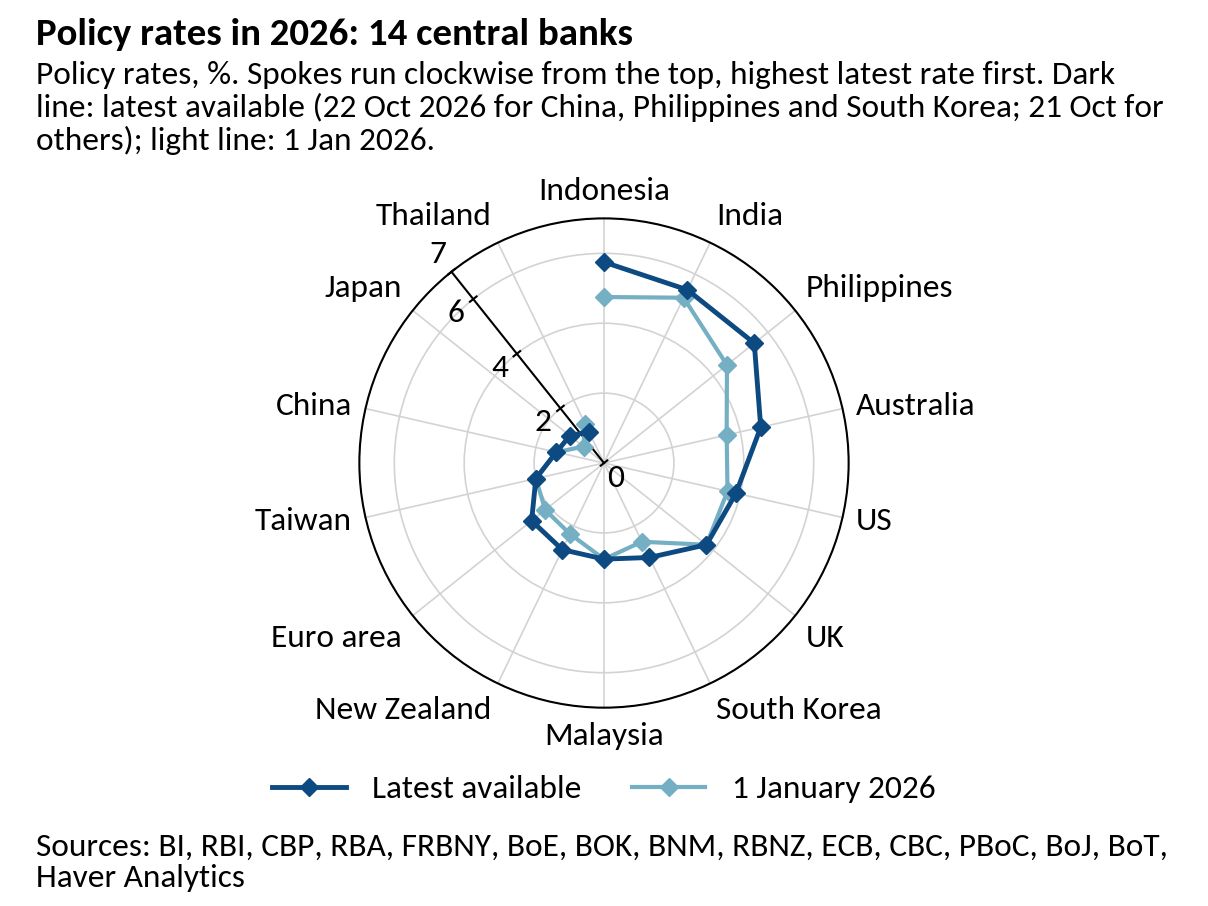
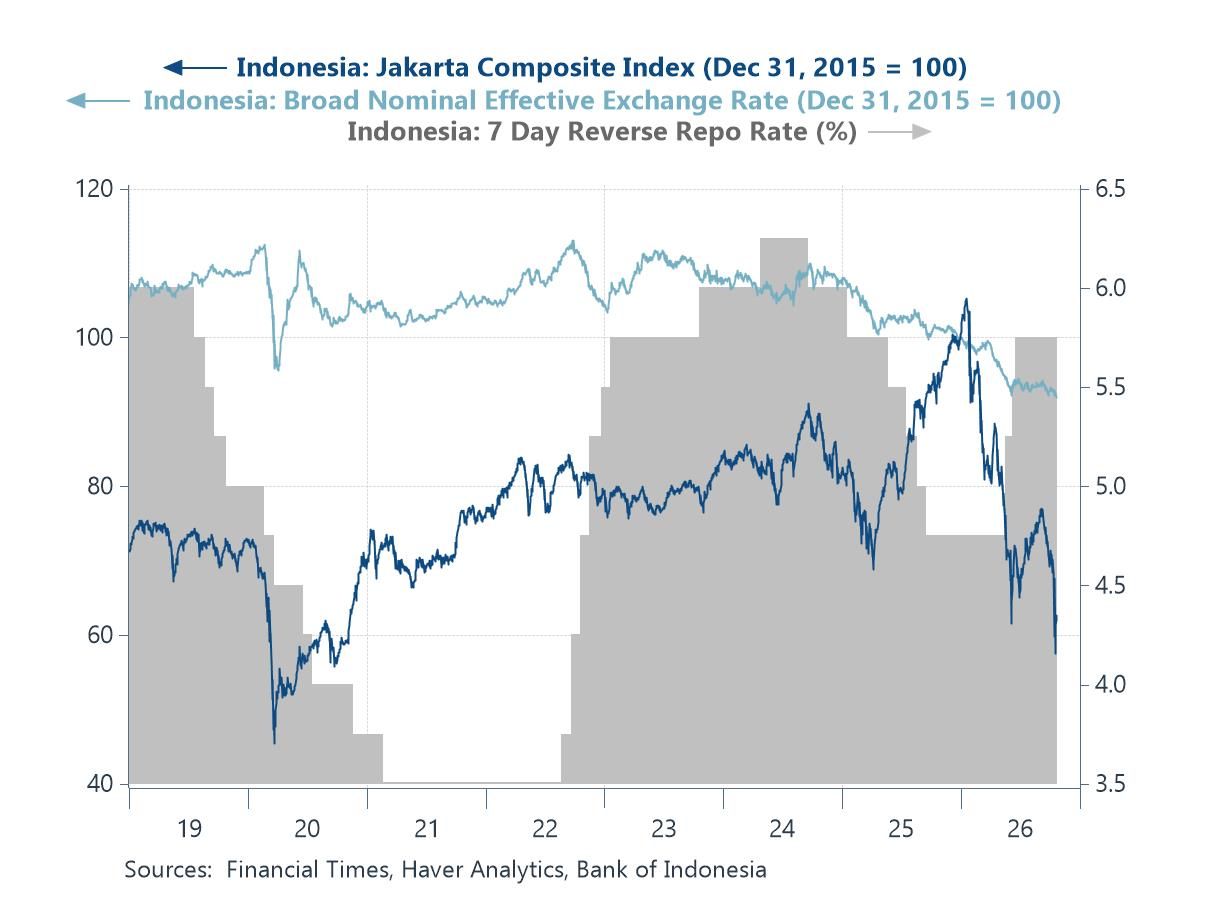
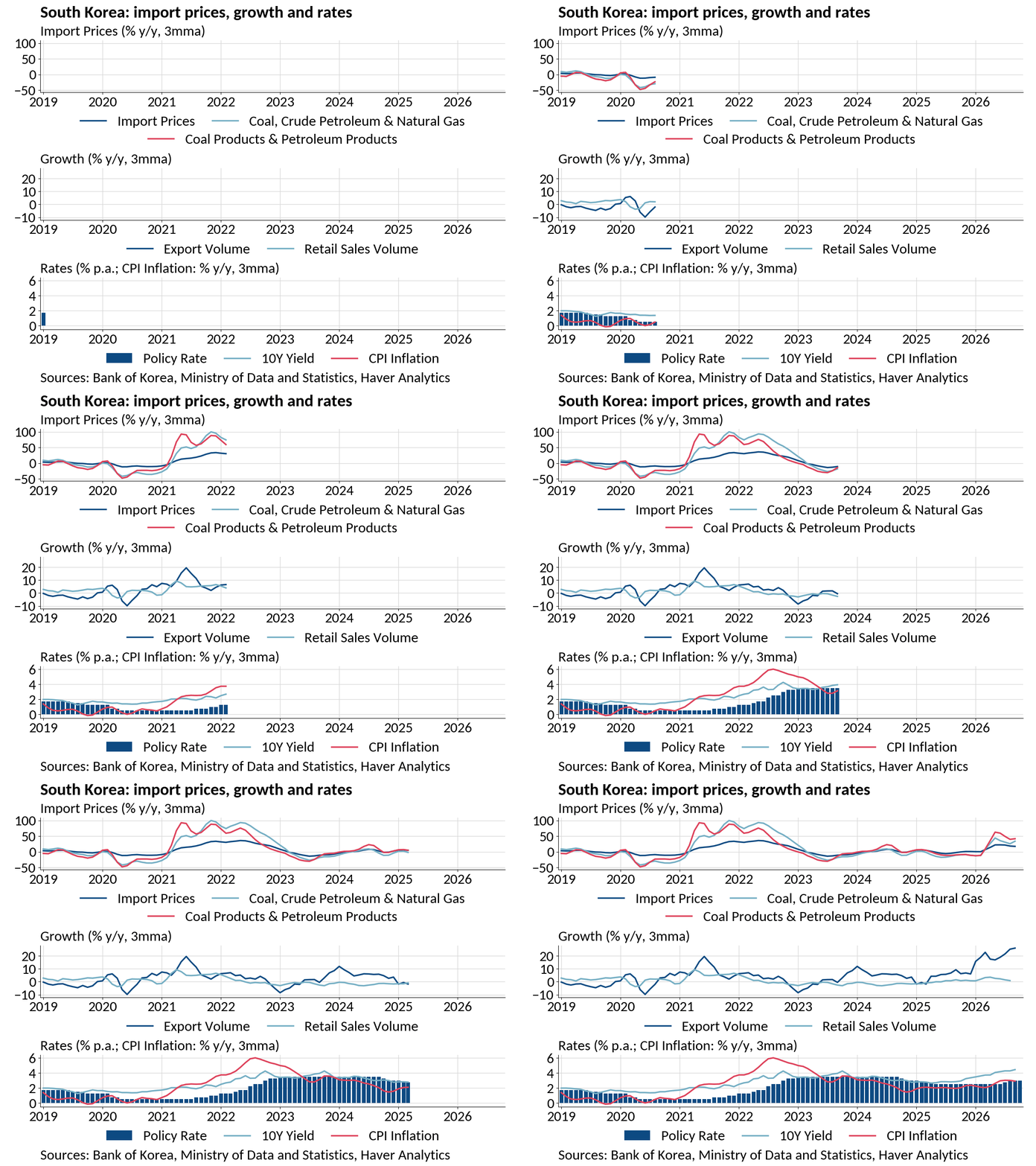
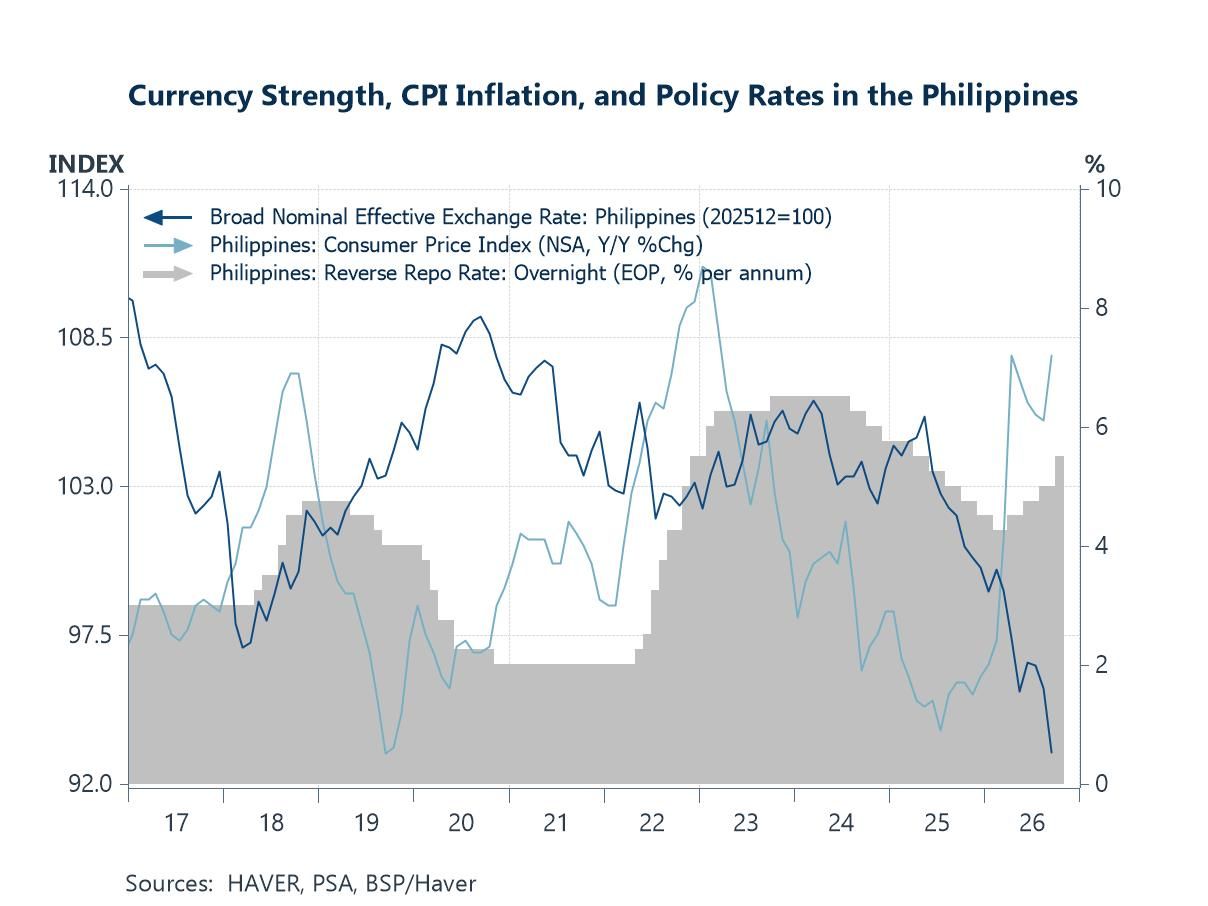
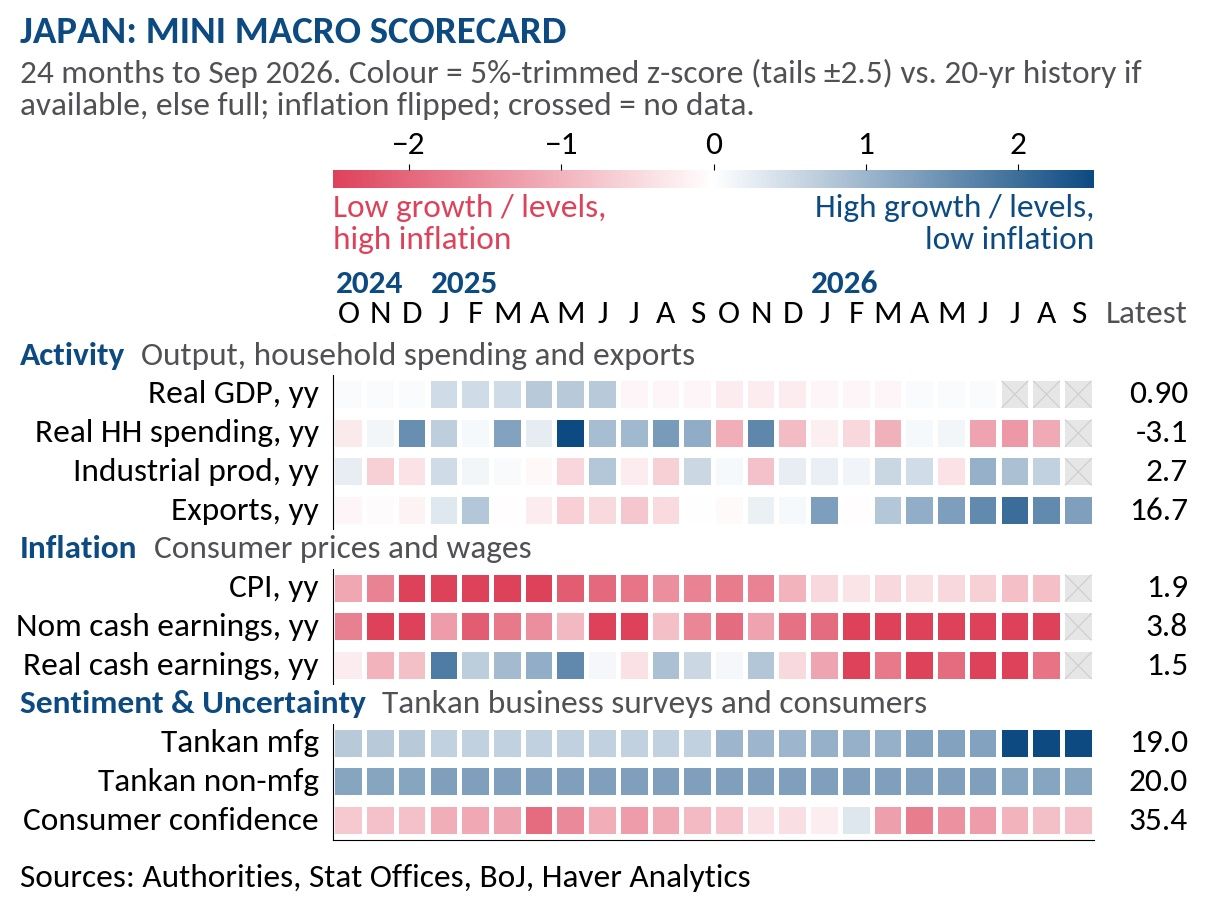
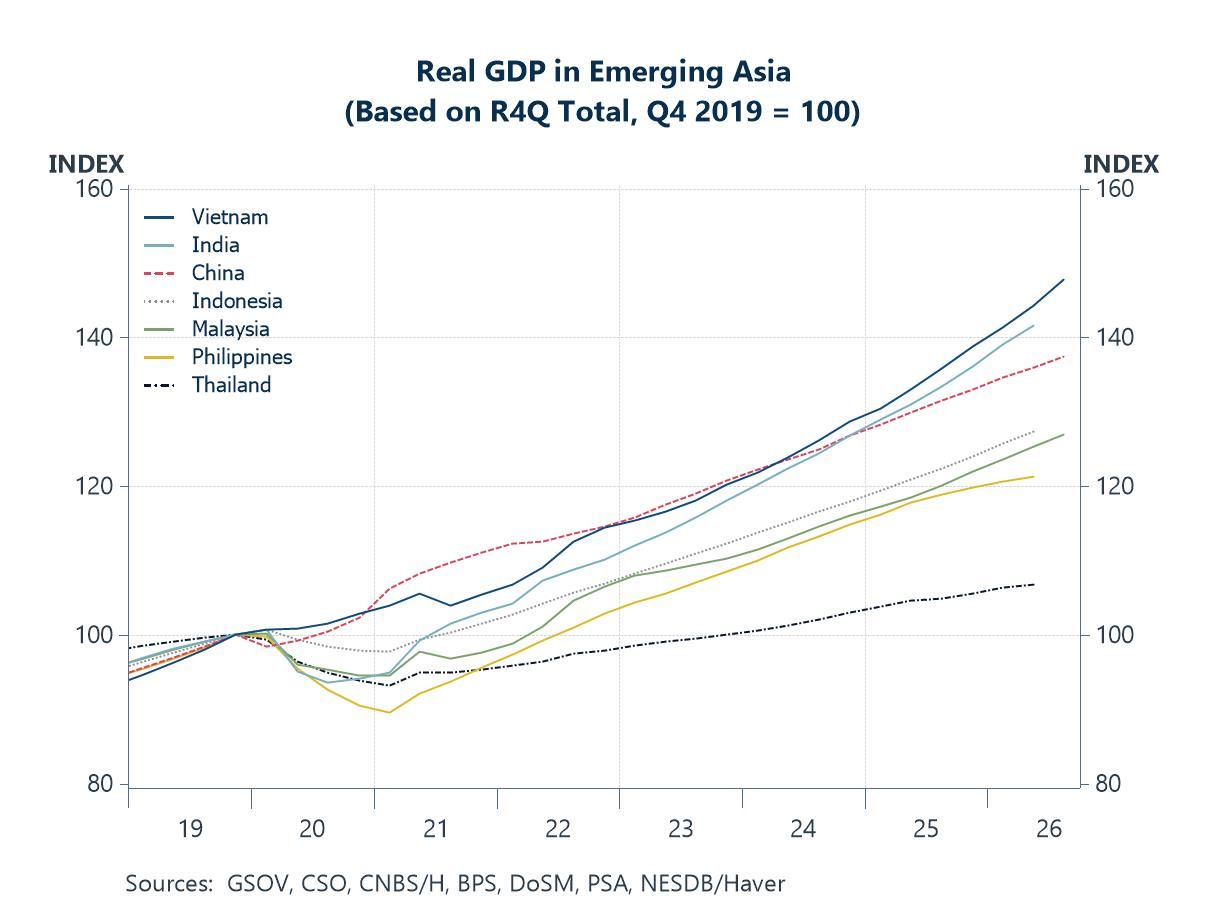
In this week’s Letter, we take stock of a busy run of central bank decisions across Asia, as most of the region tightens in the face of an oil-driven inflation shock. So far this year, most central banks in the region have raised rates (chart 1). The US-Iran conflict, a renewed Fed hiking cycle and domestic pressures have driven this, with Thailand the clear exception. In Indonesia, BI held its benchmark rate at 5.75% but raised its deposit facility rate and cut reserve requirements (chart 2). Indonesian assets remain under heavy pressure, with equities hit further by MSCI’s potential downgrade to standalone status. In South Korea, the BoK paused at 3.00% after hikes in July and August, with markets eyeing November for another move. Yet much of its inflation is imported and its growth export-led, so the headline data may overstate its room to tighten (chart 3). The Philippines faces a harder trade-off. The BSP hiked for a fourth straight meeting as energy prices, El Niño risks and a record-weak peso push inflation up. Growth, meanwhile, remains a laggard (chart 4). Looking ahead, the Fed, ECB and BoJ all decide this week. The BoJ is expected to hold at 1.25% and hike in December, with solid wages and business sentiment offsetting weak household spending (chart 5). Thailand also decides this week. Having cut to 1.00% in February, the Bank of Thailand faces a soft economy weighed down by household debt and weak tourism. Relative to its pre-pandemic level, its real GDP has recovered the least in emerging Asia, a sign of deep pandemic scarring (chart 6).
The year so far The past week brought a cluster of monetary policy decisions in Asia. Bank Indonesia (BI) and the Bank of Korea (BoK) held their policy rates, while the Philippines’ central bank (BSP) raised its policy rate by 25 bps. Zooming out, most central banks in the region have tightened policy so far this year (chart 1). Several forces lie behind this. The oil price shock from the US-Iran conflict has pushed inflation higher across the region. In the US, the Fed resumed hiking in September with a 25 bp move to 3.75% to 4%, its first increase in three years. Domestic factors have added to the pressure in several economies. There are exceptions, however. Malaysia has broadly stood pat, while Thailand has gone the other way. The Bank of Thailand cut its policy rate to 1.00% in February, in part to support soft domestic growth.
Chart 1: Monetary policy rates in Asia and major central banks
Indonesia In its latest decision, Bank Indonesia held its benchmark rate at 5.75% last week (chart 2), with economists split between a hold and a hike. It did, however, act on two other fronts. It raised the deposit facility rate by 25 bps to 5.00% to try to attract inflows. It also cut banks’ rupiah reserve requirement by 2 ppts, from 9% to 7% in two steps, to release liquidity. BI has raised its benchmark rate by 1 ppt this year, all of it in May and June. Even so, Indonesian assets remain under pressure. Policy concerns, among other factors, have weighed on the rupiah, equities and bonds. Equities took a further hit after MSCI proposed in mid-October a two-step downgrade from emerging market to standalone status. That would exclude Indonesian stocks from MSCI’s major benchmarks and the tracker funds that follow them, raising the risk of large outflows. Separately, Indonesia continues to step up efforts against persistent peatland fires, whose haze has degraded air quality in several neighbouring countries.
Chart 2: Indonesia equities, rupiah, and policy rate
South Korea The BoK kept its policy rate at 3.00% last week, a widely expected outcome after back-to-back hikes in July and August. The pause gives the board time to assess external developments and the effects of its earlier tightening. CPI inflation, at 2.9% y/y in September, remains above the 2% target. Growth is robust, supported by AI-driven demand for exports, with export volumes up more than 20% y/y on a three-month average basis (chart 3). Further tightening this year is therefore plausible, and many investors are eyeing November. However, much of the recent rise in inflation looks externally driven, through import prices, with energy import prices up sharply (chart 3). Demand-driven inflation appears limited so far, with retail sales volumes barely growing. Growth, too, has been led by exports rather than domestic demand. Looking at headline inflation and growth alone may therefore overstate how much room the BoK has for further tightening.
Chart 3: South Korea import prices, growth, and rates
The Philippines Moving to the Philippines, the BSP raised its policy rate for a fourth consecutive meeting last week with a larger-than-expected 50 bp move, taking it to 5.50%. Its inflation problem is more acute than that of most peers. As a heavy energy importer, the Philippines saw an outsized surge in CPI inflation on higher oil prices. Inflation reached 7.2% y/y in September, well above the 2 to 4% target (chart 4). Developing El Niño conditions threaten adverse food supply shocks, adding a second source of upward pressure. A persistently weak peso, which hit a record low beyond 63 per US dollar this month, opens a third channel through import prices. The peso’s nominal effective exchange rate now sits at its weakest level since at least 2017. All this tightening is happening against a weak growth backdrop. GDP grew just 2.3% y/y in Q2 2026, the slowest pace since 2009 outside the pandemic. That makes the Philippines’ economic catch-up a harder task than usual.
Chart 4: The Philippine peso, and CPI inflation and policy rates in the Philippines
Japan Looking ahead, markets face a pivotal week, with the Fed deciding on 28 October, the ECB on 29 October and the BoJ on 30 October. Markets expect the BoJ to hold at 1.25% for now, with the next hike seen in December instead. This fits the bank’s step-by-step approach to normalisation since it ended negative rates in March 2024. Domestic indicators broadly support continued gradual tightening (chart 5). CPI inflation, at 1.9% y/y, is close to the 2% target, with lingering upside risks from oil prices and a weak yen. Wage growth remains firmly positive, with nominal cash earnings up 3.8% y/y and real earnings up 1.5% y/y. Tankan business sentiment is strong, at 19 for manufacturers and 20 for non-manufacturers. Other indicators paint a softer picture. Real household spending is still falling, down 3.1% y/y, and consumer confidence remains subdued.
Chart 5: Mini Japan macro scorecard
Thailand The week also brings Thailand’s rate decision on 28 October. As noted earlier, the Bank of Thailand is just about the only central bank in the region to have cut this year. That stands in stark contrast with peers, which have mostly tightened or stood pat. The soft domestic backdrop behind February’s cut has persisted. Real GDP contracted 0.2% q/q sa in Q2 2026, with private consumption weighed down by household debt of 85.2% of GDP. Foreign tourist arrivals are also running about 4% below last year’s pace. More broadly, Thailand remains a laggard among its regional peers (chart 6). Real GDP only climbed back above its pre-pandemic level around the end of 2023 and now sits about 7% higher, the smallest gain in the group. This points to deep scarring from the pandemic, especially in the tourism and household sectors. Foreign arrivals reached nearly 33mn in 2025, still well short of the almost 40mn recorded in 2019.
Chart 6: Real GDP in emerging Asia

Tian Yong Woon
AuthorMore in Author Profile »Tian Yong joined Haver Analytics as an Economist in 2023. Previously, Tian Yong worked as an Economist with Deutsche Bank, covering Emerging Asian economies while also writing on thematic issues within the broader Asia region. Prior to his work with Deutsche Bank, he worked as an Economic Analyst with the International Monetary Fund, where he contributed to Article IV consultations with Singapore and Malaysia, and to the regular surveillance of financial stability issues in the Asia Pacific region.
Tian Yong holds a Master of Science in Quantitative Finance from the Singapore Management University, a Master of Science in Analytics from the Georgia Institute of Technology, a Bachelor of Science in Mathematics from the Singapore University of Social Sciences, and a Bachelor of Science in Banking and Finance from the University of London.
More Economy in Brief