Durable Goods Orders: Irregular Upward Trend Continues
Summary
- A broad-based advance in December offset a drop in aircraft bookings.
- Unfilled orders are beginning to build.
- Orders for nondefense capital goods ex-aircraft remain on a solid path.
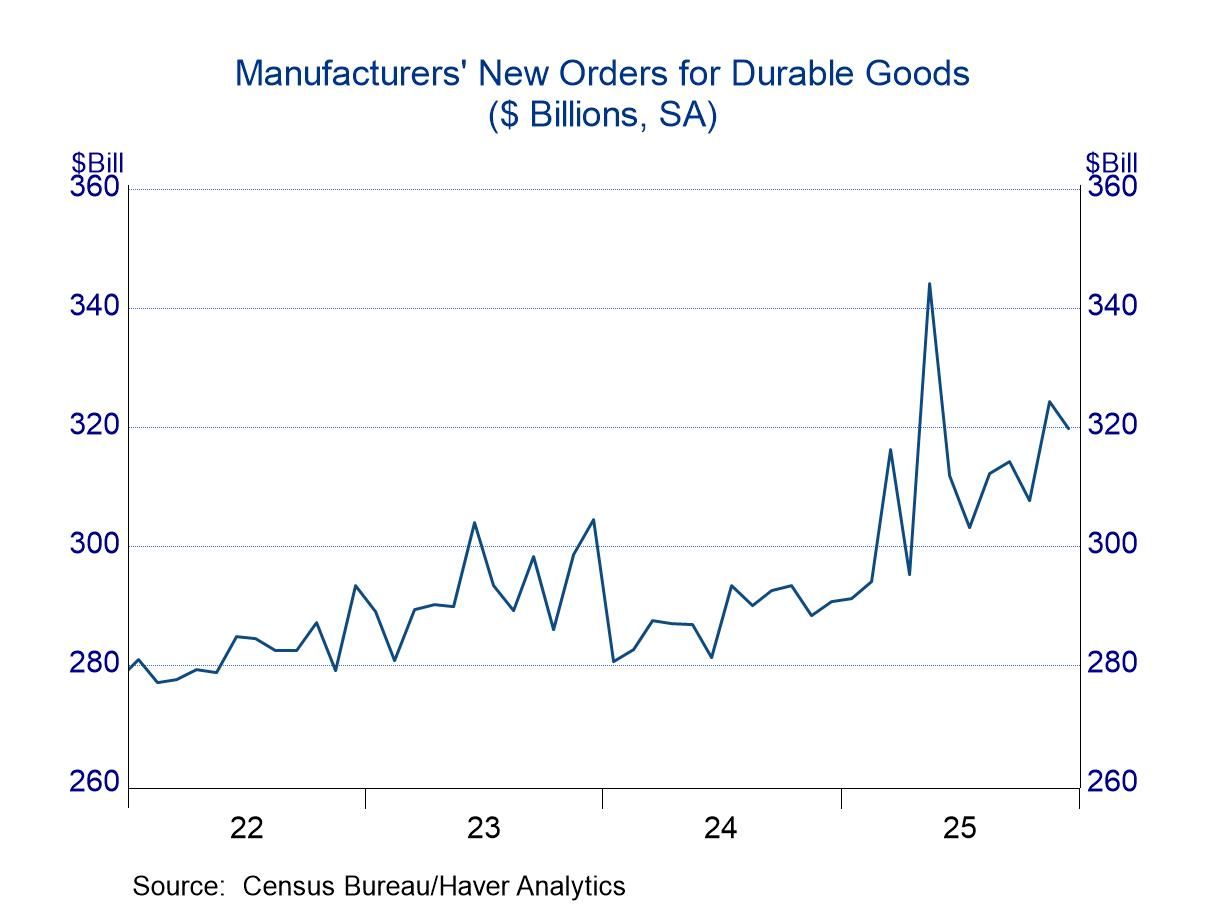
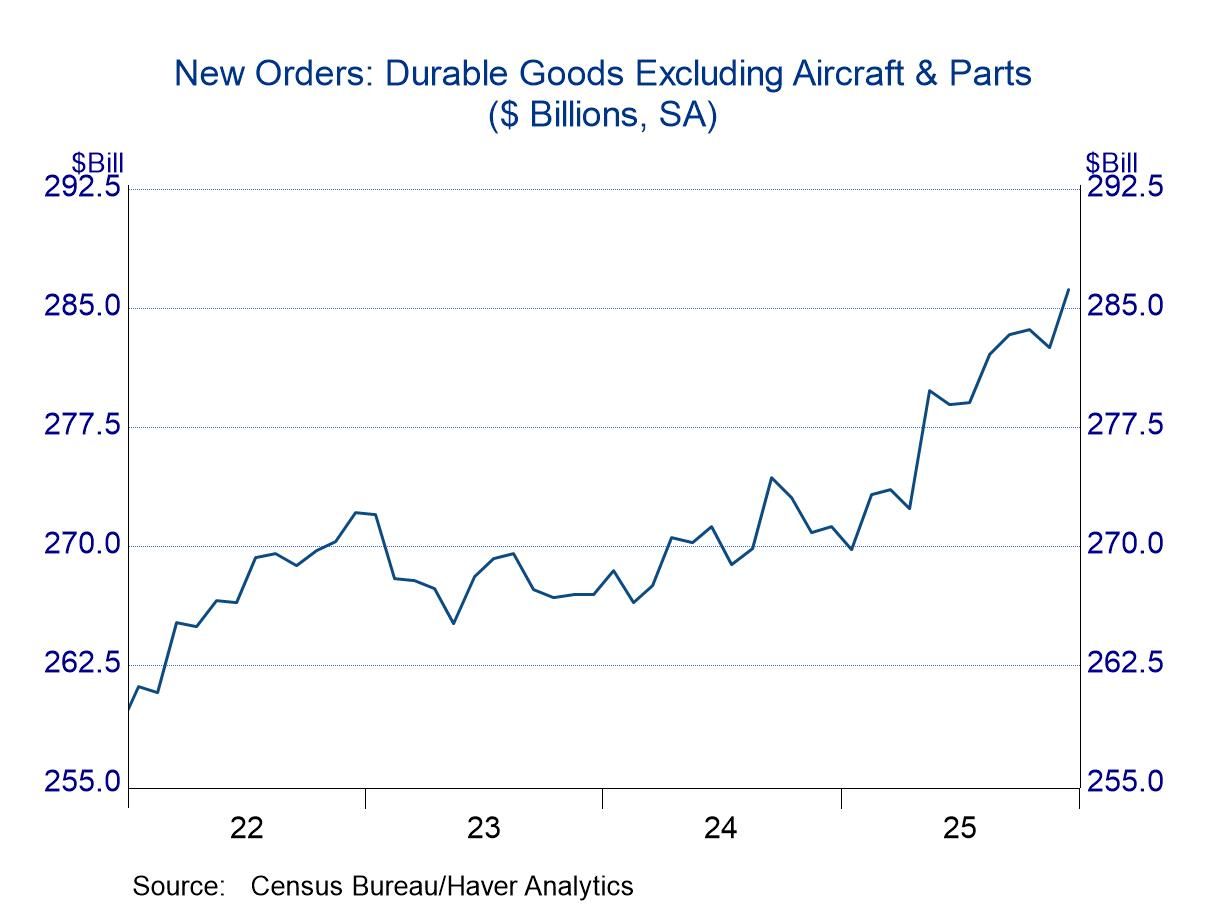
New orders for durable goods fell 1.4% in December, but the change followed a strong advance in the prior month, leaving little damage to the upward trend that began early last year. The improvement in 2025 ended a period of little net change in the prior two years and left year-over-year growth of 10.0% in December.
As is often the case, the decline in headline bookings was influenced by the volatile aircraft and parts component, which fell 19.7%. Excluding aircraft, durable orders rose 1.3% month-to-month. Moreover, the advance was broadly based, with five of the six non-transportation categories contributing to the gain (only the miscellaneous category fell and the decline was modest at 0.2%).
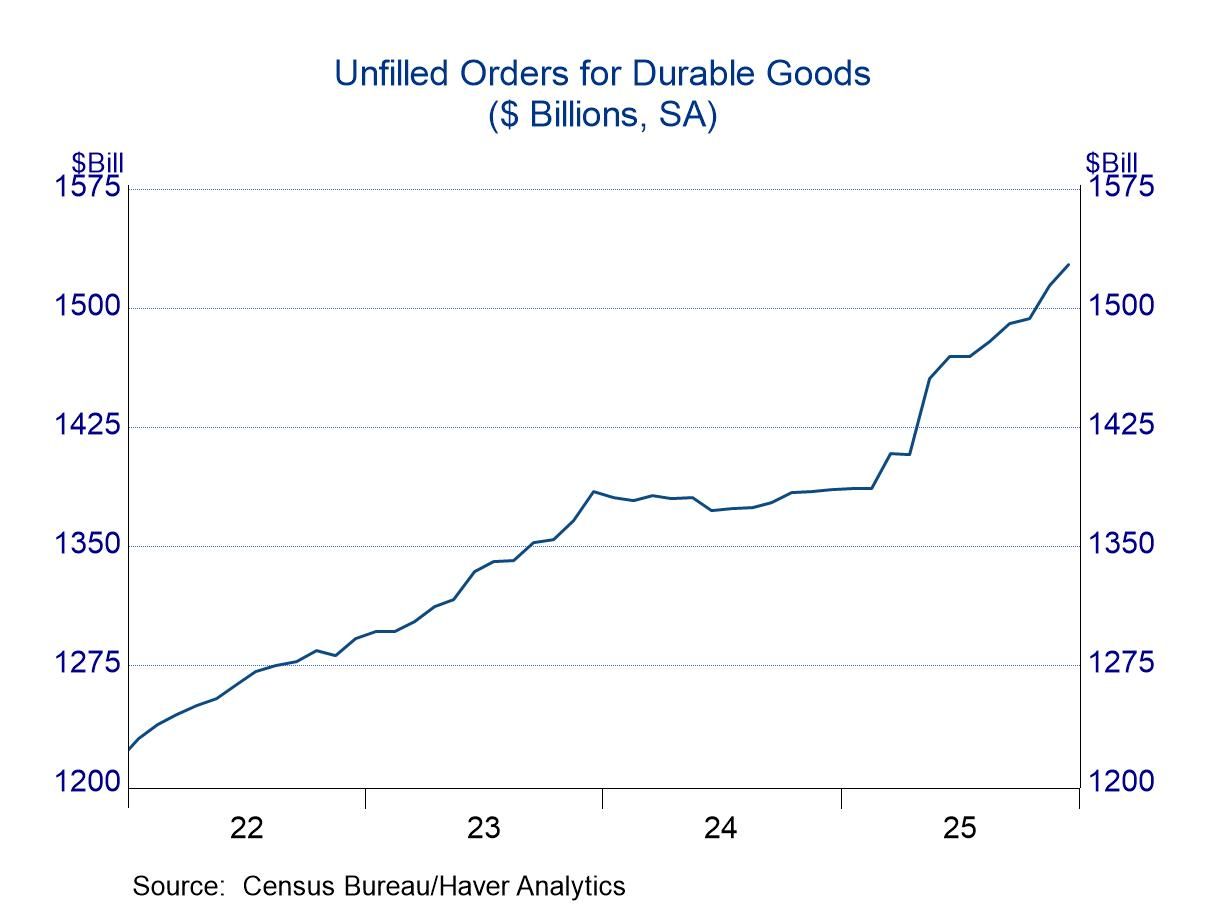
With order flows trending up, manufacturers have started to register increases in unfilled orders. The backlog outside of transportation has increased for five consecutive months, averaging 0.3% per month. The aircraft industry, although not experiencing robust new orders, also has built up a backlog because of the long gestation period in building aircraft. Total unfilled orders have increased 10.2% in the past 12months.
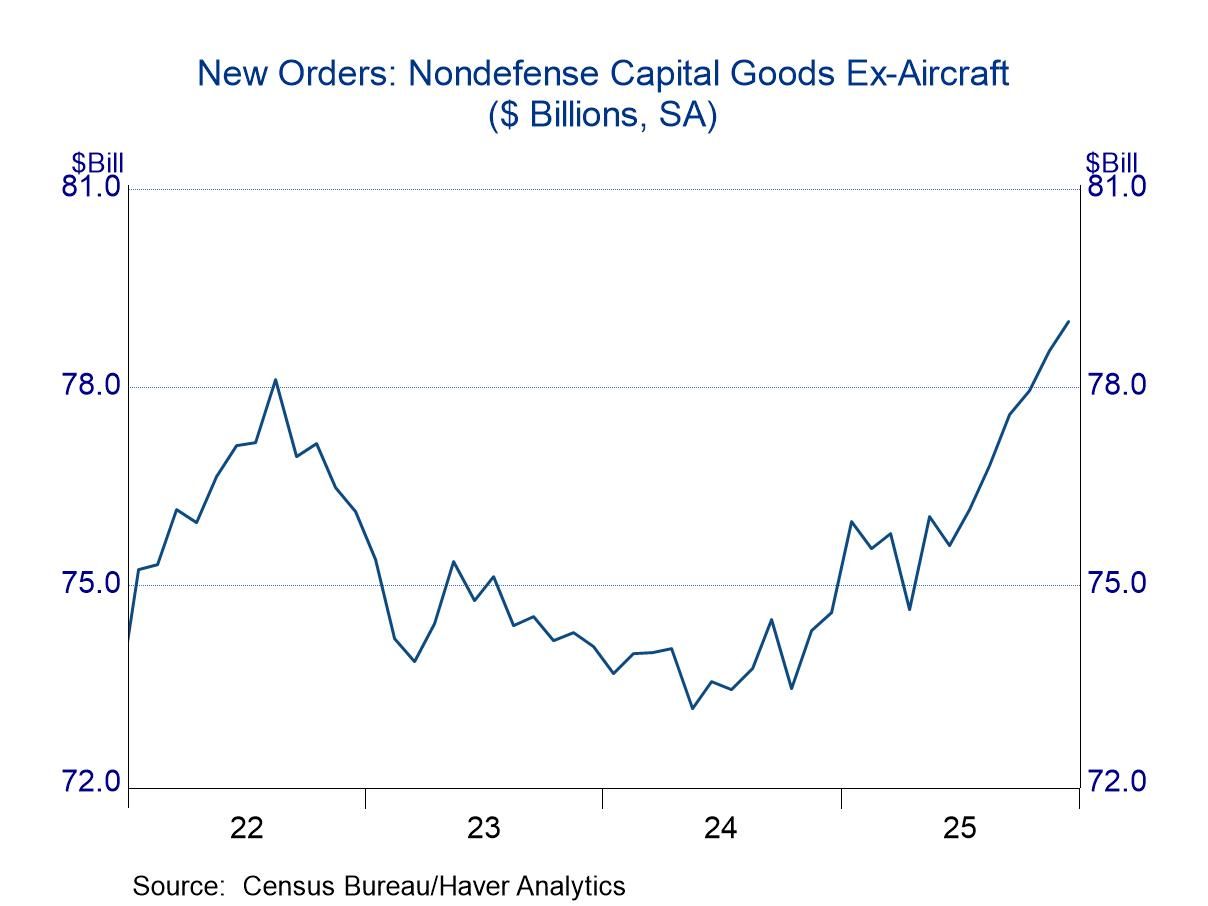
New orders for nondefense capital goods other than aircraft is a component worthy of special attention because of the insight it provides into investment spending by businesses. This measure rose 0.6% in December, marking the sixth consecutive monthly advance. As with the headline figure, the improvement in 2025 ended a lethargic performance in the prior two years.
Manufacturers’ orders and shipments of durable and nondurable goods, along with unfilled orders and inventories, are compiled by the U.S. Census Bureau. They are available in Haver’s USECON database. The Action Economics forecast data are in the AS1REPNA database.

Michael J. Moran
AuthorMore in Author Profile »Before joining Haver Analytics in 2025, Michael J. Moran was the chief economist of Daiwa Capital Markets America Inc. He was responsible for preparing the firm’s economic forecast and interest rate outlook. He traveled frequently to visit the clients of Daiwa Capital Markets and wrote weekly economic commentary. Mr. Moran also was involved in the flux of financial markets, as he spent a portion of each day on Daiwa’s trading floor interpreting economic statistics and Federal Reserve activity for traders and salespeople. Mr. Moran is quoted frequently in the financial press, and he appears regularly on cable news shows. He also has published articles in several journals and periodicals. Before joining Daiwa Capital Markets America, Mr. Moran worked as an economist at the Federal Reserve Board in Washington, D.C. where he analyzed a broad range of issues dealing with the financial sector of the economy and regularly briefed the Board of Governors. He was on the faculty of Pennsylvania State University from 1979 to 1980 and taught on a part-time basis at George Washington University from 1980 to 1987.
Mr. Moran received his Ph.D. in economics from Pennsylvania State University in 1980 and a B.S. in business administration from the University of Bridgeport in 1975. He was a CFA charter holder from 2002 until 2016.
More Economy in Brief
 Global