

 Global| Jul 08 2026
Featured Data Additions, July 8, 2026
EMERGEFM → Liberia → Production
Production statistics for Liberia were added to the EMERGEFM database. Categories include agricultural products, manufactured goods, mineral products, and services. The table includes commodities important to Liberia’s economy such as gold, iron ore, diamonds, rubber, cocoa beans, and timber. Monthly data are sourced from the Central Bank of Liberia and start as early as January 2004.
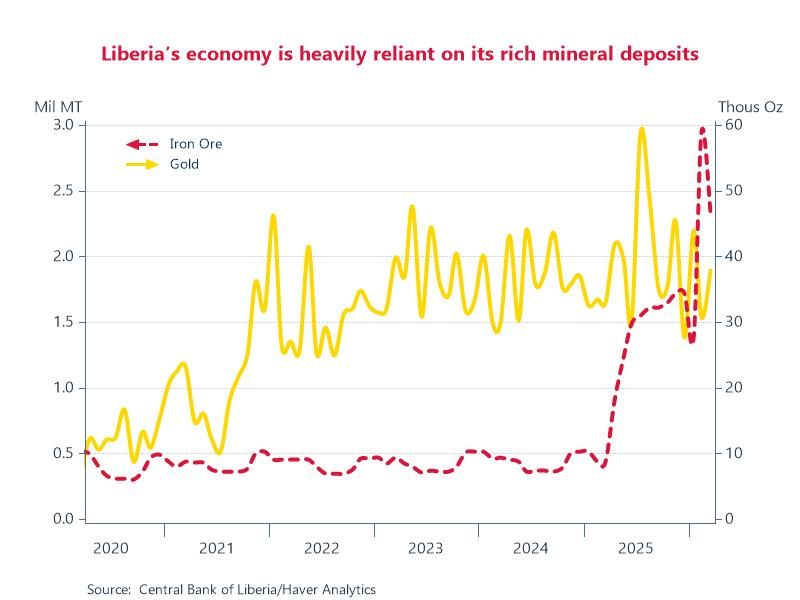
Chart: Liberia’s economy is heavily reliant on the production and export of primary raw materials. The iron ore sector is the backbone and is experiencing a massive boom with production tripling from 5.2 million MT in 2024 to 14.9 million MT in 2025 – spiking in February 2026 recording 3 million MT in that month alone. Gold production increased 79% YoY in 2021 followed by 49% and 16% increases in the subsequent years – spiking in July 2025 with a record 59 thousand ounces extracted. Expansion in the mining sector is a core catalyst for projected real GDP growth of 5.5%.
ENERGY → Country-Sourced Statistics → Ecuador → Daily Oil Production
A daily crude oil production series for Ecuador was added to the ENERGY database. This series, reported in barrels, provides insights into oil production in Ecuador at least two months sooner than monthly series available from other sources. The series is sourced from the Central Bank of Ecuador and starts in January 2018.
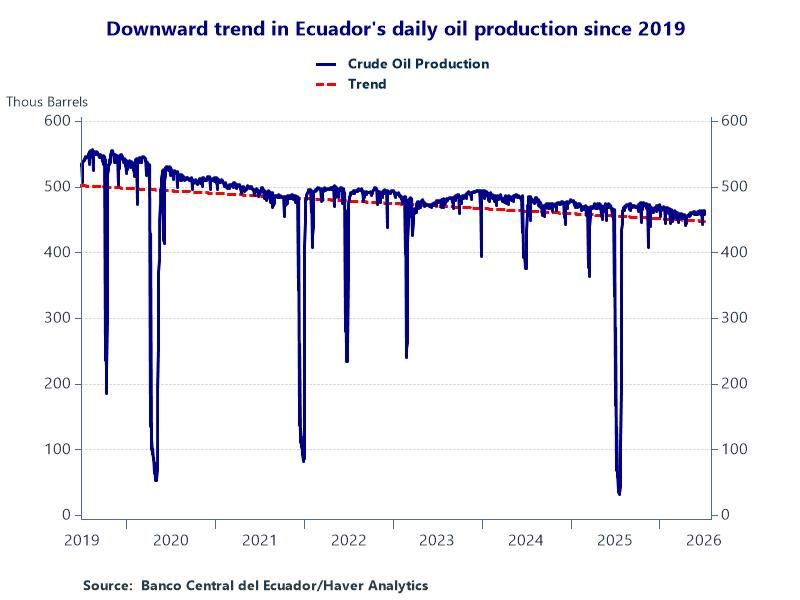
Chart: Since 2019, Ecuador's downward trend in daily oil production has been driven by the natural decline of mature fields, severe infrastructure outages, escalating hydrocarbon theft, and political and environmental mandates. From mid-2019 to the present, daily oil production has decreased by 19.2%. 2026 year-to-date production is down by approximately 2% compared to 2025. These declines are destabilizing Ecuador’s economy by shrinking government revenues, blowing out the fiscal deficit, and worsening the public debt.
EMERGECW → Georgia → Public Finance and Debt → External Public Debt
External public debt statistics for Georgia were added to EMERGECW. Government and national bank external debt is available in USD and Georgian Lari along with accrued interest. Government debt is further broken out by multilateral, bilateral, and bonds with detail by creditor. These monthly data are sourced from the Georgia Ministry of Finance and start as early as 2003.
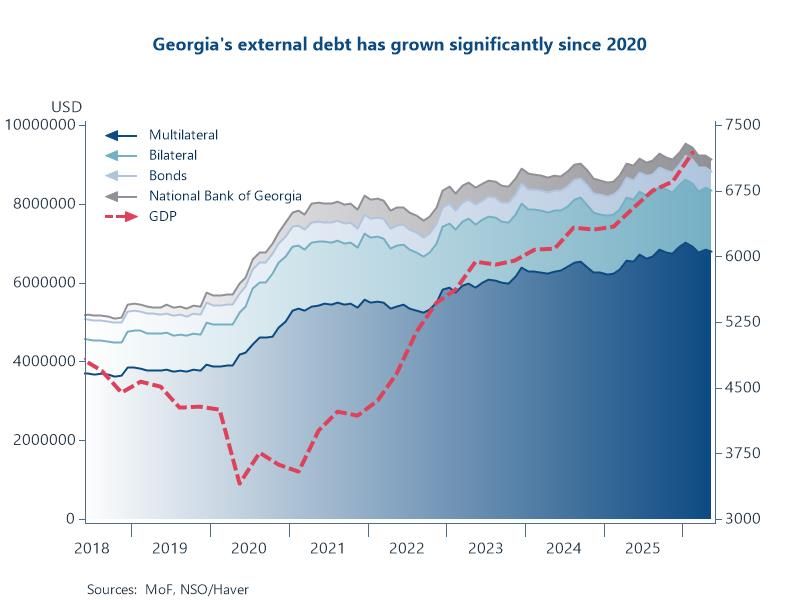
Chart: Georgia's external debt has grown by 59% since 2020. Multi- and bilateral external debt increased 72.6% and 45.9%, respectively during that horizon. Debt growth was initially driven by emergency borrowing during the pandemic followed by extensive government borrowing to fund large-scale infrastructure projects such as the modernization of highways and tunnels. Despite this absolute increase, strong GDP growth has kept the relative debt-to-GDP ratio manageable and stabilized the country's sovereign credit rating which is currently BB from Fitch.
More Featured Data Additions
 Global| Sep 18 2026
Featured Data Additions, September 18, 2026
 Global| Sep 02 2026
Featured Data Additions, September 2, 2026
 Global| Aug 27 2026
Featured Data Additions, August 27, 2026
 Global| Aug 19 2026