Asia| Sep 01 2026
Economic Letter from Asia: Lingering Unease
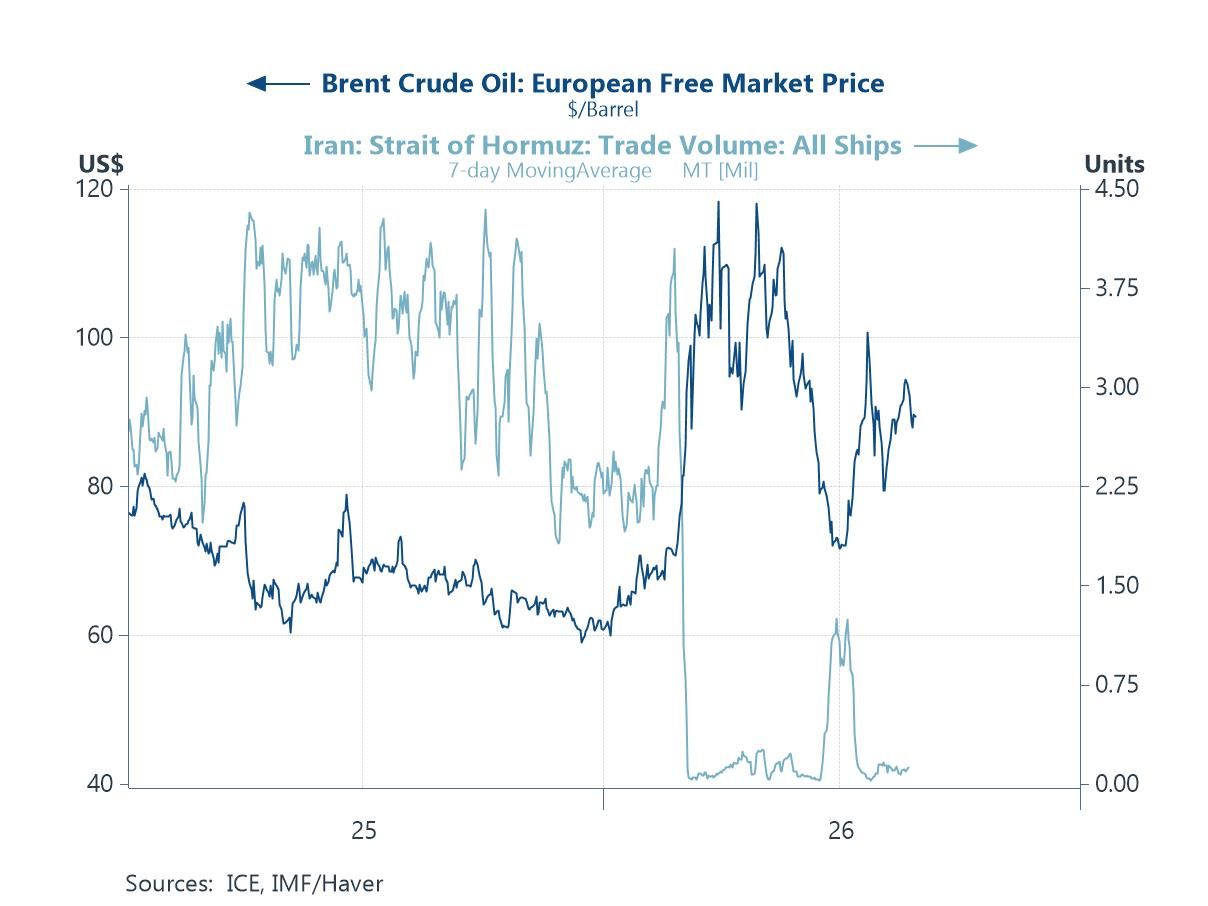
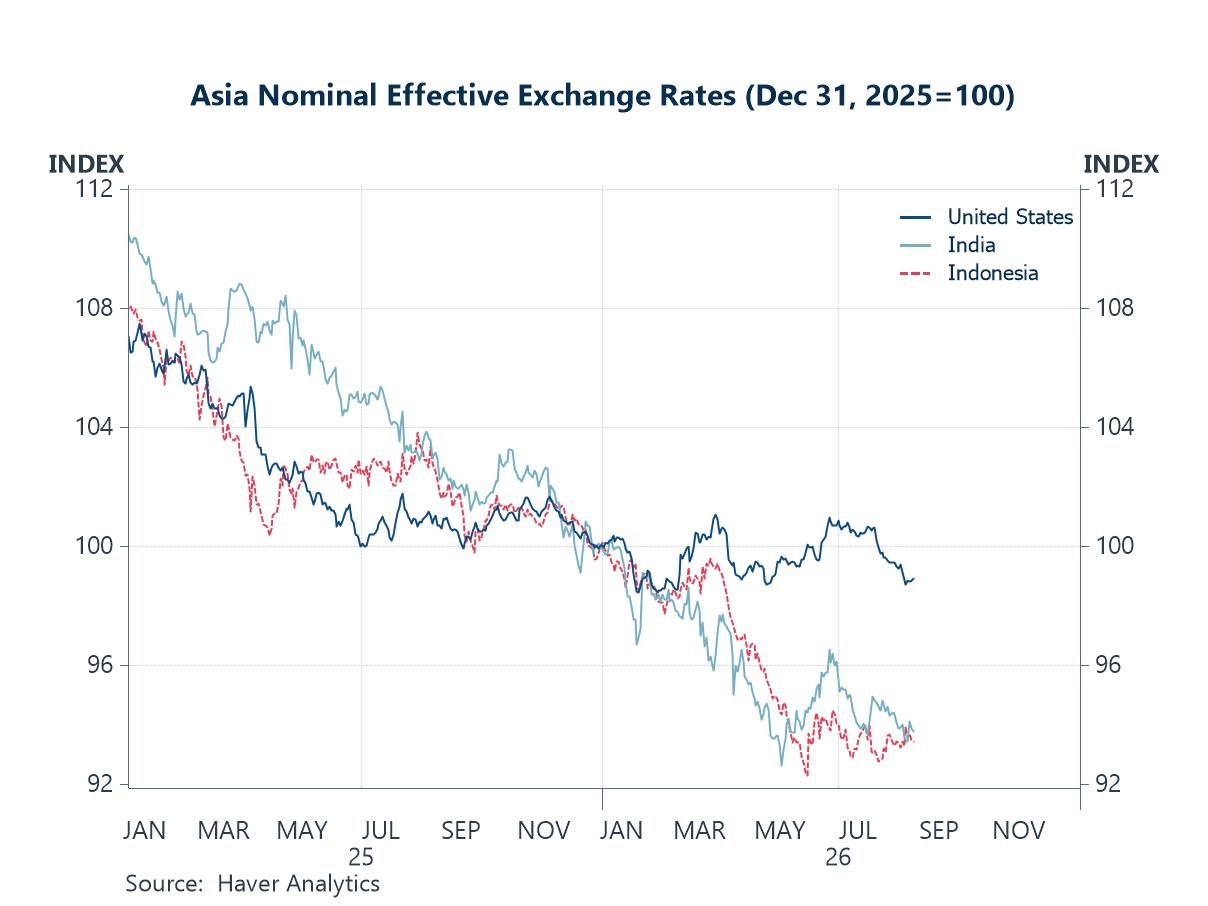
In this week’s Letter, we examine why the continuing oil shock is placing renewed pressure on several Asian currencies—and why the mechanisms differ significantly across economies. The US–Iran conflict shows no meaningful sign of abating, with further strikes exchanged earlier this week. Meanwhile, shipping through the Strait of Hormuz remains severely disrupted (chart 1), effectively putting a floor beneath crude prices. The resulting increase in energy costs is sustaining inflation risks and worsening the terms of trade for oil-importing economies. This has contributed to the weakness of both the yen and the rupee this year, although energy dependence is only part of the explanation (chart 2). Unfavourable interest-rate differentials remain the principal constraint on the yen, while portfolio flows have amplified the rupee’s decline. Pressure on the Indonesian rupiah, by contrast, owes more to concerns about domestic politics and fiscal credibility. Although broad dollar strength is often blamed for the region’s currency weakness, our trade-weighted nominal dollar index has moved largely sideways.
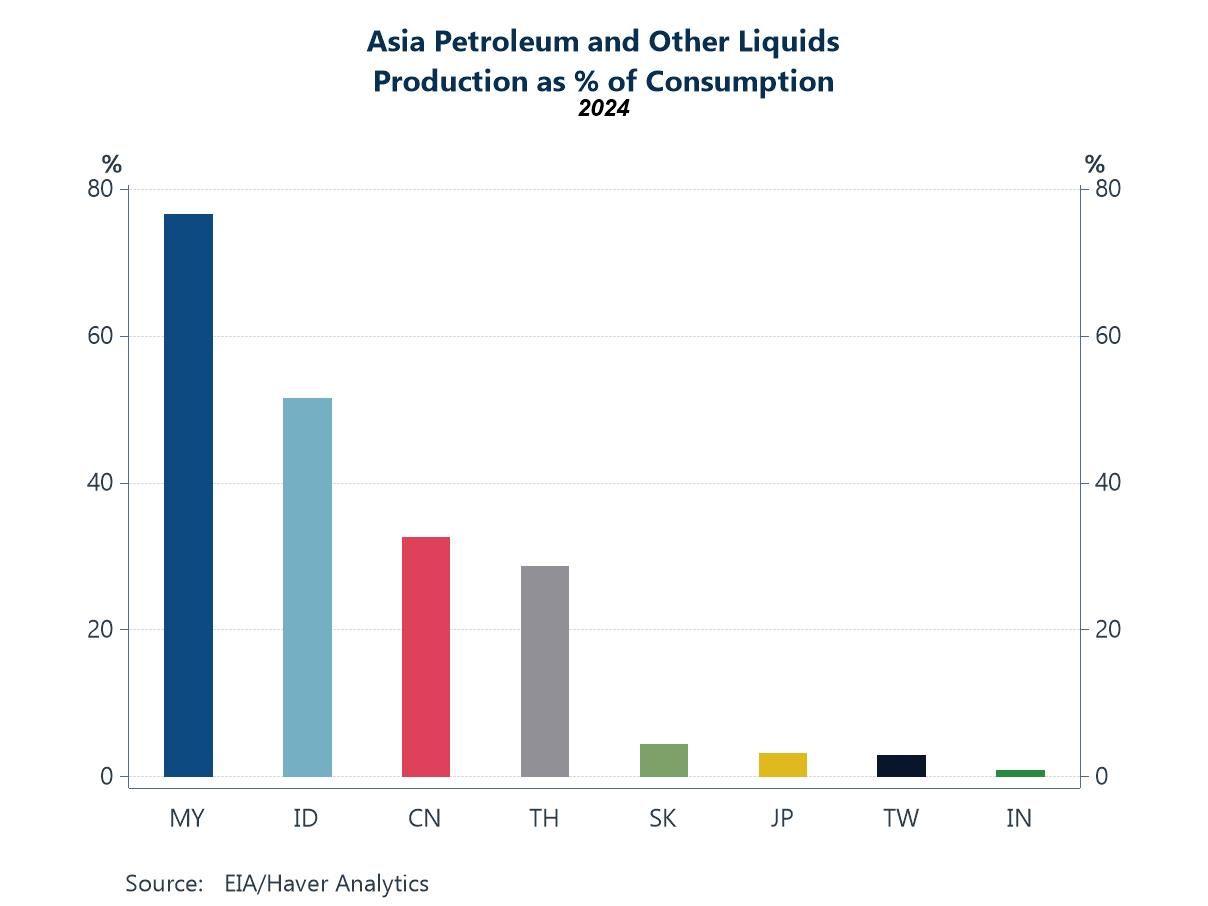
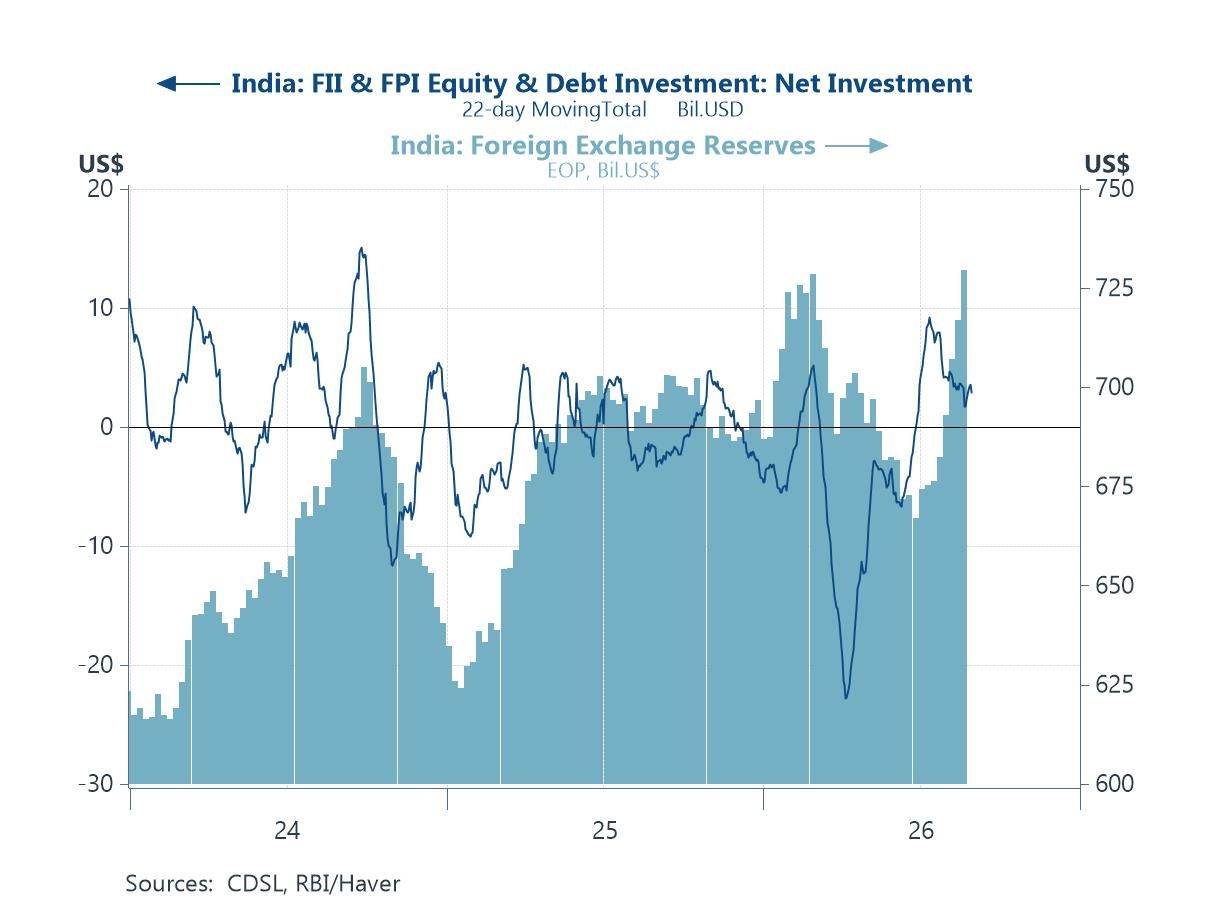
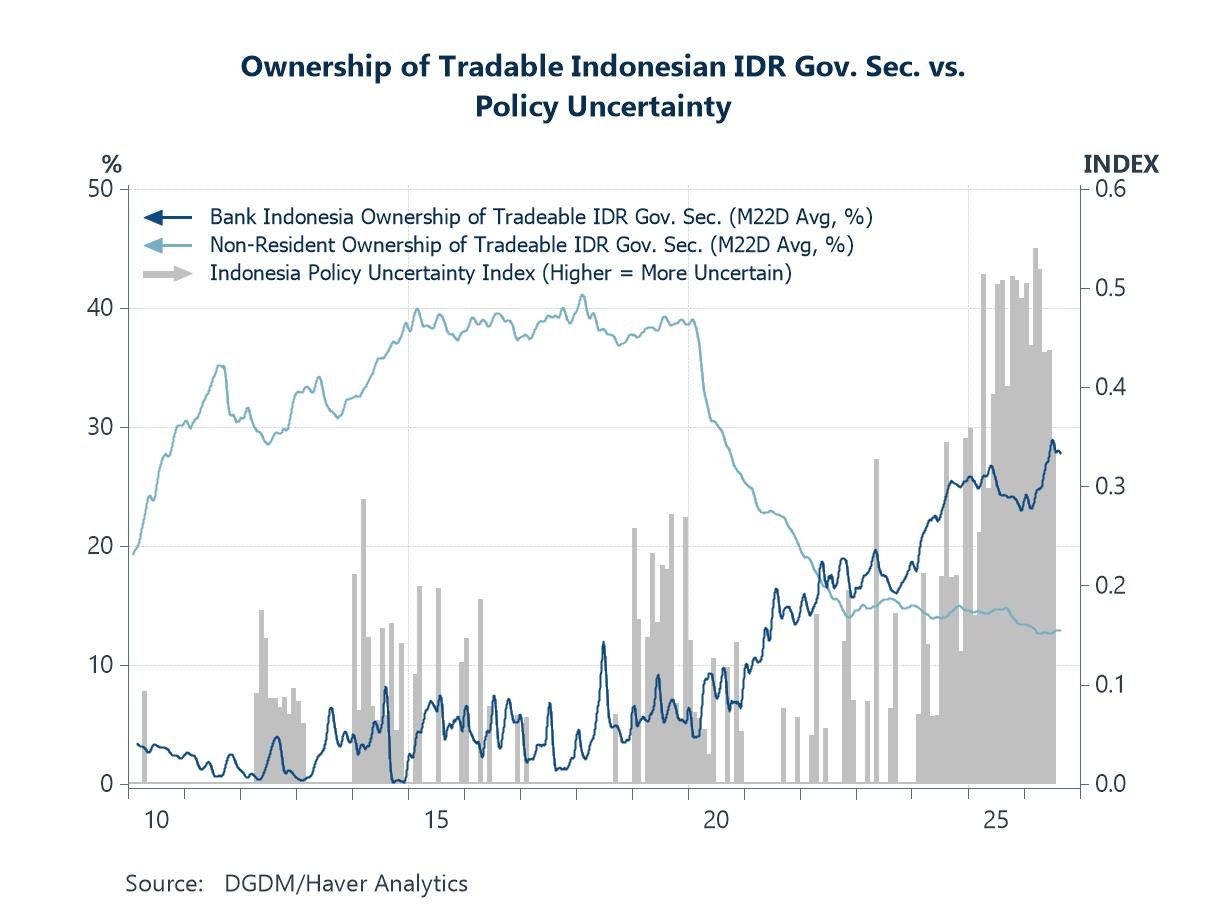
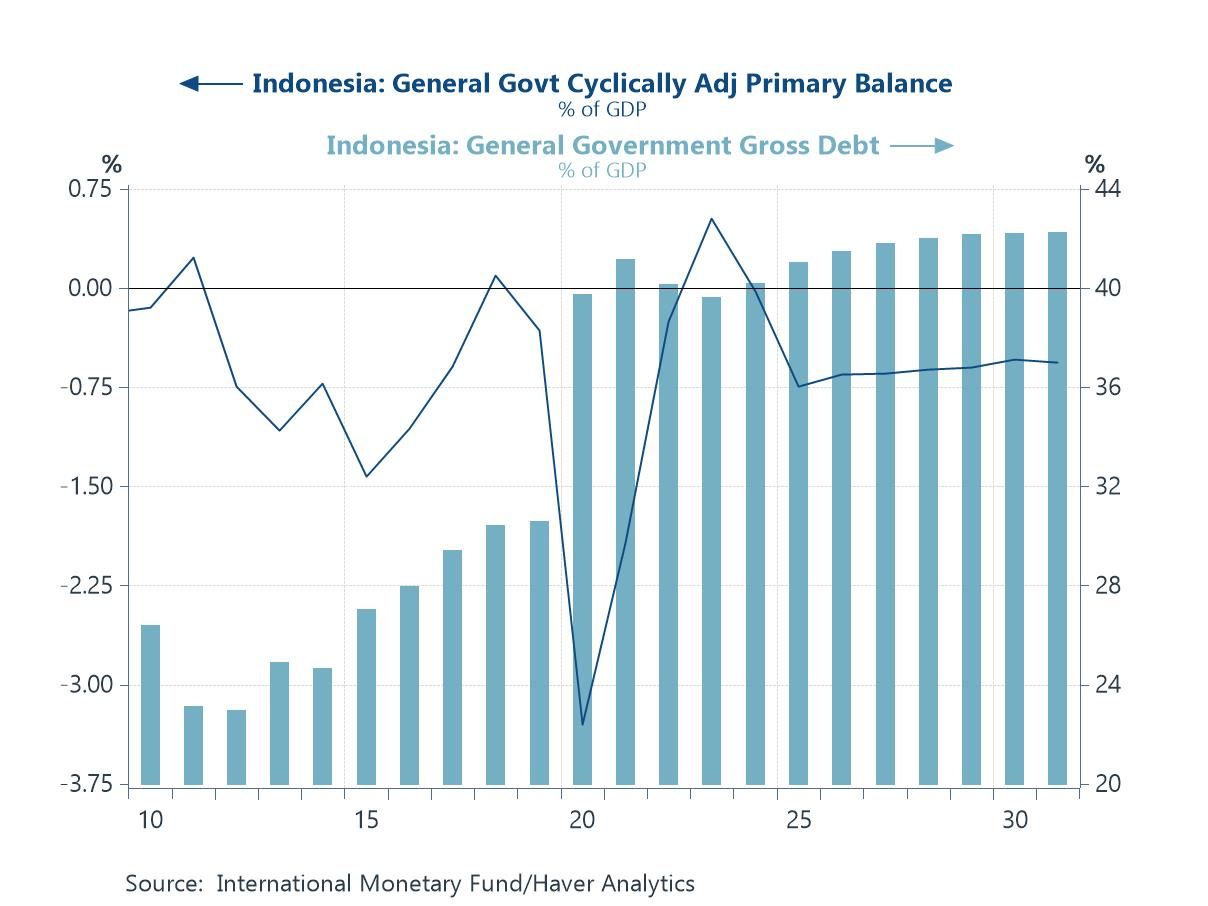
India’s vulnerability to the oil shock is particularly pronounced. Domestic crude production covers only a small share of consumption, leaving the economy highly exposed to movements in global prices (chart 3). South Korea, Japan and Taiwan face similarly heavy import dependence, while the headline figures for China probably understate its underlying exposure. For India, however, a deteriorating energy bill has coincided with financial-account pressure. Portfolio investors withdrew capital for an extended period after conflict erupted in late February (chart 4). These outflows subsequently reversed after the RBI introduced incentives in June to attract dollar deposits—measures that proved effective enough to be withdrawn ahead of schedule. Nevertheless, the rupee has recovered little of its earlier decline. Indonesia presents a different risk profile. Investor unease centres less on oil-import dependence than on the direction of fiscal policy and the broader political environment. Foreign ownership of rupiah-denominated government bonds has fallen below 13%, even as the outstanding stock of debt has continued to expand (chart 5). President Prabowo’s USD 230bn budget for 2027 targets a smaller deficit (chart 6), but it remains unclear whether this will be sufficient to restore investor confidence.
The oil situation There is little sign of a substantive let-up in the US-Iran situation. Both sides exchanged strikes earlier this week, the first such exchange in about a month. Absent the strikes, the underlying economic reality remains broadly unchanged. Shipping traffic through the Strait of Hormuz has remained weak (chart 1), leaving an implicit floor under crude oil prices. Upside inflation risks stemming from energy therefore remain alive, and with them the implications for monetary policy. Beyond inflation, this protracted bout of elevated oil prices continues to add to the hefty bills faced by net energy importers, in the region and well beyond it.
Chart 1: Brent crude oil prices and Strait of Hormuz shipping volume
Currencies Among other drivers, the exposure of Japan and India to oil imports has weighed on their currencies this year. The surge in oil prices has raised their energy bills sharply. Other factors are also at play, with rate differentials weighing on the yen and capital flows compounding rupee weakness. The latter is a topic we revisit later in this Letter. Other Asian currencies have also shown significant weakness this year, though energy is not the main driver of their depreciation. The Indonesian rupiah has fallen sharply (chart 2), largely on fiscal concerns as the government pursues a highly expansionary fiscal policy. That has raised worries about fiscal sustainability, among other woes, which we also return to later. Dollar strength has been frequently cited as an additional driver of this Asian currency weakness. Yet the broadly sideways pattern of our trade-weighted nominal dollar index suggests otherwise.
Chart 2: Asia nominal effective exchange rates
India Focusing more on India, chart 3 shows how dependent the country is on imported petroleum for its consumption needs. Compared with oil producers in Asia such as Malaysia, India's production is minuscule as a proportion of its consumption. That implies an extremely high dependence on imported sources. It leaves India almost wholly exposed to fluctuations in global oil prices, apart from supply supplements drawn from oil reserves. Several other Asian economies fall into the same bucket, namely South Korea, Japan and Taiwan. Their production is slightly higher relative to consumption for petroleum and other liquids, but still very low. For other Asian economies such as China, the statistic does not tell the whole story, since much of China's refined production also relies on imported crude.
Chart 3: Asia petroleum and other liquids production vs. consumption
India's hefty imported energy bill aside, another drag on the rupee came from persistent capital outflows earlier in the year. These immediately followed the initial outbreak of the US-Iran conflict in late February. As shown in chart 4, India faced protracted outflows from foreign institutional and portfolio investors during that early period. Those outflows were subsequently reversed following concerted measures by the Reserve Bank of India (RBI) to spur inflows. Specifically, the central bank introduced a raft of measures in June to boost dollar inflows. These allowed banks to offer attractive rates on FX deposits, with the RBI subsidising hedging costs. They have apparently been so successful in attracting inflows that the central bank has decided to shut them down early. That said, the rupee has not yet regained the ground it lost this year, despite the surge in inflows.
Chart 4: India foreign institutional / portfolio investor flows and FX reserves
Indonesia Moving to Indonesia, the driver landscape behind the year's persistent rupiah weakness looks rather different. It is characterised more by investor perceptions of the country's political and fiscal state than by the energy-driven narrative facing India. Chart 5 shows one symptom of this loss of standing among foreign investors. The share of non-resident ownership of tradable rupiah government bonds has extended its mild decline through the year, falling to just under 13%. That decline reflects broadly unchanged non-resident holdings against a total stock of government securities that has continued to grow. Driving that expansion in the debt stock, and possibly further expansion ahead, are the fiscal-intensive measures of the current government, including its Free Nutritious Meals programme. Other measures, notably energy subsidies, have also bitten into the fiscal spend. All in, these have raised concerns about the country's future fiscal position, weighing on the rupiah in turn.
Chart 5: Indonesia government security ownership vs. policy uncertainty
On that note, Indonesia's President Prabowo has unveiled a USD 230bn "expansive" budget for 2027. This came earlier last month, perhaps in an attempt to allay the above-mentioned investor concerns about fiscal sustainability. The fiscal deficit is set at 2.4% of GDP, the narrowest in three years. It remains to be seen whether investor concerns will be substantially allayed by the news. Nor is it clear whether the rupiah could recover meaningfully on the back of these announced measures. Also still lacking is the full scale of the ongoing Free Nutritious Meals programme, which has already been beset by issues and scaled back. A further point to watch is whether expectations of Indonesia's fiscal trajectory shift substantially. That applies to investors and to organisations such as the IMF, in its upcoming fiscal outlook publication.
Chart 6: Indonesia’s government primary balance and gross debt

Tian Yong Woon
AuthorMore in Author Profile »Tian Yong joined Haver Analytics as an Economist in 2023. Previously, Tian Yong worked as an Economist with Deutsche Bank, covering Emerging Asian economies while also writing on thematic issues within the broader Asia region. Prior to his work with Deutsche Bank, he worked as an Economic Analyst with the International Monetary Fund, where he contributed to Article IV consultations with Singapore and Malaysia, and to the regular surveillance of financial stability issues in the Asia Pacific region.
Tian Yong holds a Master of Science in Quantitative Finance from the Singapore Management University, a Master of Science in Analytics from the Georgia Institute of Technology, a Bachelor of Science in Mathematics from the Singapore University of Social Sciences, and a Bachelor of Science in Banking and Finance from the University of London.
More Economy in Brief