• Inventory decumulation subtracts from total.
• Domestic final demand slips.
• Foreign trade deficit lessens.


Introducing
in:Our Authors
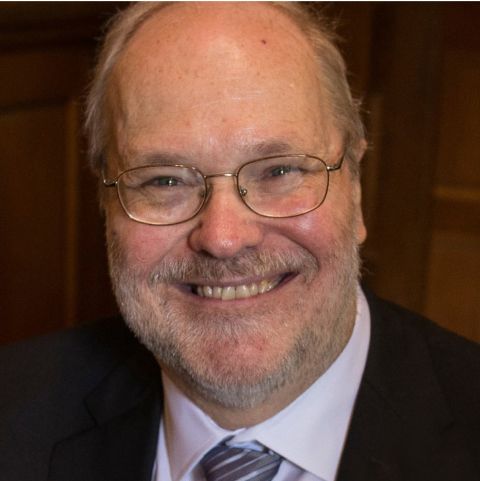
Prior to joining Haver Analytics in 2000, Mr. Moeller worked as the Economist at Chancellor Capital Management from 1985 to 1999. There, he developed comprehensive economic forecasts and interpreted economic data for equity and fixed income portfolio managers. Also at Chancellor, Mr. Moeller worked as an equity analyst and was responsible for researching and rating companies in the economically sensitive automobile and housing industries for investment in Chancellor’s equity portfolio. Prior to joining Chancellor, Mr. Moeller was an Economist at Citibank from 1979 to 1984. He also analyzed pricing behavior in the metals industry for the Council on Wage and Price Stability in Washington, D.C. In 1999, Mr. Moeller received the award for most accurate forecast from the Forecasters' Club of New York. From 1990 to 1992 he was President of the New York Association for Business Economists. Mr. Moeller earned an M.B.A. in Finance from Fordham University, where he graduated in 1987. He holds a Bachelor of Arts in Economics from George Washington University.

• Inventory decumulation subtracts from total.
• Domestic final demand slips.
• Foreign trade deficit lessens.
by:Tom Moeller
|in:Economy in Brief

• Nondefense capital goods orders excluding aircraft improve steadily.
• Transportation equipment orders surge.
• Order backlogs & inventories increase.
by:Tom Moeller
|in:Economy in Brief

At today's meeting of the Federal Open Market Committee (FOMC), the Fed announced a 75-basis point increase in the target range for the Federal funds rate to 2.25% - 2.50%. It was the second consecutive 75-basis point move and placed the rate at the highest level since July 2019, up from a low near zero in mid-March.
The Fed has raised the funds rate at four consecutive meetings. The latest move was in line with expectations in the Action Economics Forecast Survey and it was endorsed by each member of the FOMC.
Fed Chairman Jerome H. Powell indicated that "From the standpoint of our Congressional mandate to support maximum employment and price stability, the current picture is plain to see: The labor market is extremely tight, and inflation is much too high."
The statement which accompanied today's action indicated that the Fed "anticipates that ongoing increases in the target range will be appropriate. In addition, the Committee will continue reducing its holdings of Treasury securities and agency debt and agency mortgage-backed securities.
The Fed also indicated that "Recent indicators of spending and production have softened. Nonetheless, job gains have been robust in recent months, and the unemployment rate has remained low. Inflation remains elevated, reflecting supply and demand imbalances related to the pandemic, higher food and energy prices, and broader price pressures."
The statement issued following today's meeting can be found here.
by:Tom Moeller
|in:Economy in Brief

• Gasoline costs down for sixth straight week.
• Crude oil prices improve slightly.
• Natural gas prices strengthen.
by:Tom Moeller
|in:Economy in Brief

• Home sales fall to lowest level since April 2000.
• Sales decline in most of country.
• Median sales price falls for second straight month.
by:Tom Moeller
|in:Economy in Brief
• Two of four components decline.
• Three-month index average turns negative.
by:Tom Moeller
|in:Economy in Brief

• Purchase & refinancing applications both decline.
• Mortgage interest rates increase.
by:Tom Moeller
|in:Economy in Brief

• Retail gasoline & crude oil prices reach five-week lows.
• Natural gas prices rise modestly.
by:Tom Moeller
|in:Economy in Brief

• Domestic demand growth reduced.
• Int'l trade deficit continues to subtract near-record from GDP growth.
• Inventory decumulation lessened.
by:Tom Moeller
|in:Economy in Brief

• Exports rise solidly while imports edge up.
• May & April deficits suggest trade will add to Q2 GDP growth.
by:Tom Moeller
|in:Economy in Brief

• Expectation reading plunges while current conditions ease.
• Employment expectations diminish.
• Expected inflation touches new high.\
by:Tom Moeller
|in:Economy in Brief

• Core capital goods orders improve again.
• Shipments surge with strength in aircraft.
• Order backlogs & inventories increase.
by:Tom Moeller
|in:Economy in Brief