

Personal Income, Consumption, and Prices in October
Summary
- Unsettling inflation results
- Personal income jumped, but consumer spending cooled
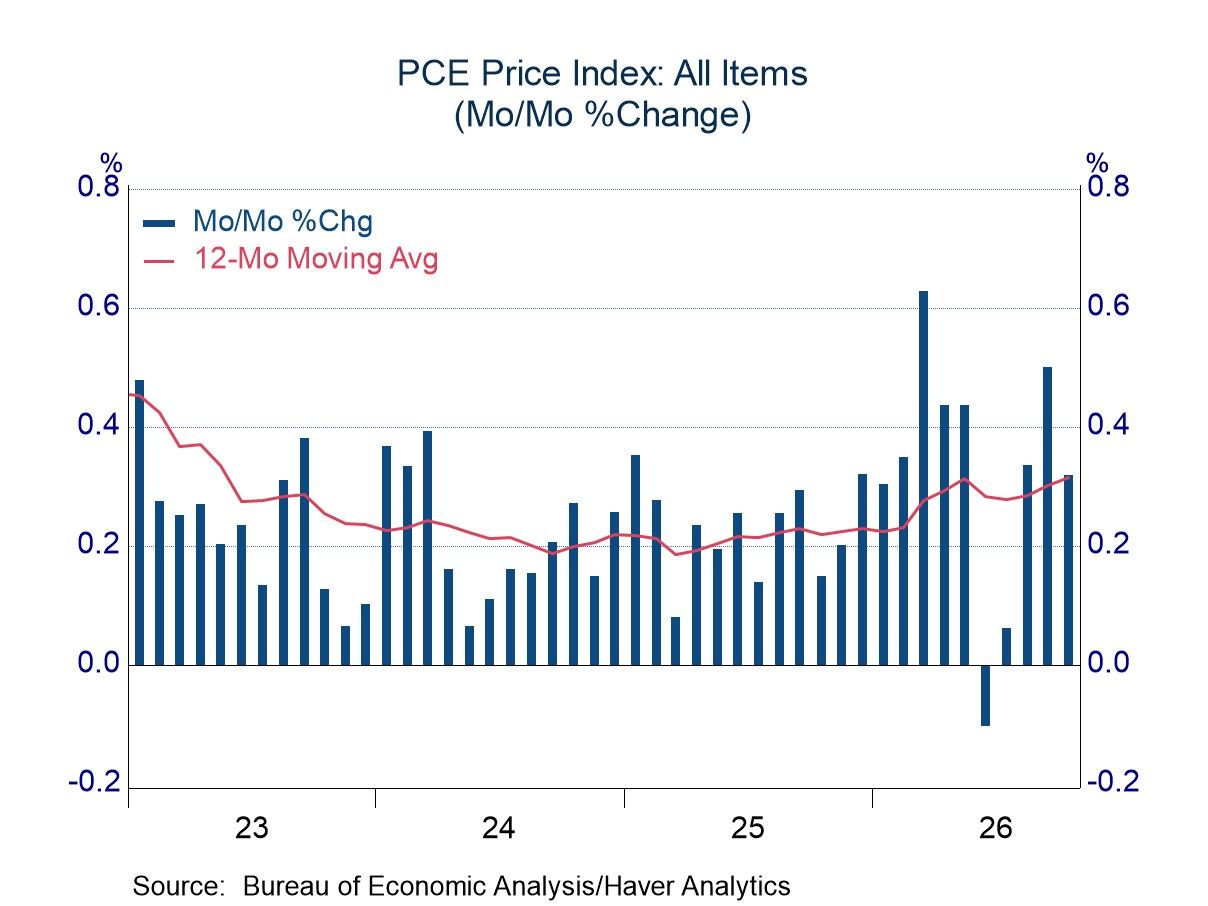
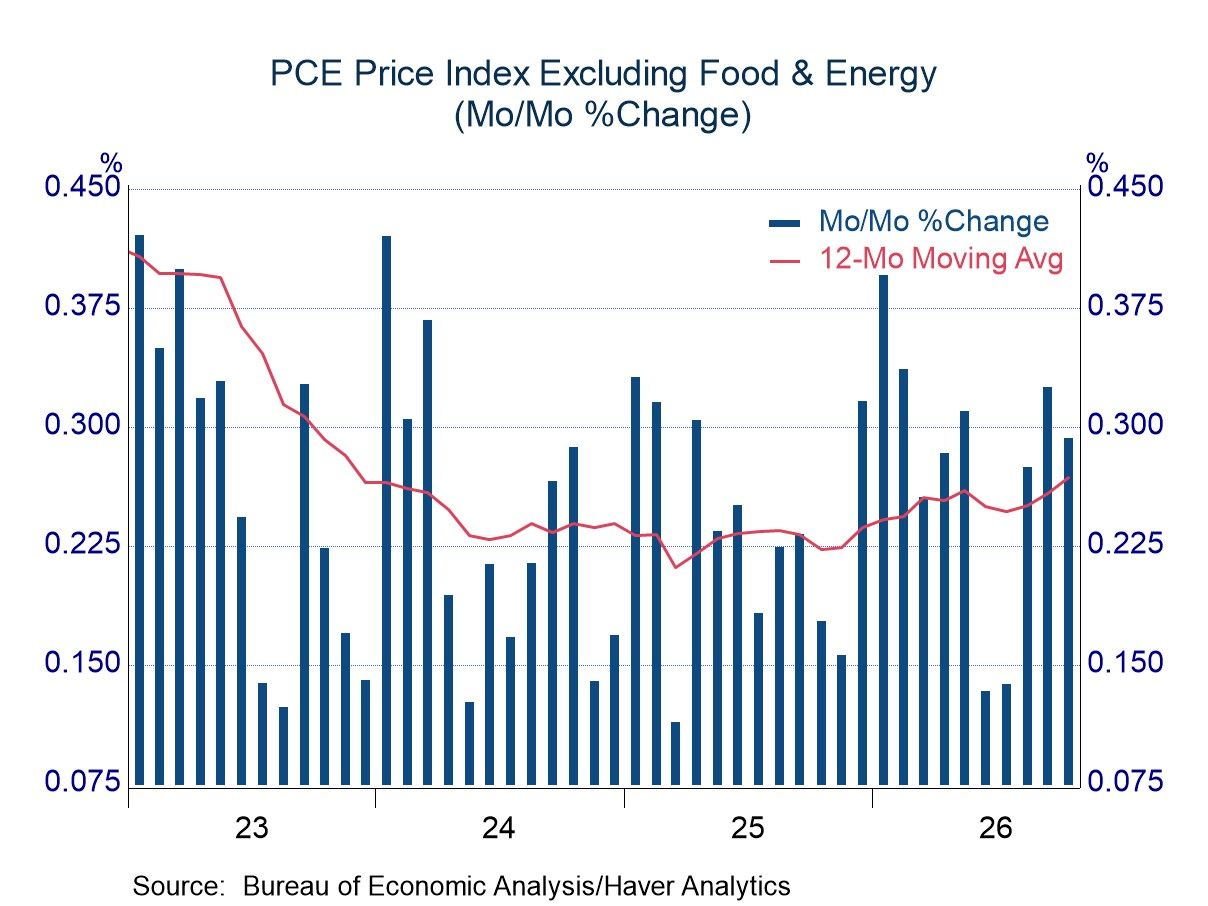
The price index for personal consumption expenditures, the measure targeted by the Federal Reserve, was in line with expectations in October, but Fed officials will probably find the results discomforting. Both the headline and core measures rose 0.3%, which left overall inflation in the past 12 months at 3.8% and inflation excluding food and energy at 3.3%, both substantially above the Fed’s target of 2.0%.
Inflation this year has followed an odd path. June and July showed modest increases in prices, but in all other months prices rose 0.3% or more. The pattern leads one to suspect that inflation results in June and July were aberrations and that an uncomfortable inflation impulse remains present in the economy. Futures contracts for federal funds show that market participants are expecting the Federal Reserve to hike interest rates at its December meeting and to continue tightening policy next year.
Nominal personal income rose 0.7% in October, the fastest pace so far this year. Growth of employee compensation was firm at 0.4%, but other components of income led the advance. Growth of dividend income was especially impressive at 1.8%; both rental income and proprietors’ income rose 0.8%, with farm proprietors booking growth of 6.0%. The jump in nominal income translated to a gain of 0.4% after adjusting for inflation.
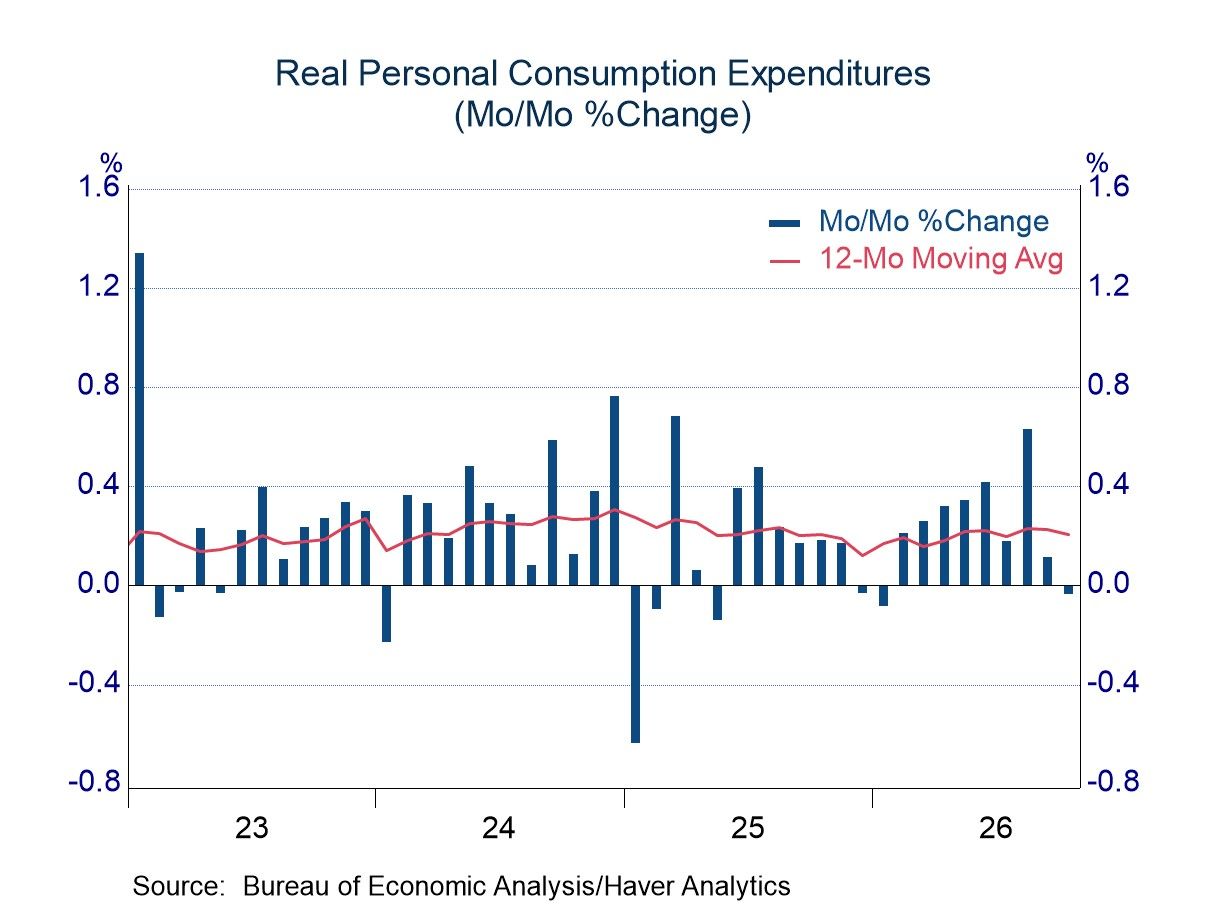
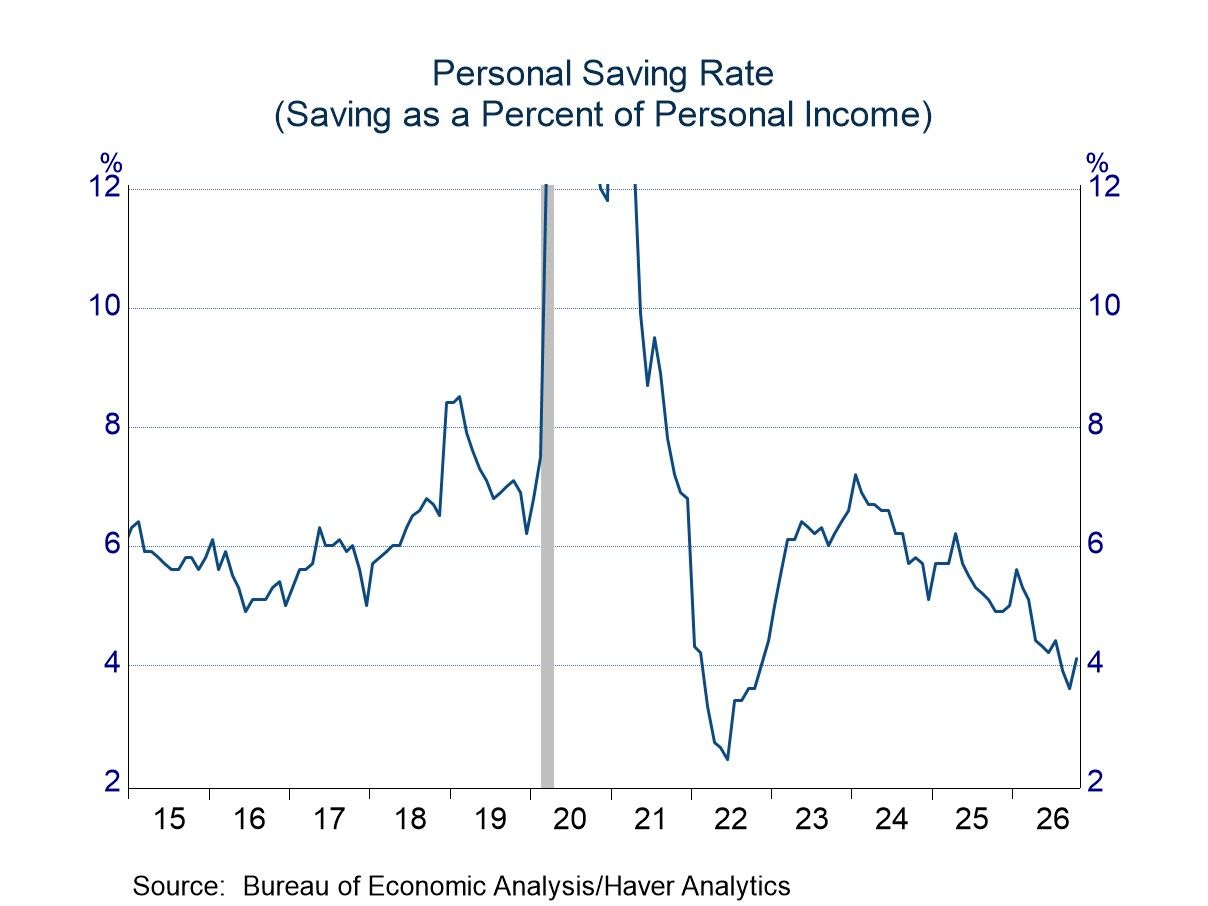
Although income grew briskly, nominal consumer spending rose only 0.3% in October, and it declined marginally after adjusting for inflation (-0.03%). The soft results in the latest month might represent a natural pause after vigorous spending in the prior two quarters (4.2% in Q3 and 3.8% in Q2). Then again, households might be starting to move to a slower pace of consumption, as outlay growth has generally been running above income growth in the past few years. The divergence has led to a decline in the personal saving rate from readings above 6.0% in much of 2023 and 2024 to a level near 4.0% in recent months (4.1% in October). Strength in the stock market has most likely generated wealth effects, which help to explain the downward trend in the saving rate, but recent hesitation in the market might be having a dampening effect on wealth-related spending.
The personal income and consumption figures are available in Haver’s USECON database with detail in the USNA database. The Action Economics forecasts are in AS1REPNA.

Michael J. Moran
AuthorMore in Author Profile »Before joining Haver Analytics in 2025, Michael J. Moran was the chief economist of Daiwa Capital Markets America Inc. He was responsible for preparing the firm’s economic forecast and interest rate outlook. He traveled frequently to visit the clients of Daiwa Capital Markets and wrote weekly economic commentary. Mr. Moran also was involved in the flux of financial markets, as he spent a portion of each day on Daiwa’s trading floor interpreting economic statistics and Federal Reserve activity for traders and salespeople. Mr. Moran is quoted frequently in the financial press, and he appears regularly on cable news shows. He also has published articles in several journals and periodicals. Before joining Daiwa Capital Markets America, Mr. Moran worked as an economist at the Federal Reserve Board in Washington, D.C. where he analyzed a broad range of issues dealing with the financial sector of the economy and regularly briefed the Board of Governors. He was on the faculty of Pennsylvania State University from 1979 to 1980 and taught on a part-time basis at George Washington University from 1980 to 1987.
Mr. Moran received his Ph.D. in economics from Pennsylvania State University in 1980 and a B.S. in business administration from the University of Bridgeport in 1975. He was a CFA charter holder from 2002 until 2016.
More Economy in Brief
 Global