

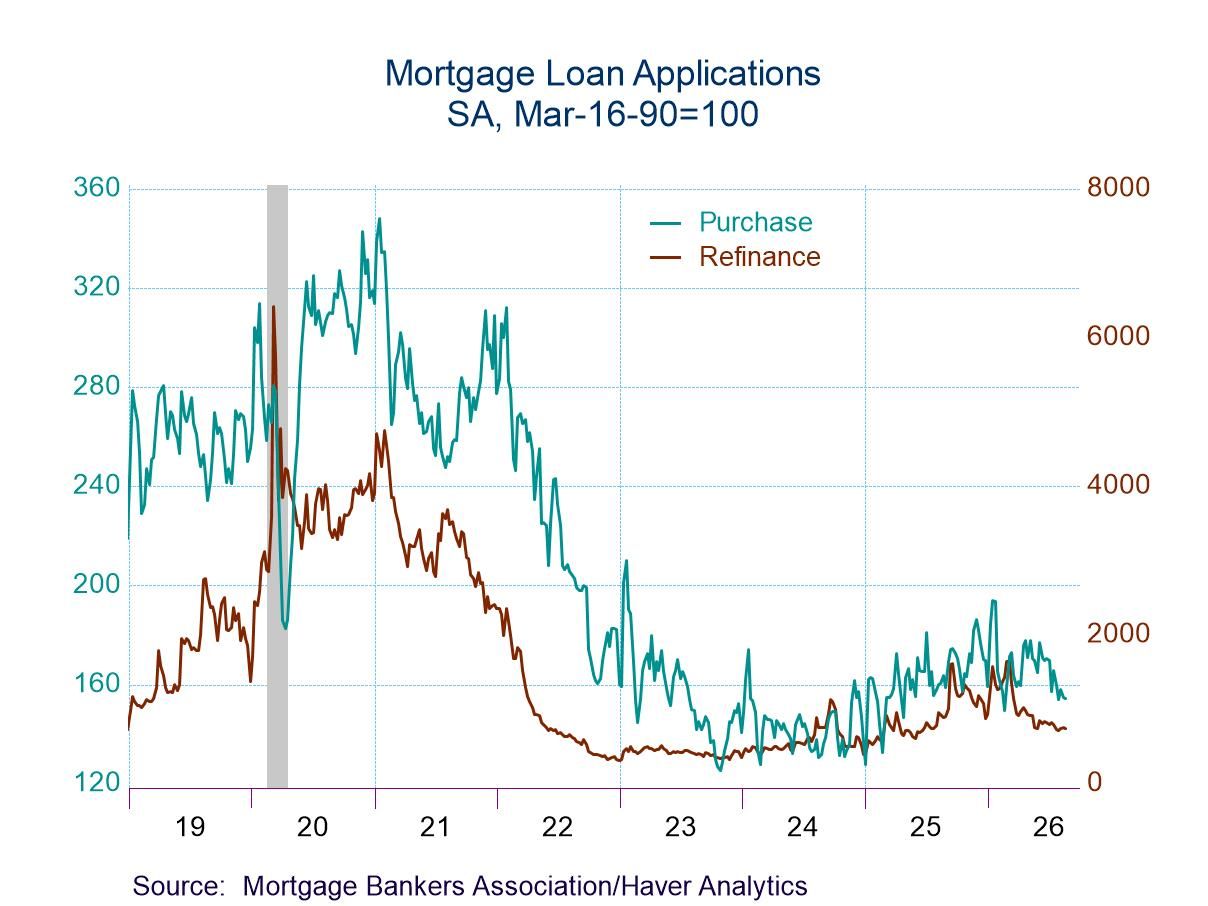
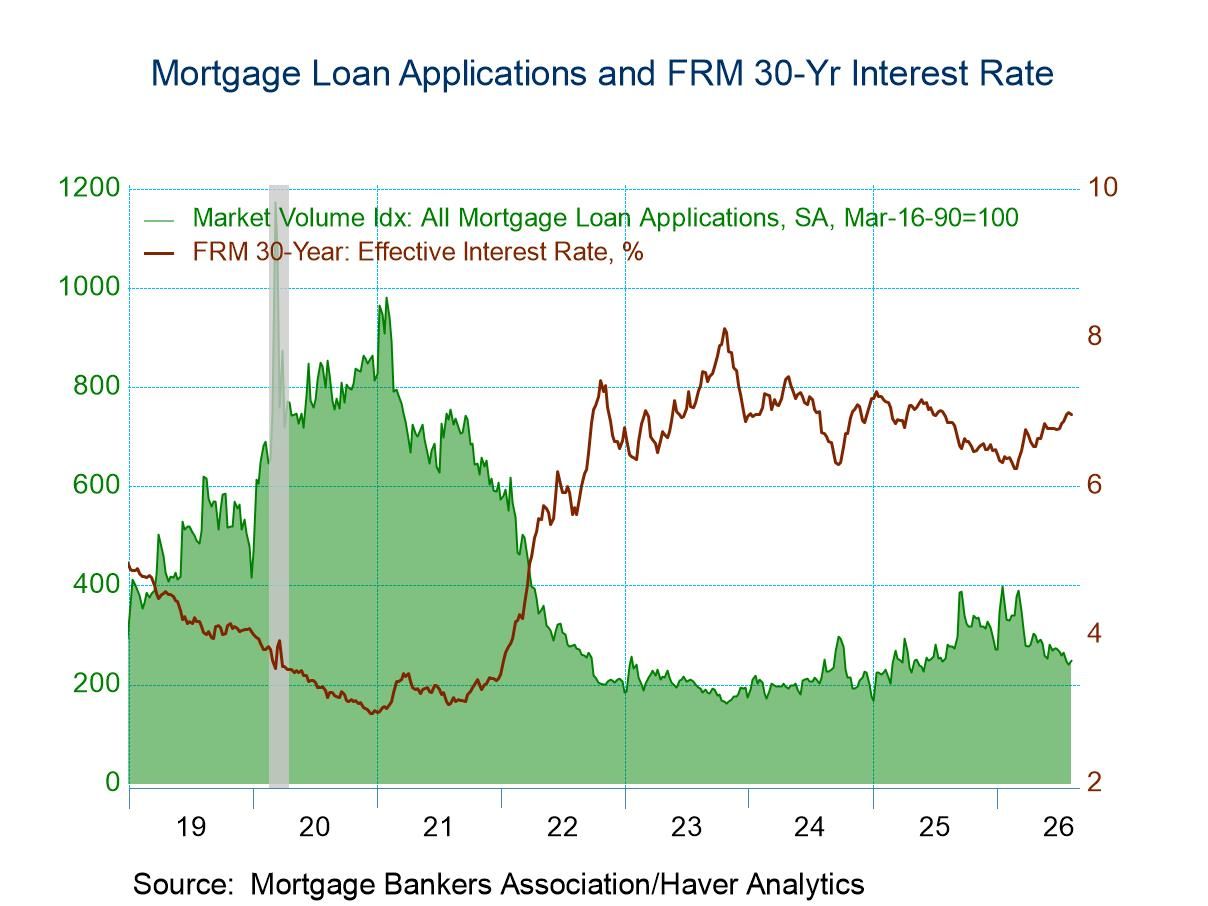
- Both applications for loans to purchase and for loan refinancing declined in the latest week.
- Interest rate on 30-year fixed-rate loans edged up 1bp to 6.97%.
- Average loan size inched up in the August 21 week.
Introducing
Kathleen Stephansen, CBE
in:Our Authors
Kathleen Stephansen is a Senior Economist for Haver Analytics and an Independent Trustee for the EQAT/VIP/1290 Trust Funds, encompassing the US mutual funds sponsored by the Equitable Life Insurance Company. She is a former Chief Economist of Huawei Technologies USA, Senior Economic Advisor to the Boston Consulting Group, Chief Economist of the American International Group (AIG) and AIG Asset Management’s Senior Strategist and Global Head of Sovereign Research. Prior to joining AIG in 2010, Kathleen held various positions as Chief Economist or Head of Global Research at Aladdin Capital Holdings, Credit Suisse and Donaldson, Lufkin and Jenrette Securities Corporation.
Kathleen serves on the boards of the Global Interdependence Center (GIC), as Vice-Chair of the GIC College of Central Bankers, is the Treasurer for Economists for Peace and Security (EPS) and is a former board member of the National Association of Business Economics (NABE). She is a member of Chatham House and the Economic Club of New York. She holds an undergraduate degree in economics from the Universite Catholique de Louvain and graduate degrees in economics from the University of New Hampshire (MA) and the London School of Economics (PhD abd).

Publications by Kathleen Stephansen, CBE
 USA| Aug 26 2026
U.S. Mortgage Applications Fell in the August 21 Week
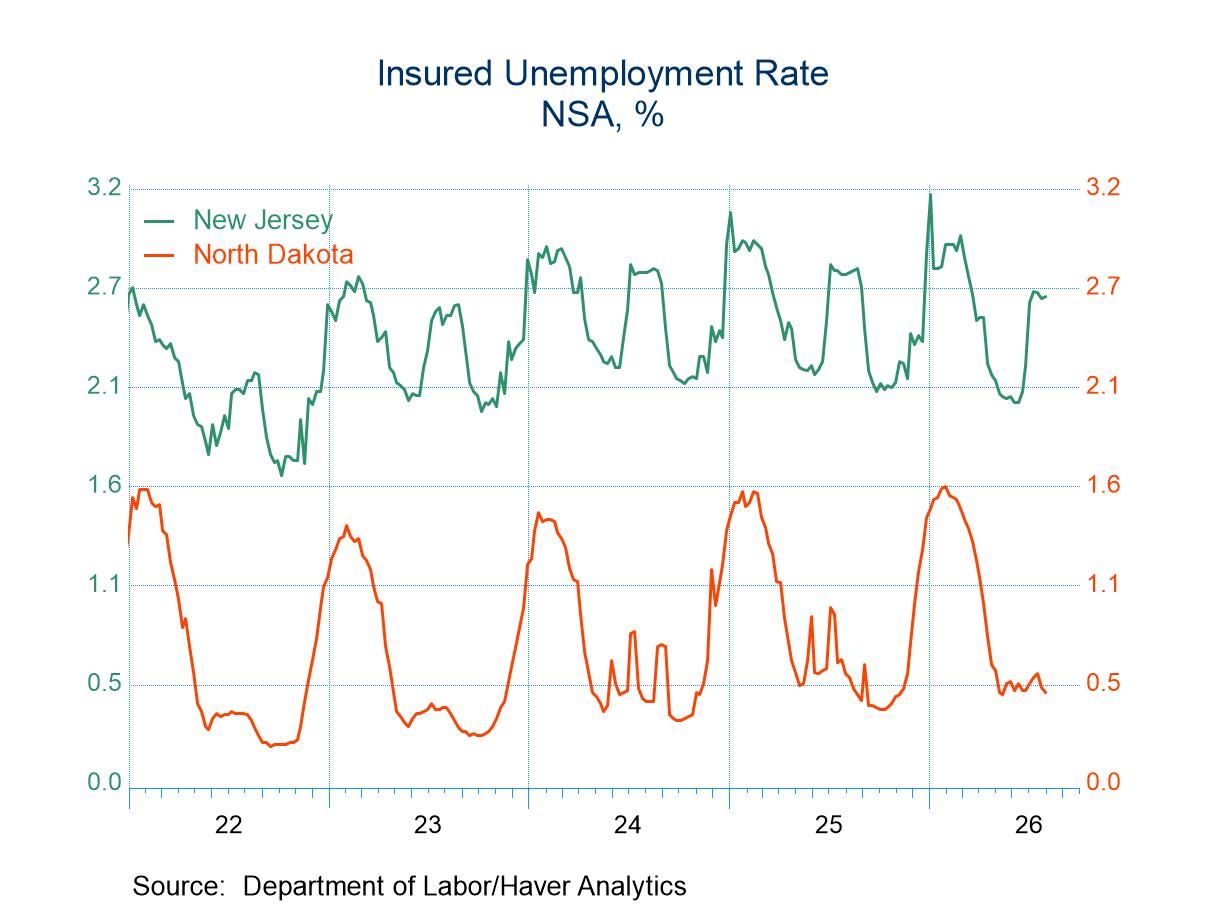
- New claims declined by 6,000 to 206,000 in the week of August 15.
- Continuing claims rose by 18,000 to 1.799 million in the week ending August 8.
- The insured unemployment rate was unchanged at 1.2% in the week of August 8.
 USA| Aug 19 2026
U.S. Mortgage Applications Edged Down in the August 14 Week
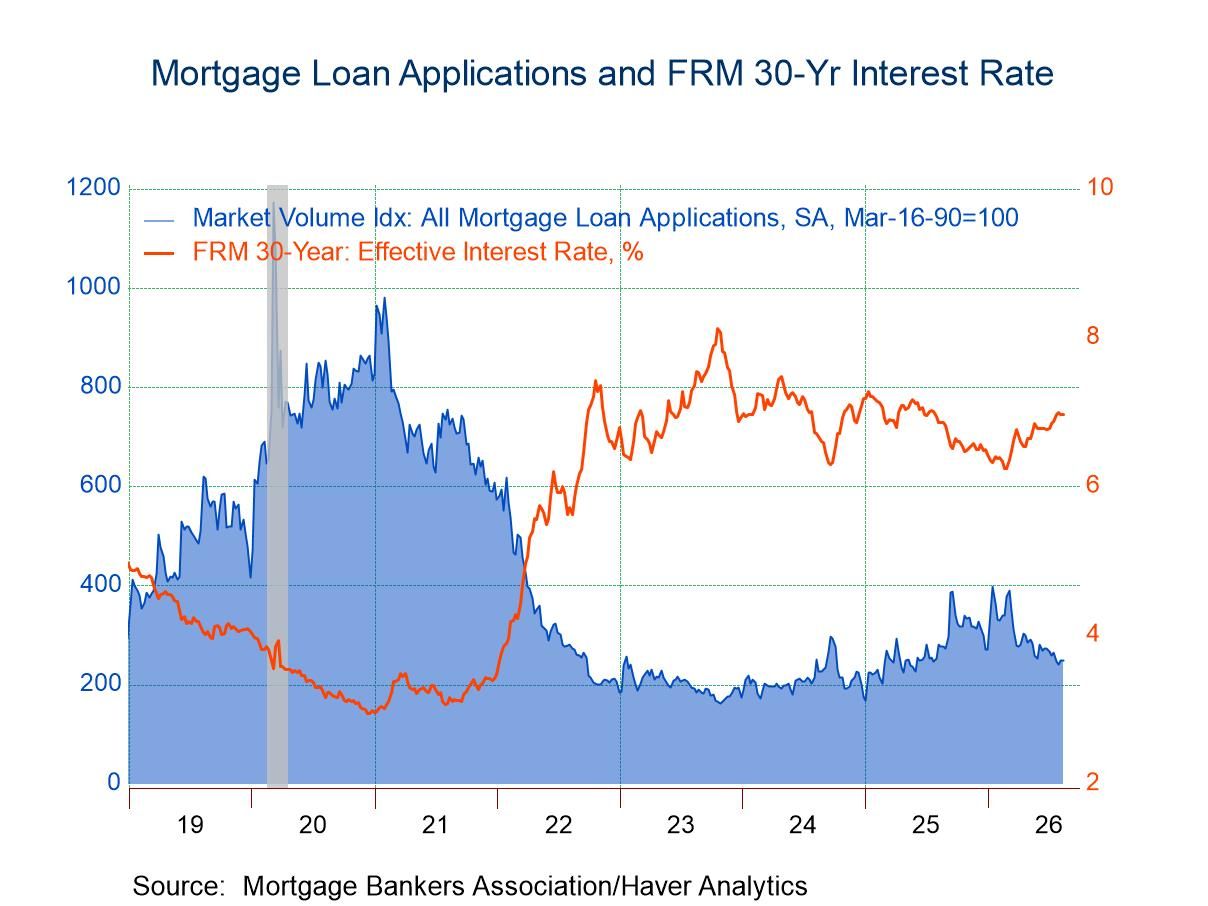
- Applications for loans to purchase declined, while applications for loan refinancing rose in the latest week.
- Interest rate on 30-year fixed-rate loans was unchanged at 6.96%.
- Average loan size declined.
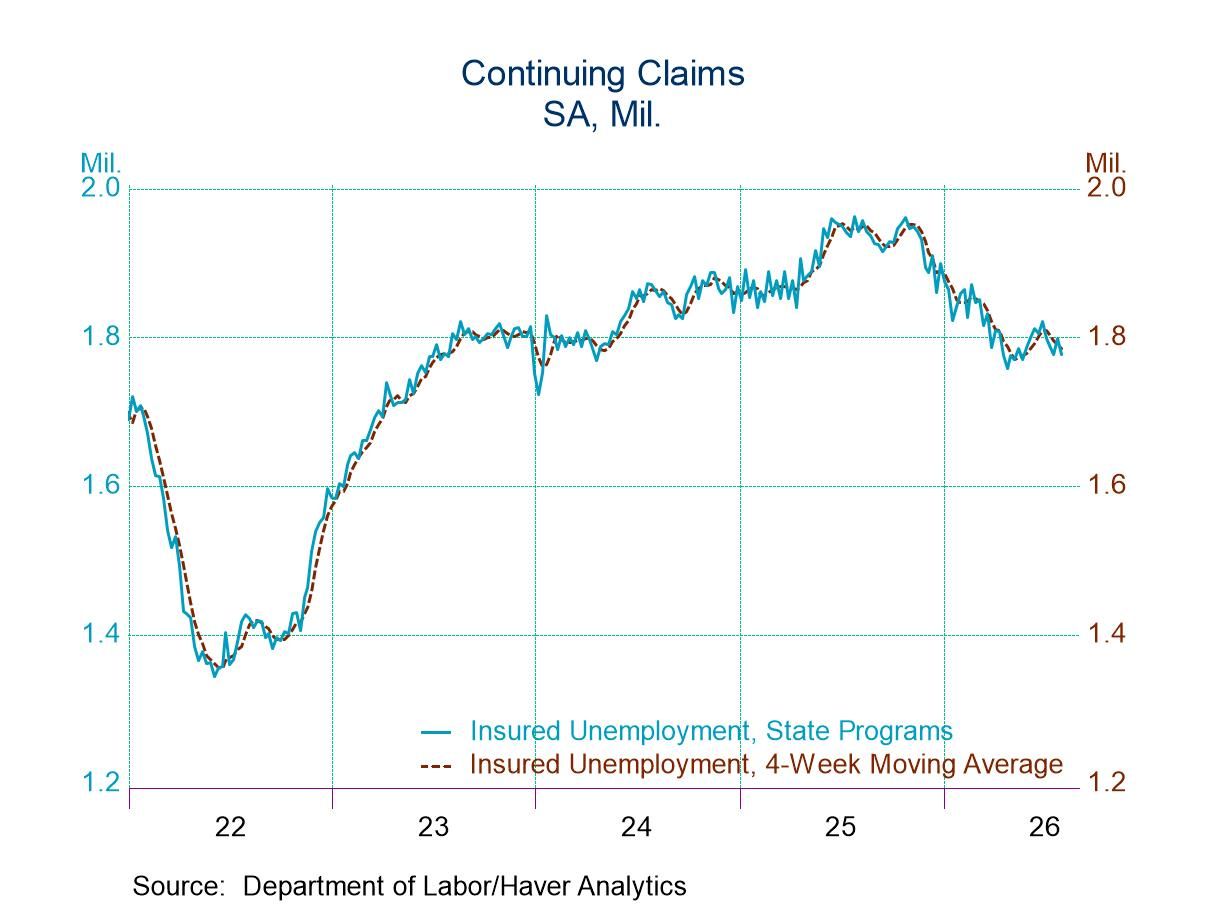
- New claims rose by 9,000 to 209,000 in the week of August 8.
- Continuing claims declined by 22,000 to 1.777 million in the week ending August 1.
- The insured unemployment rate was unchanged at 1.2% in the week of August 1.
 USA| Aug 12 2026
U.S. Mortgage Applications Rose in the August 7 Week
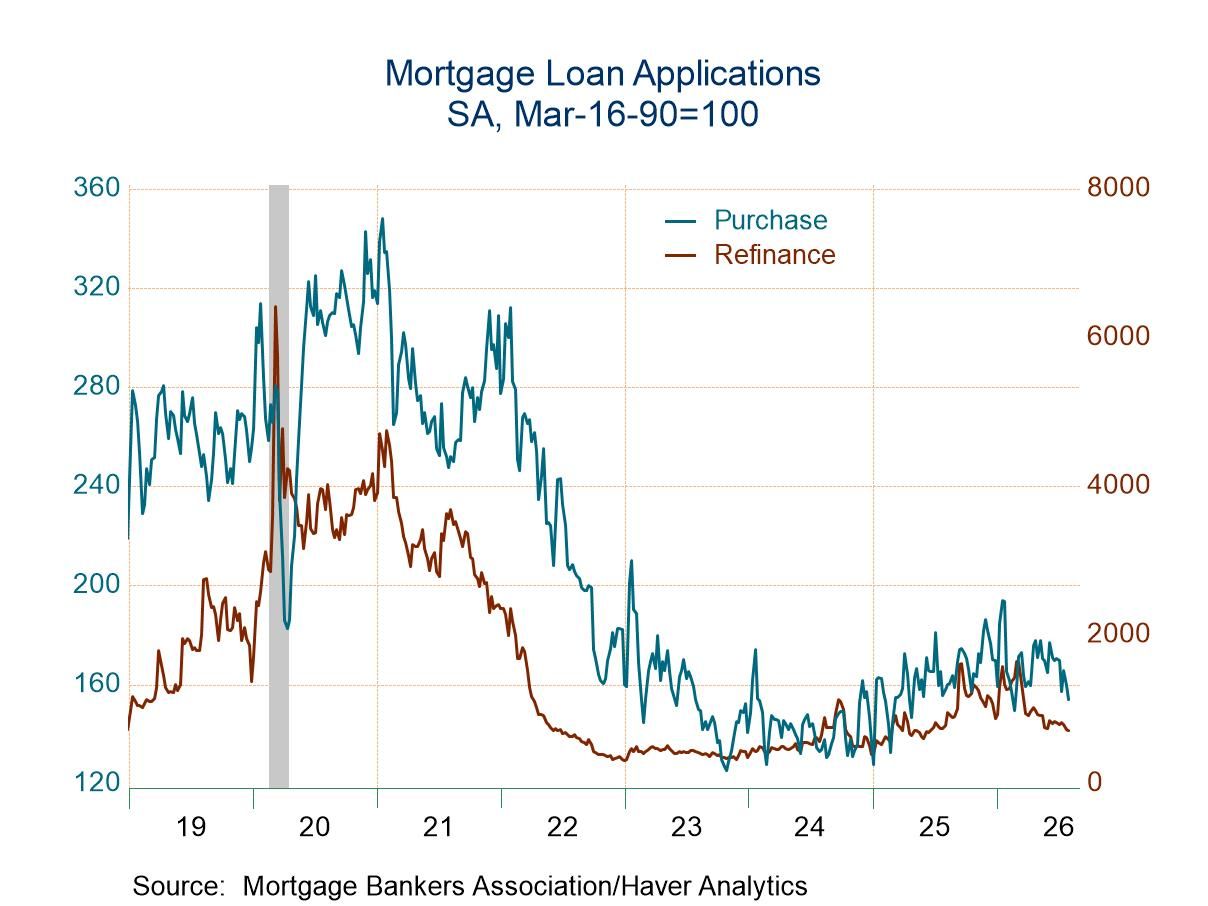
- Both applications for loans to purchase and applications for loan refinancing rose in the latest week.
- Interest rate on 30-year fixed-rate loans edged down 3bps to 6.96%, still at levels not seen since July/August 2025.
- Average loan size edged down.
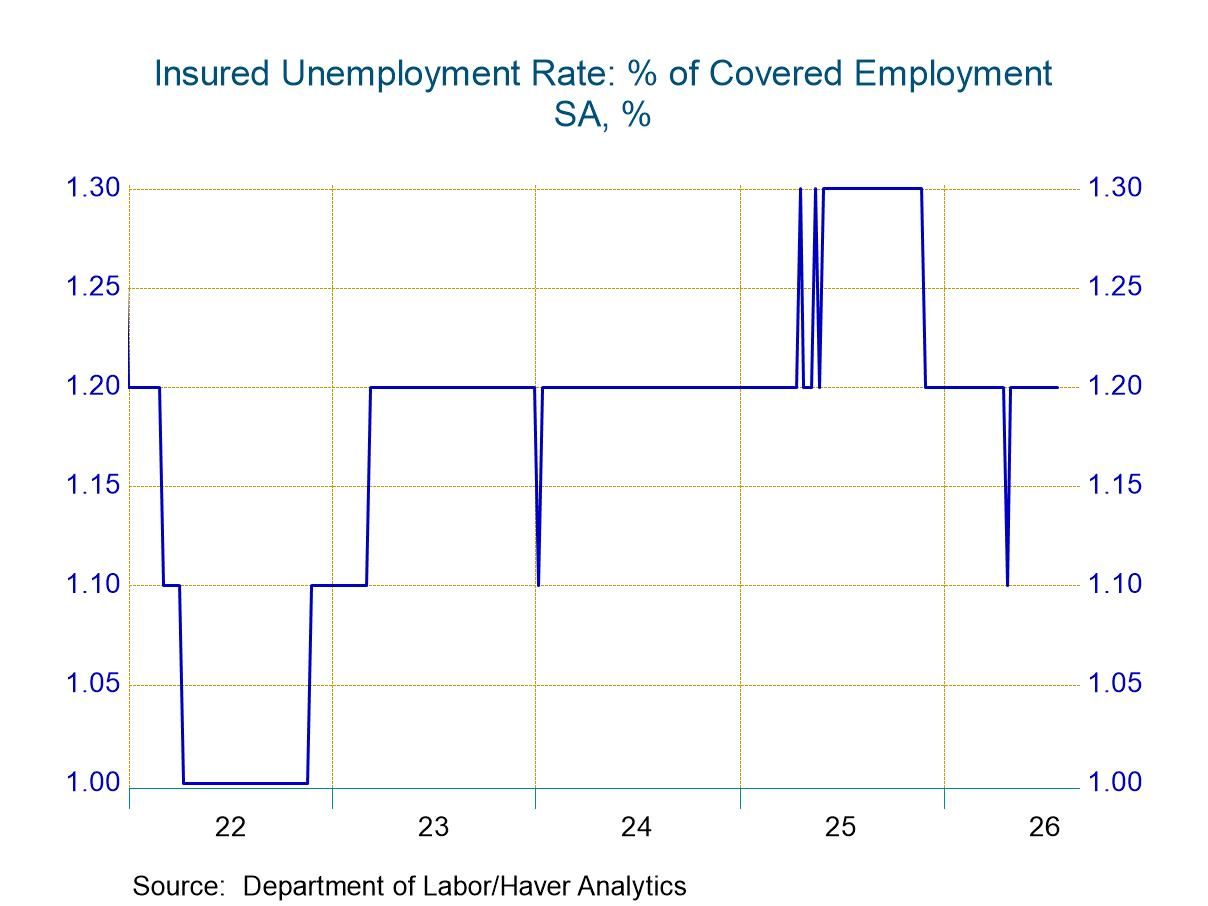
- New claims rose by 1,000 to 199,000 in the week of August 1.
- Continuing claims rose by 24,000 to 1.801 million in the week ending July 25.
- The insured unemployment rate was unchanged at 1.2% in the week of July 25.
 USA| Aug 05 2026
U.S. Mortgage Applications Declined in the July 31 Week
- Both applications for loans to purchase and applications for loan refinancing declined in the latest week.
- Interest rate on 30-year fixed-rate loans rose 3bps to 6.99%, the highest since July 2025.
- Average loan size edged down.
 USA| Jul 30 2026
U.S. Initial Unemployment Claims Rose in the Week of July 25
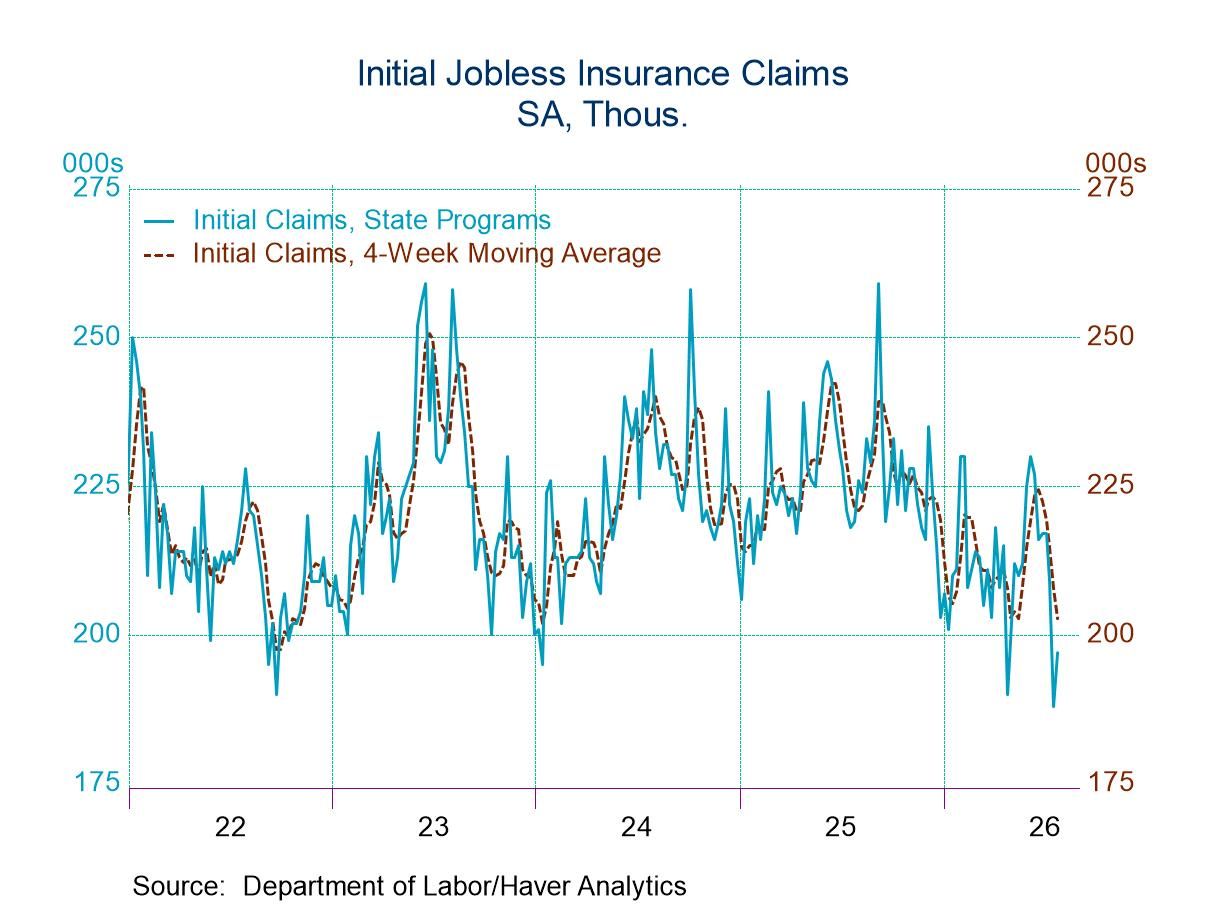
- New claims rose by 9,000 to 197,000 in the week of July 25, after reaching their lowest level since 1969 in the July 18 week.
- Continuing claims declined by 7,000 to 1.782 million in the week ending July 18.
- The insured unemployment rate was unchanged at 1.2% in the week of July 18.
 USA| Jul 29 2026
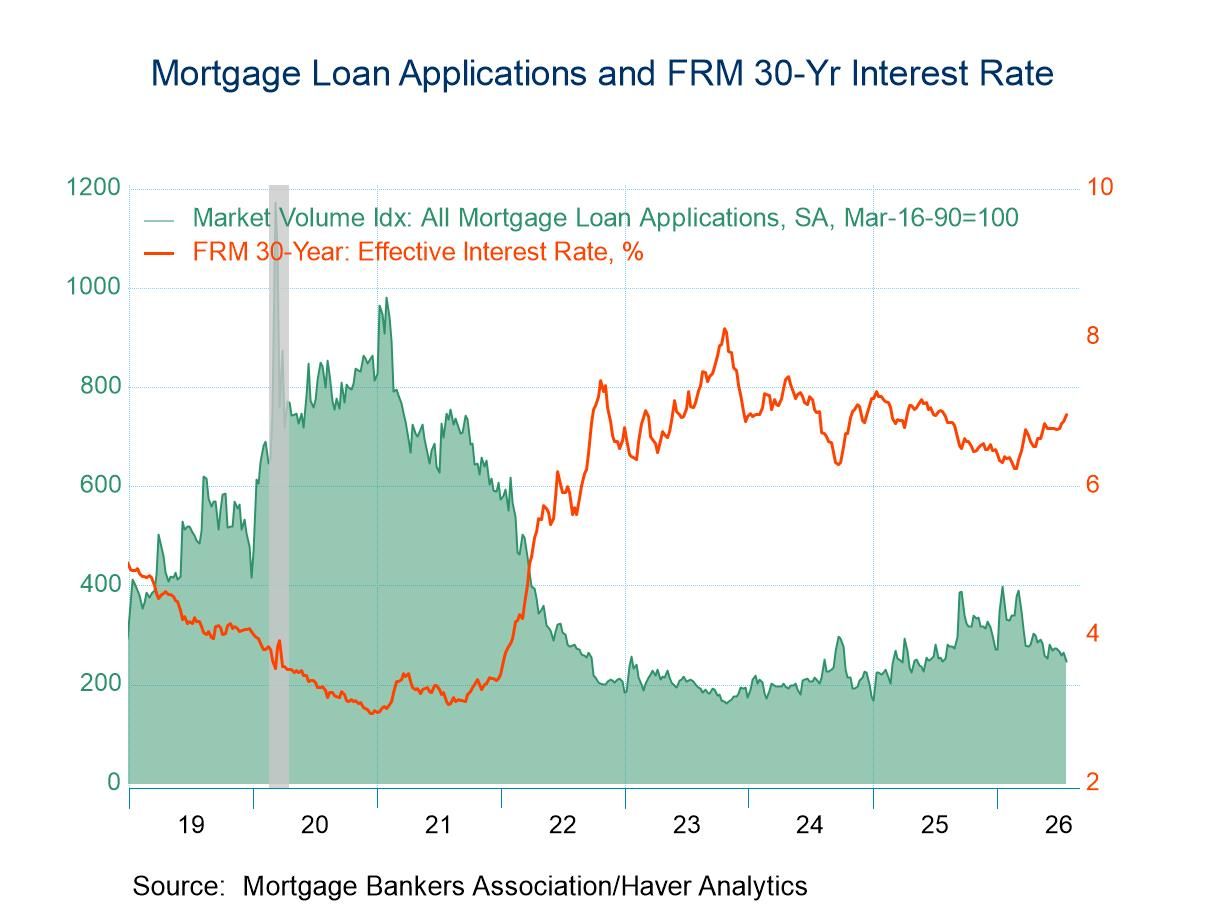
U.S. Mortgage Applications Declined in the July 24 Week
- Both applications for loans to purchase and applications for loan refinancing declined in the latest week.
- Interest rate on 30-year fixed-rate loans rose 9bps to 6.96%.
- Average loan size edged up.
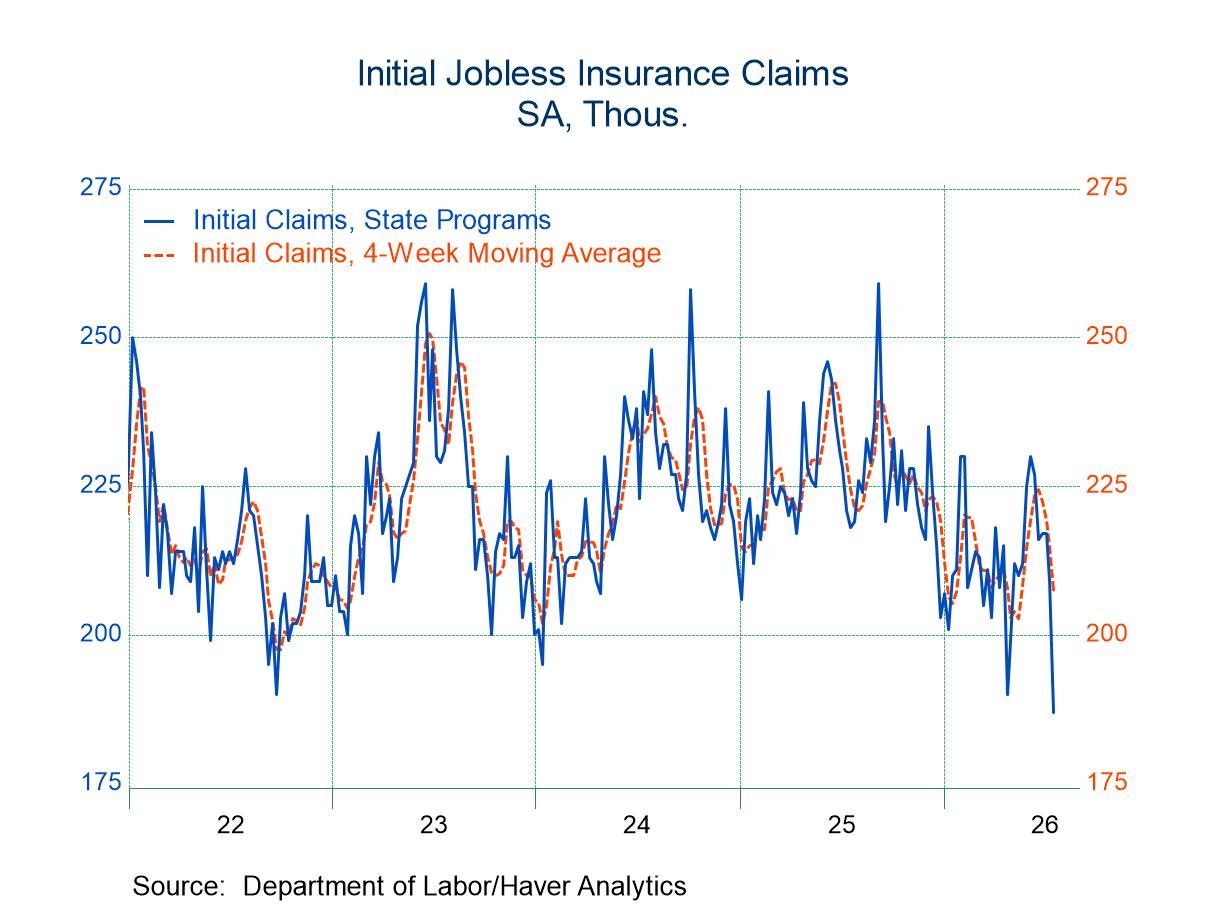
- New claims dropped by 22,000 to 187,000 in the week ending July 18, the lowest level since 1969.
- Continuing claims declined by 2,000 to 1.796 million in the week ending July 11.
- The insured unemployment rate was unchanged at 1.2% in the week of July 11.
 USA| Jul 22 2026
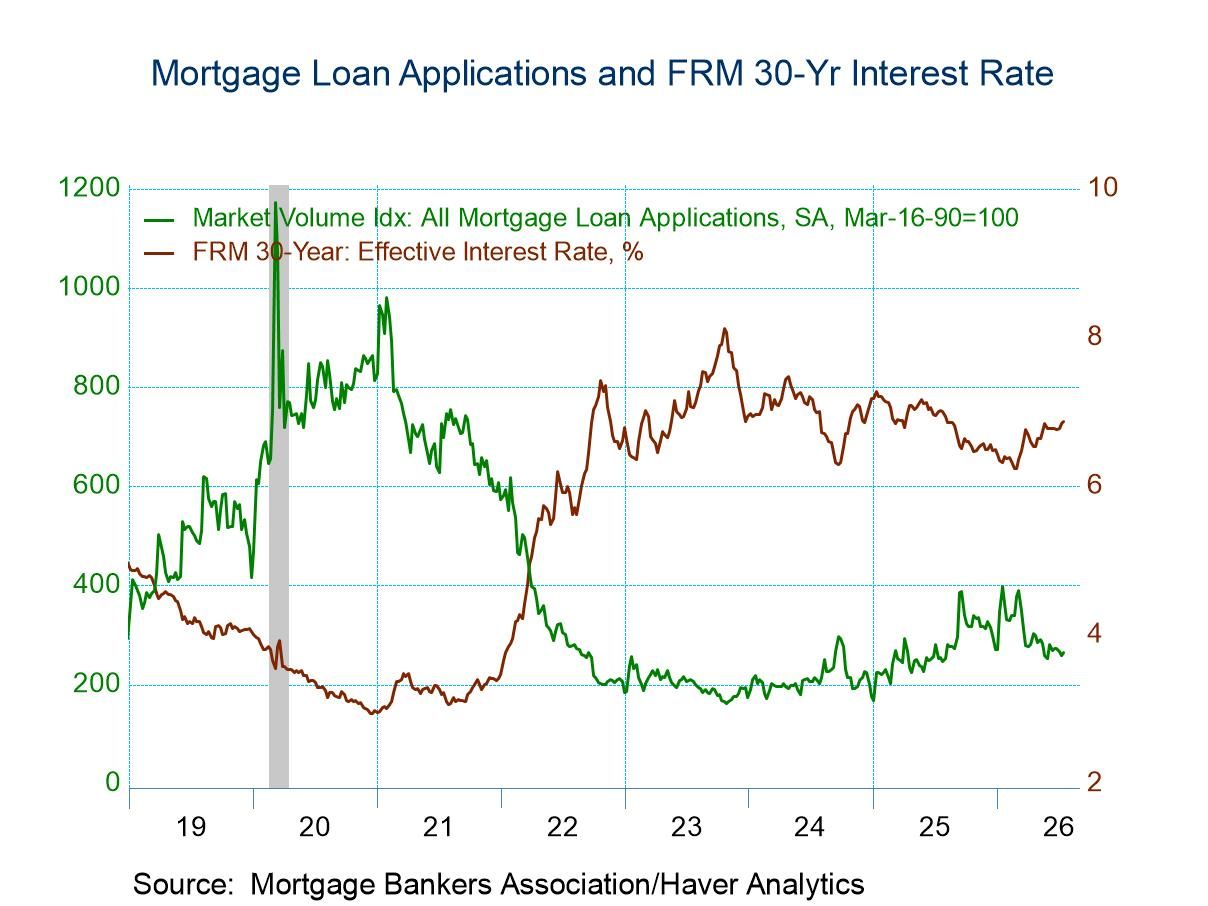
U.S. Mortgage Applications Rose in the July 17 Week
- Applications for loans to purchase rose in the latest week, while applications for loan refinancing declined.
- Interest rate on 30-year fixed-rate loans rose 2bps to 6.87%.
- Average loan size rose.
 USA| Jul 09 2026
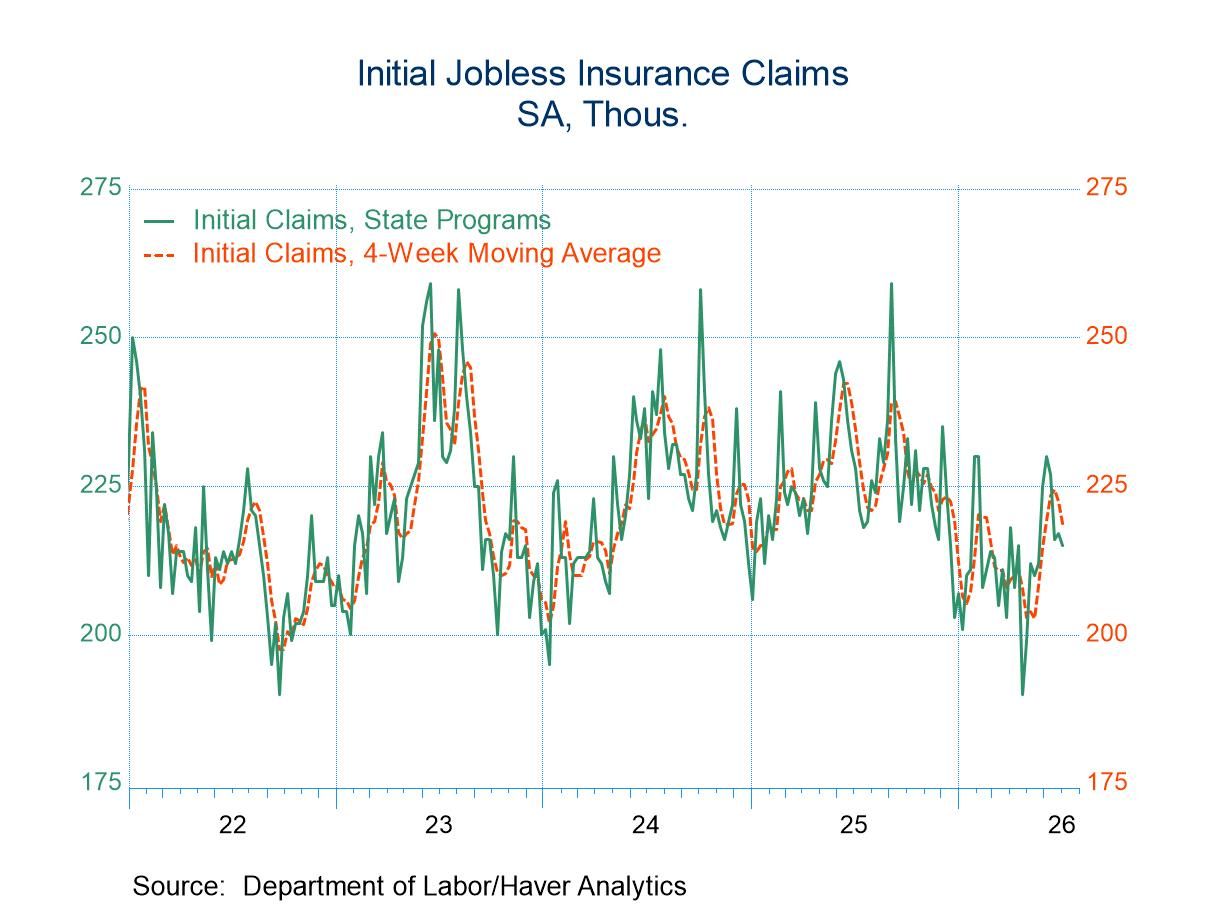
U.S. Initial Unemployment Claims Declined in the Week of July 4
- New claims declined by 2,000 to 215,000 in the week ending July 4.
- Continuing claims rose by 8,000 to 1.814 million in the week ending June 27.
- The insured unemployment rate was unchanged at 1.2% in the week of June 27.
- of9Go to 2 page